

Privacy is of major importance to many people when they browse the Web, and this factor has made the DuckDuckGo search engine a go-to for privacy-minded individuals. Now, after releasing its own mobile browser, DuckDuckGo is introducing a dedicated desktop browser.
DuckDuckGo’s Work with Web Privacy
As laid out in a blog post on December 21, 2021, DuckDuckGo has built a reputation for the privacy it offers users. “From improvements to search, tracker blocking, and our mobile app, to new features like Email Protection and App Tracking protection, we’re building a simple privacy layer for how people use the Internet today, without any tradeoffs. It’s privacy, simplified,” explained the blog post.
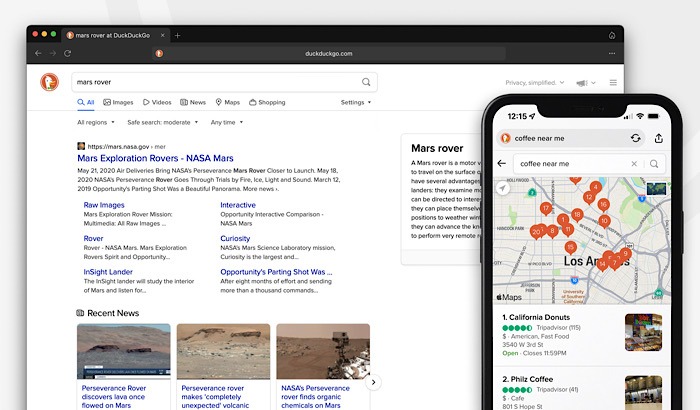
DuckDuckGo noted the “tremendous response” it’s seen from users. It’s the most downloaded Android browser and behind only Chrome on iOS in most markets. It averages more than 100 million searches every day, with nine percent of Americans using the search engine.
After announcing the beta version of its free email forwarding service Email Protection in October of this year, the same company added a beta version of the App Tracking Protection service to its Android app last month.
Improvements were also made to DuckDuckGo’s search results. The blog post encouraged former users to give it another go. It believes that people who could only use it part time before will recognize the “revamped” search results page and refinements to “local, maps, and directions results,” and “revamped definitions and weather answers, custom date range filtering, more filters on images, and improvements to advanced research.”
The DuckDuckGo search engine introduced a new feature as well: “translations instant answer,” while the browser extension added a feature that identifies and blocks hidden trackers on Facebook and strengthened the Tracker Radar data set that identifies CNAME cloaking.
DuckDuckGo Now Has Mobile and Desktop Apps
The iOS and Android mobile DuckDuckGo browsers include the Fire Button to clear tabs and browsing data in one quick tap with multiple animations. A “Fireproofing” prompt allows you to remain logged in, and loading time on Android has been sped up.
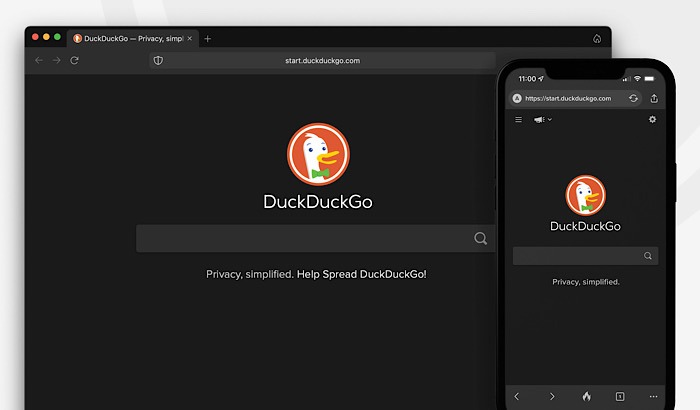
DuckDuckGo is bringing the same “user expectations of everyday online privacy” to a new desktop browser. It promises “no complicated settings, no misleading warnings, no ‘levels’ of privacy protection that works by default, across search, browsing, email, and more.”
But DuckDuckGo doesn’t want to be seen as a “privacy browser” – it wants the new desktop browser to be seen as an everyday browsing app that happens to respect your privacy. But, frankly, everyone has a favorite so that that goal may be a very lofty one. ‘
The new DuckDuckGo desktop browser isn’t like others that fork Chromium, as it was built “around the OS-provided rendering engines,” which allow it to “strip away a lot of the unnecessary cruft and clutter that’s accumulated over the years” in the other browsers.
The new browser promises a “clean and simple interface” while also bringing over the Fire Button from the mobile app. It considers itself to be cleaner, more private, and faster than Chrome.
But realists know there is little chance of the DuckDuckGo desktop browser toppling the king, Chrome. Before it sets its sights there, it may want to try toppling Firefox, Edge, and Safari.
Image Credit: DuckDuckGo in 20201: Building the Privacy Super App