

Most modern smartphones have cameras that can take amazing photos. Some phones also have a macro or wide-angle lens as well, allowing you to shoot a variety of different angles. However, if you’re looking to start some serious photography, it is wise to invest in a professional camera. When you think of professional photography, the word “DSLR” often comes to mind, but mirrorless cameras are also becoming increasingly popular. In this article we cover the main differences between the two camera systems. This should help you decide which one to buy.
Also read: How to Use the iPhone Camera
What are DSLR and Mirrorless Cameras?
DSLR stands for Digital Single-Lens Reflex. This is named after the system which resides inside the camera. A DSLR has a reflex mirror inside. When light enters through the lens, it bounces off the mirror and goes into the optical viewfinder.
On the other hand, a mirrorless camera does not have a mirror. Light goes directly into the image sensor. The image is previewed on an electronic viewfinder or LCD monitor.
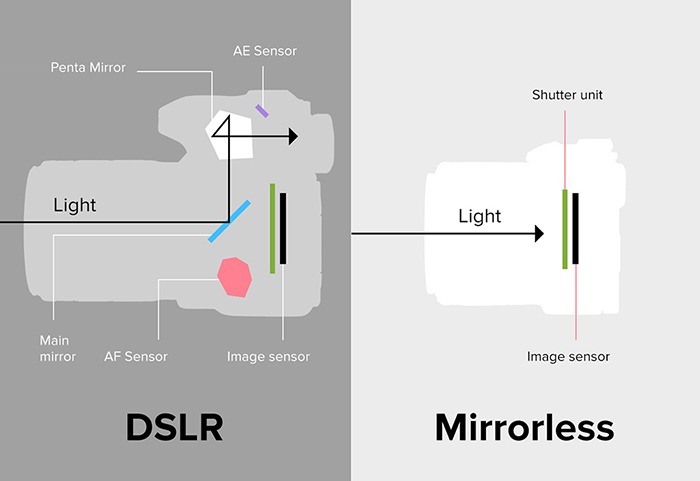
DSLR cameras have been present for a long time on the market. Thus, they were always the go-to camera for professionals. However, mirrorless systems have caught up in recent years and have become close to DSLR cameras in quality. As a mirrorless camera is much smaller and lighter in size, many photographers have shifted over to mirrorless systems.
While this sounds simple, there are many differences associated with each system. We’ll discuss some of these below.
Image Quality
One reason why many photographers continue using DSLR cameras is that they are slightly faster when autofocusing or tracking subjects. While the difference is not that much when compared to modern top mirrorless systems, it can still make a difference.
On the technical side, DSLR cameras mostly use “phase detection” autofocus modules in the body of the camera. This helps make autofocusing faster, which leads to quicker shots.
Mirrorless cameras rely on sensor-based autofocus. This analyzes the maximum contrast between pixels on the camera’s sensor. With high contrast, the subject is in focus. However, this method is traditionally slower and also sometimes tends to struggle with moving subjects. This is changing, though, with higher-end mirrorless systems featuring both sensor-based and phase detection autofocus systems.
DSLRs are usually a bit slower with continuous shooting. Since mirrorless cameras don’t rely on a mirror for shooting, they shoot more photos per second at higher shutter speeds.
Also read: What Is a Time-of-Flight Camera and How Does It Work?
Viewfinders
DSLRs have optical viewfinders, which allow the user to directly observe the scene you’re about to capture. An optical viewfinder will show you the scene you’re about to photograph as it is. This is similar to what you’re viewing with your eye. It is not a “preview” of the photo that the camera will take. Since the camera settings (aperture, shutter speed, ISO, etc.) are not factored in, what you see through the viewfinder and the image your camera takes can be completely different. You may need to take a photo, readjust settings, or take another photo before you get the perfect result.
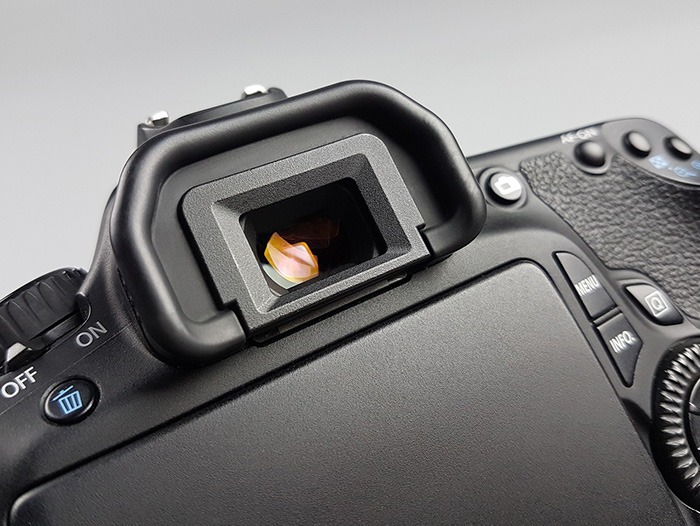
On the other hand, mirrorless cameras make use of electronic viewfinders. This allows you to see a preview of exactly how the image will turn out. When you’re shooting outside in good light, the preview on the screen of a mirrorless camera will look close to the final image. In a low-light situation, or with fast moving objects, the image (on the viewfinder) will become dull or grainy.
You should note that some low-end mirrorless cameras do not have an electronic viewfinder. Instead, the image preview is shown directly on the screen, which you can use to shoot the photo.
Video Quality
DSLRs are primarily meant for photography; thus, they don’t shoot video very well. The superior autofocus that a DSLR uses for photography doesn’t work while shooting video.
Mirrorless cameras are better geared toward video than DSLRs. Most mirrorless cameras now feature the option to capture 4K footage, with four times the resolution of HD footage. This coupled with the superior video autofocus provides better results for most filmmakers.
Size and Battery Life
DSLRs are known to be very heavy and bulky, which can turn some people off. You’ll almost always need to carry them in a separate bag, as they tend to be too big. Higher-end DSLRs tend to be expensive as well. DSLRs also have greater battery life than similar mirrorless systems since they have the option to shoot without using the LCD screen.
One of the greatest advantages of a mirrorless camera is its size. The average mirrorless camera is half the size and weight of a traditional DSLR camera. This allows you to easily carry it with you and shoot for extended periods of time without getting tired.
Nevertheless, both DSLRs and mirrorless cameras come with removable batteries so you can keep spares with you.
Lenses and Accessories
For DSLRs, there is a multitude of lenses and accessories for each camera. Multiple manufacturers continue to release different lenses for each camera lineup, which gives consumers a greater variety to choose from depending on their requirements and budget.
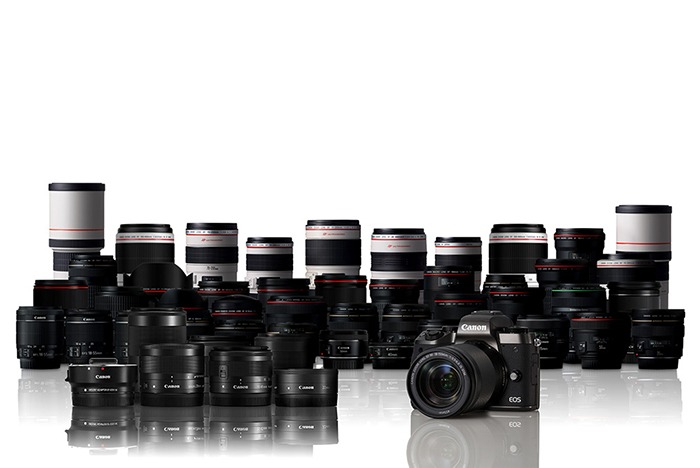
Mirrorless systems suffer from a restricted lineup of lenses from the camera maker. However, this is changing, with more lenses being released by different manufacturers every year.
Final Words
As you can see, DSLR and Mirrorless cameras are quite different from each other. Whichever you choose comes down to personal preference, your requirements and your budget. If you are not into professional photography, your iPhone or Android phone can be used to take amazing photos, too.