
Disney Plus the Latest Streaming App to Crack Down on Password Sharing

Disney Plus Crack Down Password Sharing Featured

It was a shock to many when Netflix started working on its password-sharing woes, but the solution worked out well for the company. Now Disney Plus is poised to do the same next month in the U.S., with CEO Bob Iger announcing an expansion of plans to stop password sharing.

Bob Iger Announces Disney+ Password-Sharing Crackdown

This move by Disney Plus is expected to curb the number of users who share their passwords with friends and family outside their household. Similar measures by Netflix had a significant impact on its subscriber growth and revenue, and Disney Plus hopes to replicate this success.

In preparation for the new policy, Disney Plus will be implementing stricter account verification processes and possibly introducing new subscription tiers to accommodate different user needs. Subscribers are certainly wondering how these changes will affect their accounts, but some of them may have already heard from the company.
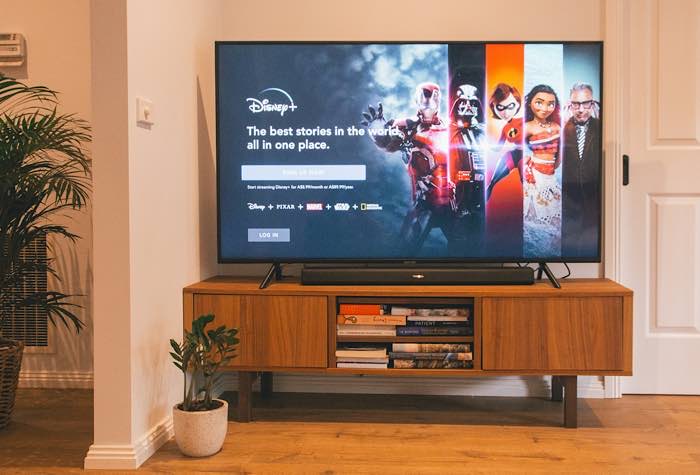
Disney Plus Crack Down Password Sharing Smart User Account
Image source: Unsplash

As the streaming industry continues to evolve, companies like Disney Plus and Netflix are finding ways to adapt to changing consumer behaviors to maximize their profitability. The crackdown on password sharing is just one of the strategies being employed to achieve these goals.

“We’ve been talking a lot about adding the technology features that we need to basically make it a higher return, higher-margin business, and a more successful business. And we’re doing that right now,” Iger said.

“We started our password-sharing initiative in June. That kicks in, in earnest, in September. By the way, we’ve had no backlash at all to the notifications that have gone out and to the work that we’ve already been doing.”

How Will Disney Carry Out This Plan?

So far, nothing was announced about the methods Disney Plus will be using to crack down on password sharing in the U.S. However, the company has already started the process in the U.K.
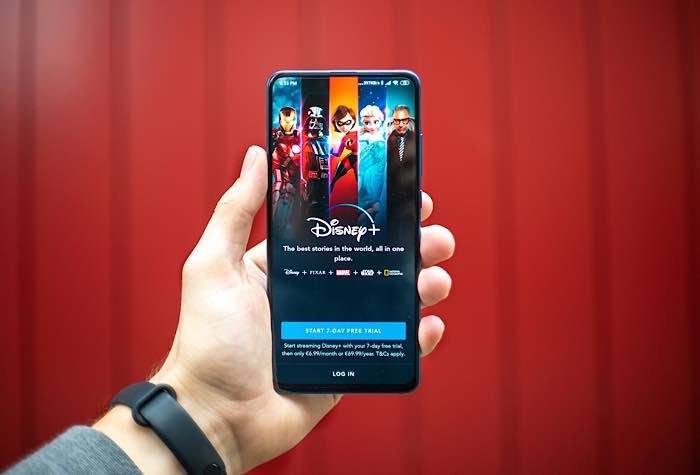
Disney Plus Crack Down Password Sharing Account On Smartphone
Image source: Unsplash

One account in the U.K. can now only be shared with devices that are owned by the people who live in your home, similar to Netflix’s plan. Also like Netflix, if you still want to share your plan with someone who doesn’t reside in your home, you can pay extra. Read on if you want to learn how to edit your profile in Disney Plus.

For Netflix users, it’s still cheaper to add a person than your friends and family members getting their own accounts. However, this hasn’t started yet, even in the U.S. or the U.K.

The impact of these changes will be closely monitored by industry analysts and competitors, as the success of Disney Plus’s strategy could influence similar actions by other streaming services, just as Disney Plus was surely influenced by Netflix. But you can also turn that around. Learn how to save money with streaming services.

Image credit: Unsplash

Subscribe to our newsletter!

Our latest tutorials delivered straight to your inbox

Laura Tucker Avatar

Read next

When the SS Great Eastern laid the first working transatlantic telegraph cable in 1866, a message that had taken ten days by steamship suddenly crossed the ocean in minutes, and the financial markets of London and New York were forced, within a single trading week, to invent the modern concept of synchronised global price.
The Big Ear telescope was scanning at 1420.4056 megahertz on the night of 15 August 1977, the exact frequency at which hydrogen atoms vibrate across the universe, because Giuseppe Cocconi and Philip Morrison had argued years earlier that any species trying to be found would broadcast on that channel — and then, for 72 seconds, something did.
When Cingular chief Stan Sigman backed the original iPhone before its 2007 unveiling, he accepted terms American carriers usually refused: no logo on the device, no control over its software, no preloaded apps, and a share of monthly subscriber revenue flowing back to Apple, after signing on without seeing a prototype
In 2016, archaeologists dated two rings of snapped stalagmites in France’s Bruniquel Cave to 176,500 years ago, evidence that Neanderthals had walked 336 metres into darkness with fire and built architecture deep underground long before modern humans reached Europe
Otto von Bismarck was 74 when Germany adopted the world’s first national old-age social insurance program in 1889, setting the pension age at 70 after years of fighting socialists with bans, laws, and a promise few workers would live long enough to use
When cosmonaut Valeri Polyakov stepped out of his Soyuz capsule in March 1995 after 437 consecutive days aboard Mir, doctors recorded him at several centimetres above his pre-flight height, and his spine had become so unaccustomed to gravity that the recovery team carried him to a chair rather than risk the compression of letting him walk.
When Bell Labs engineer Karl Jansky pointed a rotating antenna at the sky in 1932 looking for sources of transatlantic radio static, he kept picking up a faint hiss that peaked every 23 hours and 56 minutes, and he eventually realized he had become the first human to hear the center of the Milky Way.
When Harvard astronomer Cecilia Payne submitted her 1925 doctoral thesis arguing that the Sun was made almost entirely of hydrogen, the field’s senior figure Henry Norris Russell talked her into adding a line calling the result ‘almost certainly not real,’ and then published the same conclusion himself four years later to widespread acclaim.