


Whether you are aware of it or not, Google has been storing all of your activities that you do with the big G’s tools, such as where you have been the past week when you used Google Maps and what things you asked for in the Google Now app on your smartphone. As for the latter activity, Google has all of the voice commands that you have ever said to the Google Now app. The reason it stores all of your commands is to provide you with better services the next time you use them.
However, if you would like Google to delete all of the Google Now commands that you have said to it, you can do that using Google’s own website. Here’s how.
Deleting All The Commands You Have Ever Said to Google Now
You do not need an app or a third-party website to get the job done. Everything can be done right from the Google website.
1. Head over to Google’s Voice & Audio Activity page using a web browser on your computer. Log in to your Google account if you are not already logged in. That page is where you can see all the audio interactions you have had with Google using your gadgets.
2. Once you are there on that page, click on the three-dots given in the top-right corner to pull down the menu. When the menu shows up, select “Delete options.”
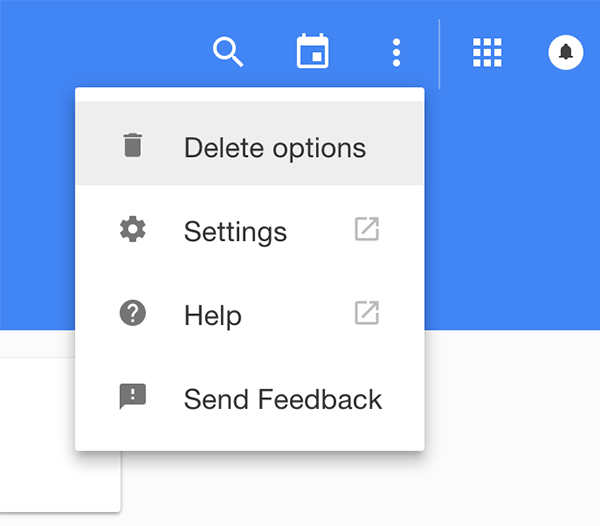
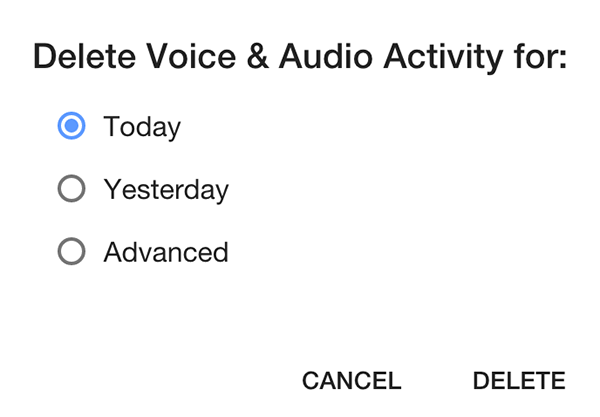
3. You should then see something like the following on your screen. Here you can select the date range of activity date you wish to be deleted.
You have three options to choose from: Today, Yesterday, and Advanced.
Select “Advanced,” as we wish to delete all the Google Now commands we have ever said to the app.
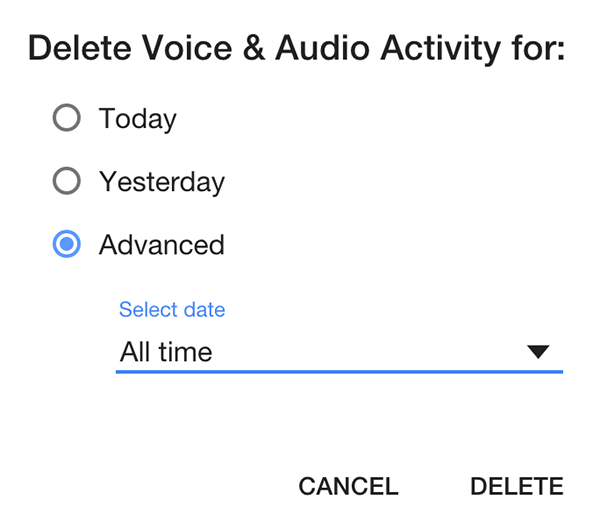
4. Once you click the Advanced option, you should see a drop-down menu containing two options:
Past 4 Weeks – It will delete your data for the past four weeks.
All time – It will delete all of your data.
Select the “All time” option to delete all of the audio activity data that Google has for your account. Then click the “DELETE” button to initiate the deletion process.
5. Wait for Google to finish deleting all of your voice records. When that is done, you can close that page in your web browser.
It should, however, keep recording your data until it not to. Therefore, you should see some data there on that page if you use the Google Now app on your gadgets after you are done with the above guide.
Conclusion
If you would prefer Google not store your voice commands, you can get that done using the above guide without looking for any other help. That is the most straightforward way to tell Google to delete whatever you have said to its Google Now app.