

Save $67 on a weBoost Home MultiRoom Cell Phone Signal Booster Kit

We may earn a commission from links on this page.
Deal pricing and availability subject to change after time of publication.
Weboost Booster Kit Featured

Do you live in an area where it’s tough to get a cell phone signal? Do you have a tough time making and receiving calls? Perhaps you need a weBoost Home MultiRoom Cell Phone Signal Booster Kit. It works with all U.S. carriers, is FCC approved, and covers up to 5,000 sq. ft.

This booster kit will provide you with enhanced cellular reception in up to three rooms. It will limit the amount of dropped calls and give you better voice quality and faster data speeds. It works with Verizon, AT&T, Sprint, T-Mobile, Straight Talk, U.S. Cellular, and all phones and cellular-connected devices.
Weboost Booster Kit Home

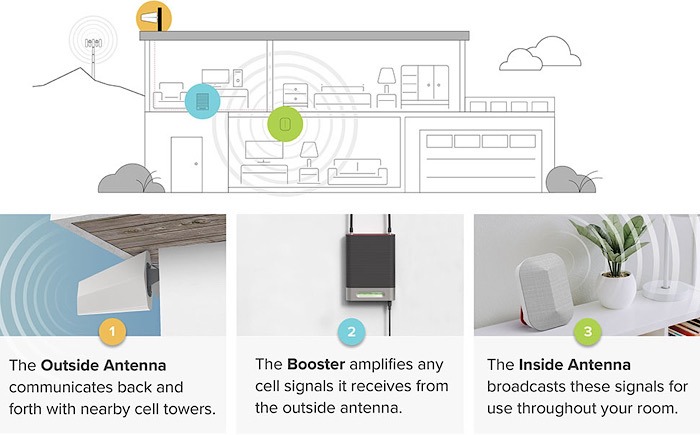
You will need no tools to install the weBoost Home MultiRoom Cell Phone Signal Booster Kit. A flat window cable will connect the booster to the outside antenna. The inside antenna can be mounted on a wall with 3M Command strips or placed on a shelf. Using the specially-designed bracket, the outside antenna can be pointed toward the nearest cell towers for more signal strength.

The weBoost kit, as well as all other weBoost products, supports 5G technology. It will work within a 5G network to deliver the strongest cell signal possible. It’s all backed by a two-year manufacturer’s warranty and a 30-day money-back warranty by weBoost.

Take $67.51 off the price of this booster kit and pay just $482.48.

weBoost Home MultiRoom Cell Phone Signal Booster Kit

Make Tech Easier may earn commission on products purchased through our links, which supports the work we do for our readers.

Subscribe to our newsletter!

Our latest tutorials delivered straight to your inbox

Laura Tucker Avatar

Read next

When you tilt a smartphone, gravity shifts microscopic silicon fingers inside its accelerometer by only a few nanometres, changing the capacitance between them and producing the electrical imbalance the phone reads as a new direction for down
Content and cloud networks now account for three-quarters of used international bandwidth, while Google, Meta, Microsoft and Amazon own, co-own or buy capacity on a growing share of the 600-plus submarine cable systems carrying over 99 per cent of data between countries, a private map hidden below the wireless internet
The peak of Chimborazo in Ecuador sits about 2,072 metres closer to space than Everest’s summit — because Earth bulges at the equator, and Chimborazo stands almost directly on the bulge
Wi-Fi doesn’t actually slow down when a café gets crowded — the signal is fine, but every device has to wait its turn to speak on the same frequency, and the polite queuing is what you feel as lag
People who are truly pleasant and kind but have no close friends often spent decades being the one everyone called during a crisis — and somewhere along the way noticed almost none of those calls had reversed direction
Research suggests the feeling that time speeds up with age can be shaped by fewer temporal landmarks — the small disruptions to routine that give the brain something worth remembering
Ray-finned fishes evolved bioluminescence at least 27 chemistry and others by housing luminous bacteria, a repeated evolutionary experiment spread across deep-sea, inshore and reef lineages using different molecular machinery to make visible light
The Sun is actually white — the yellow we see is Earth’s atmosphere scattering the shorter blue wavelengths away before the light reaches our eyes, which is also why sunsets turn red