
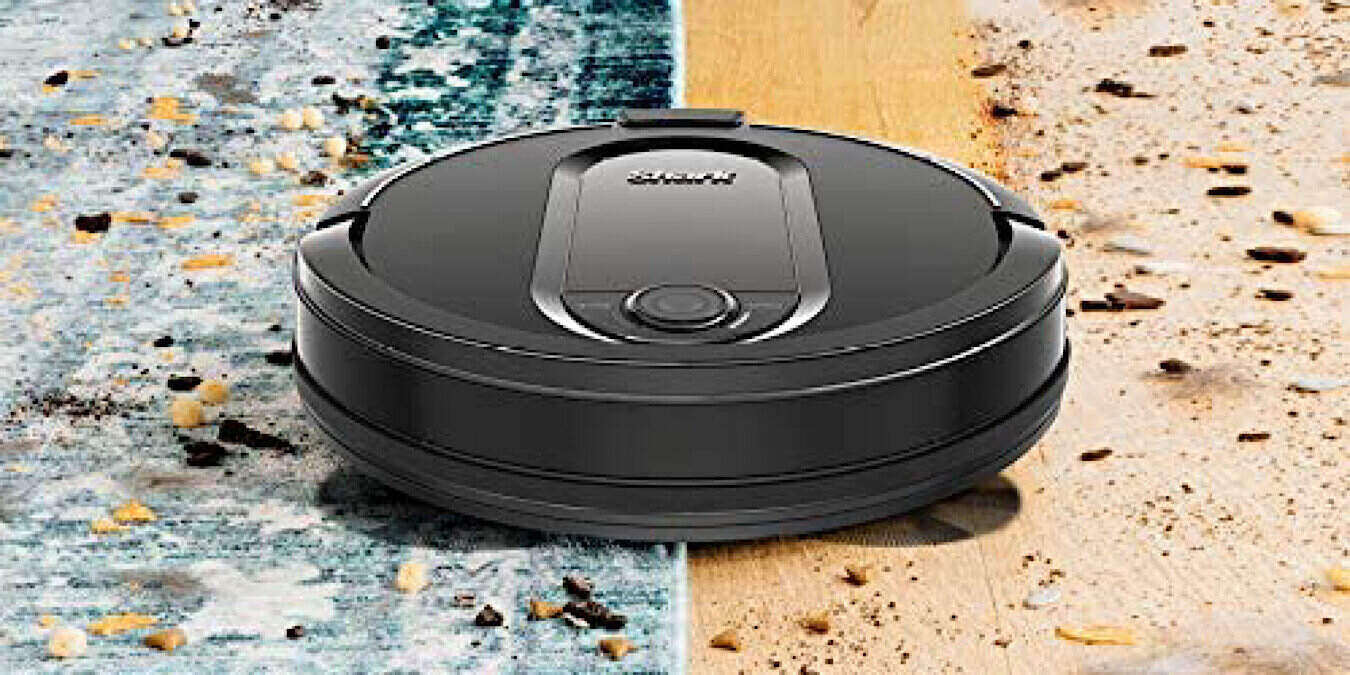
Save $150 on a Shark IQ Robot Vacuum with Self-Empty Base

We may earn a commission from links on this page.
Deal pricing and availability subject to change after time of publication.
Shark Iq Robot Vacuum Featured

If you’re looking for a new robot vacuum, you want to go with all the latest features, such as a self-emptying base and advanced navigation mapping. When you buy a Shark IQ Robot Vacuum, you get all that and more – at a $150 discount no less.

With this self-emptying base, you can forget about vacuuming for up to 45 days. Let the vacuum clean on a schedule, and it will empty dirt and debris into the bagless base, holding it there until you empty it on your own time. The advanced navigation mapping will map out your home, allowing you to tell it where to clean. Better yet, it maps faster than the previous model.
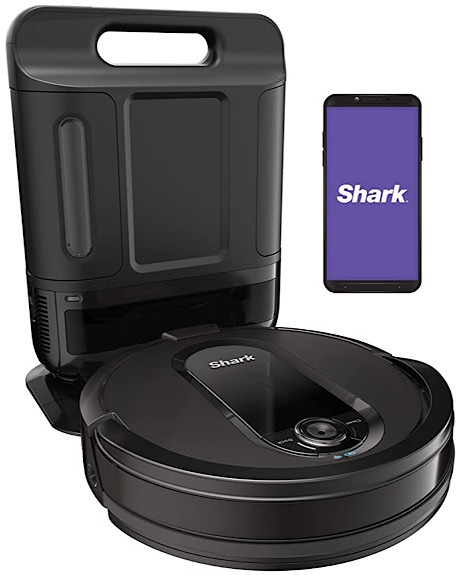
Shark Iq Robot Vacuum Self Emptying Base

The Shark IQ Robot Vacuum also has improved cleaning performance over the previous model. The multi-surface brushroll cleans all kinds of carpet and flooring, picking up all dirt, debris, and pet hair with deep-cleaning power, thanks to a powerful suction. It will clean methodically row by row as it follows its own mapping from room to room.

You can schedule the robot to clean your home or choose to clean only specific rooms with the SharkClean app. You can also use the Amazon Alexa or Google Assistant voice assistants to direct the vacuum when and where to clean.

Take $150 off the price of this 45-day capacity multi-surface brushroll vacuum and pay just $449.99. Alternatively, get it with a 30-day capacity and self-cleaning brushroll and without the home mapping.

Shark IQ Robot Vacuum

Make Tech Easier may earn commission on products purchased through our links, which supports the work we do for our readers.

Subscribe to our newsletter!

Our latest tutorials delivered straight to your inbox

Laura Tucker Avatar

Read next

If you double-check if the door is locked (even when you know it is), psychology says you likely have these 8 distinct traits
Psychology says people who push their chair back in when they leave a table usually display these 9 unique behaviors
Mycorrhizal fungi colonised plant roots roughly 450 million years ago and biologists now suspect plants could never have moved out of the oceans onto bare rock without them, meaning every forest on Earth — including the redwoods, the Amazon, and the boreal belt — is still running on a partnership older than trees themselves
Suzanne Simard sealed paper birch and Douglas fir seedlings inside plastic bags, fed them carbon-14 and carbon-13 dioxide, and nine days later found carbon had crossed between species through fungal threads in the British Columbia soil beneath her boots
A species of jellyfish called Turritopsis dohrnii can revert its adult cells back to a juvenile polyp stage when injured or starving, effectively restarting its life cycle, and biologists have so far failed to identify any natural limit to how many times it can do this.
French scientist Michel Siffre spent two months alone in a cave with no clock, no calendar, and no sunlight — and when his team finally told him the experiment was over, he thought he still had nearly a month left underground
When Cingular chief Stan Sigman backed the original iPhone before its 2007 unveiling, he accepted terms American carriers usually refused: no logo on the device, no control over its software, no preloaded apps, and a share of monthly subscriber revenue flowing back to Apple, after signing on without seeing a prototype
In 2016, archaeologists dated two rings of snapped stalagmites in France’s Bruniquel Cave to 176,500 years ago, evidence that Neanderthals had walked 336 metres into darkness with fire and built architecture deep underground long before modern humans reached Europe