
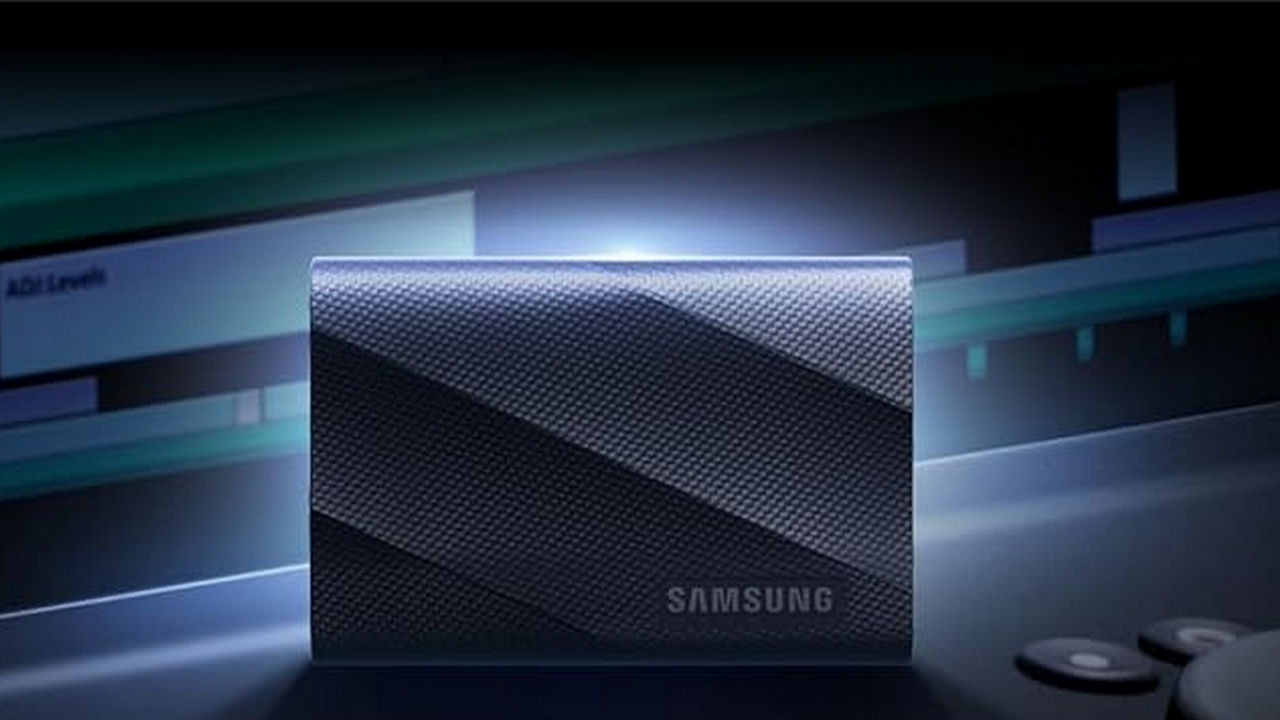
For Just $292.52, Expand Your Storage With a Samsung T9 SSD

We may earn a commission from links on this page.
Deal pricing and availability subject to change after time of publication.
Samsung T9 Ssd

Insufficient storage is a real challenge for many today, regardless of the profession. As we generate and store more data than ever, the built-in storage of our devices often fails to keep up, which can be both frustrating and limiting. The Samsung T9 Portable SSD solves this problem with its impressive 4 TB capacity, offering ample room to store all your critical files, without the hassle of constant data management.

This compact, lightweight SSD, apart from its spacious storage, boasts USB 3.2 Gen 2×2 connectivity that enables it to deliver outstanding transfer speeds of up to 2,000MB/s. You can quickly move large files with efficiency that internal drives often can’t match.
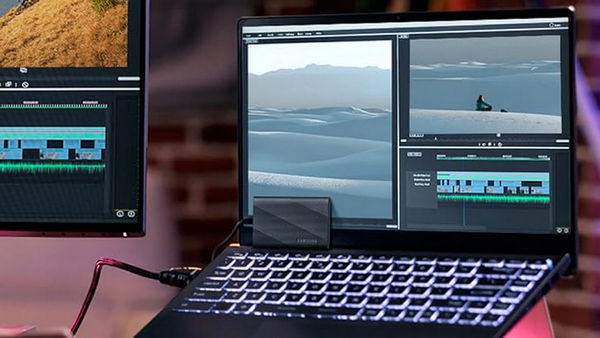
Samsung T9 Ssd On Laptop

Moreover, the Samsung T9 features advanced thermal management with its Dynamic Thermal Guard. This technology actively cools the drive during high-speed operations to make sure it doesn’t overheat, which helps maintain optimal performance and extends the lifespan of the device.

Compatibility won’t be a problem either. The T9 is designed to work smoothly with a wide array of devices, including PCs, Macs, gaming consoles, and the latest smartphones, like the iPhone 15 and 16. No matter what device you use, the T9 is ready to plug in and play. To top it all off, the SAMSUNG T9 comes with Magician Software, enhancing its functionality even further. This software provides firmware updates, drive health monitoring, and additional encryption to keep your data secure and ensure your SSD operates like new.

Samsung T9 Ssd Software

If you’re looking for a high-capacity, high-performance portable storage solution that can keep pace with the demands of your work, the SAMSUNG T9 Portable SSD is an outstanding choice.

Get this portable SSD for just $292.52 after a 47% discount.

SAMSUNG T9 Portable SSD

Make Tech Easier may earn commission on products purchased through our links, which supports the work we do for our readers.

Subscribe to our newsletter!

Our latest tutorials delivered straight to your inbox

Zainab Falak Avatar

Read next

A species of jellyfish called Turritopsis dohrnii can revert its adult cells back to a juvenile polyp stage when injured or starving, effectively restarting its life cycle, and biologists have so far failed to identify any natural limit to how many times it can do this.
French scientist Michel Siffre spent two months alone in a cave with no clock, no calendar, and no sunlight — and when his team finally told him the experiment was over, he thought he still had nearly a month left underground
When Cingular chief Stan Sigman backed the original iPhone before its 2007 unveiling, he accepted terms American carriers usually refused: no logo on the device, no control over its software, no preloaded apps, and a share of monthly subscriber revenue flowing back to Apple, after signing on without seeing a prototype
In 2016, archaeologists dated two rings of snapped stalagmites in France’s Bruniquel Cave to 176,500 years ago, evidence that Neanderthals had walked 336 metres into darkness with fire and built architecture deep underground long before modern humans reached Europe
Otto von Bismarck was 74 when Germany adopted the world’s first national old-age social insurance program in 1889, setting the pension age at 70 after years of fighting socialists with bans, laws, and a promise few workers would live long enough to use
When cosmonaut Valeri Polyakov stepped out of his Soyuz capsule in March 1995 after 437 consecutive days aboard Mir, doctors recorded him at several centimetres above his pre-flight height, and his spine had become so unaccustomed to gravity that the recovery team carried him to a chair rather than risk the compression of letting him walk.
When Harvard astronomer Cecilia Payne submitted her 1925 doctoral thesis arguing that the Sun was made almost entirely of hydrogen, the field’s senior figure Henry Norris Russell talked her into adding a line calling the result ‘almost certainly not real,’ and then published the same conclusion himself four years later to widespread acclaim.
When Edme Mariotte stared at marks on a wall in the 1660s, one mark vanished inside a six-degree hole where the optic nerve leaves the eye and the brain has been filling in wallpaper, sky, and faces ever since