
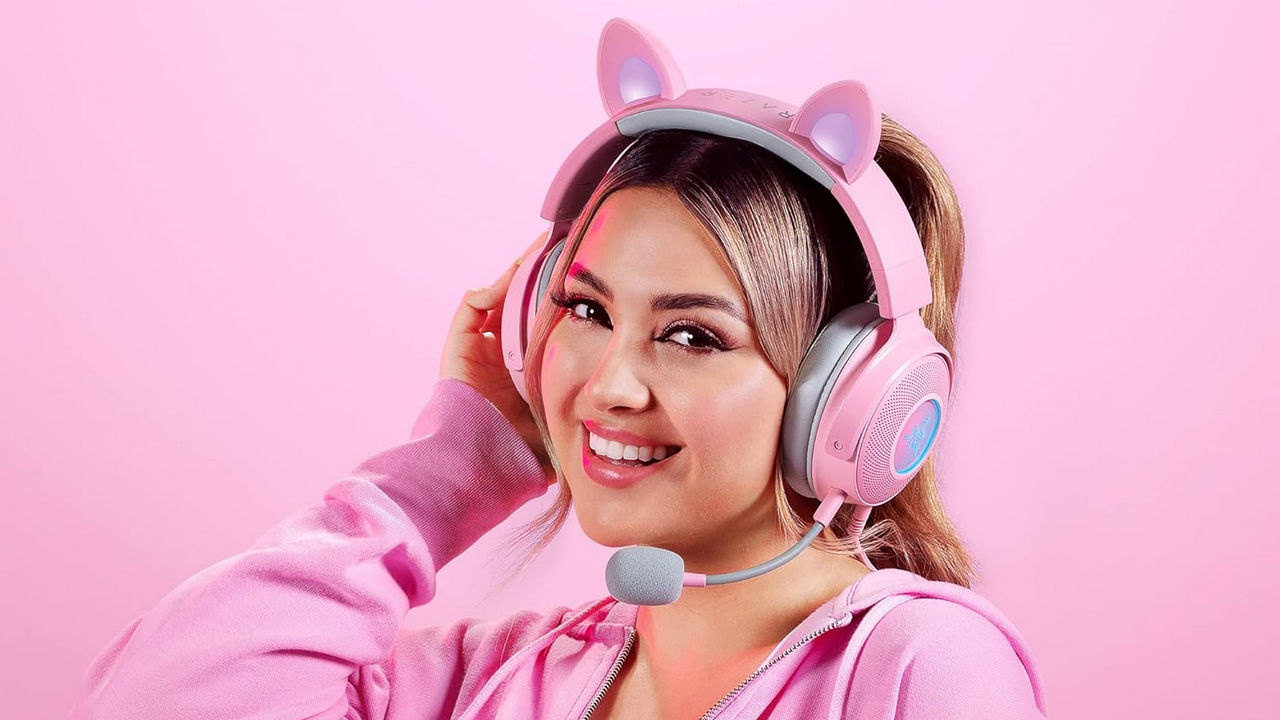
Surprise Your Children With the Razer Kraken Kitty V2 Pro Headset

We may earn a commission from links on this page.
Deal pricing and availability subject to change after time of publication.
Razor Kraken Kitty V2 Pro

Finding the right gift for kids during the holiday season can be complicated. You want something that sparks joy, won’t be forgotten in the back of a closet, and maybe even has a bit of practical use. One gift that is sure to stand out and be cherished long after the holiday decorations are packed away is the Razer Kraken Kitty V2 Pro Headset.

This headset comes with a creative touch: interchangeable ears that allow users to switch between Kitty, Bear, and Bunny designs. It won’t be just another piece of tech, but a reflection of your child’s personality. They can customize their look and express themselves in a fun, playful way.
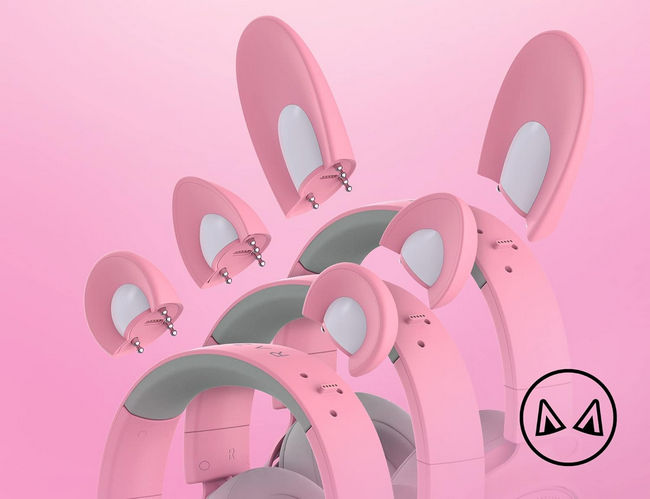
Interchangable Headphone Ears

Apart from visual appeal, the Razer Kraken Kitty V2 Headset also brings an interactive lighting system to the table. Stream Reactive Lighting makes the ear and earcup lighting respond to different aspects of use. They will change colors and patterns with the action on the screen or in response to sound cues. This RGB lighting can be customized with over 16.8 million colors and various effects.

On the technical side, the headset features TriForce Titanium 50mm drivers. These drivers separate the bass, mid, and treble frequencies for clearer sounds and a richer audio experience. Plus, with its 7.1 Surround Sound feature (only available on Windows 10 64-bit), it offers a more immersive auditory experience. This will enhance spatial awareness in gaming and provide an even better movie-watching or music-listening session.
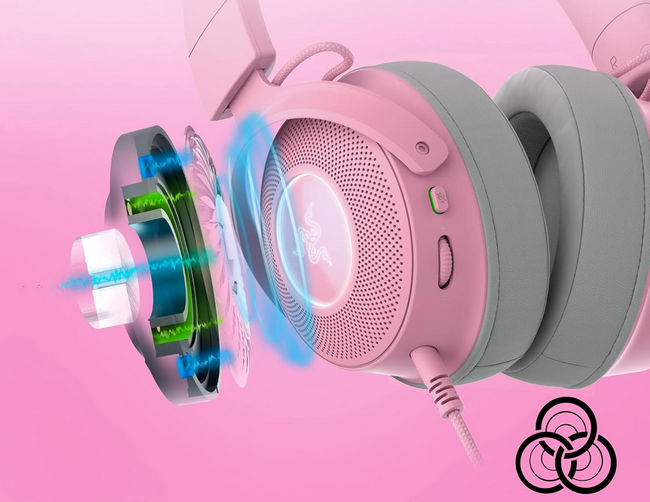
Razor Kraken Kitty V2 Pro Drivers

The Razer Kraken Kitty V2 Pro Headset is designed for comfort. The hybrid fabric and foam cushions offer both snugness and noise isolation, making the headset suitable for extended use.

Grab this headset in Classic Black or Quartz Pink for $149 after a 25% discount.

Razer Kraken Kitty V2 Pro Headset

Make Tech Easier may earn commission on products purchased through our links, which supports the work we do for our readers.

Subscribe to our newsletter!

Our latest tutorials delivered straight to your inbox

Zainab Falak Avatar

Read next

Psychology suggests people who browse social media but never post or comment aren’t passive — they’ve simply opted out of the performance while retaining access to the information, which is a sign of quiet self-awareness
Toy Story 2 was nearly erased from existence when someone at Pixar accidentally ran a delete command on the film’s master files, wiping out roughly 90 percent of the project — and the only reason the production survived was that Galyn Susman, a technical director on maternity leave, had a working copy on a computer at her house.
A Japanese man named Jiroemon Kimura, who lived to 116, was born in 1897 when Queen Victoria still ruled and died in 2013, meaning a single human life personally overlapped with the invention of the airplane, the atomic bomb, the internet, and Instagram
The Hollywood sign originally read HOLLYWOODLAND when it was built in 1923 as a real estate advertisement for a housing development, and it was only meant to stand for 18 months, but nobody ever got around to taking it down and the city eventually adopted it as a landmark
In 1859 a storm on the Sun struck the Earth so hard that telegraph wires threw sparks and operators were shocked at their desks, and scientists warn the same event today would knock out power grids across entire continents.
Almost all of the world’s internet traffic does not travel by satellite but through fibre-optic cables lying on the ocean floor, a hidden web of wires crossing the deepest parts of the sea to connect the continents.
A four-month-old Chinese startup just launched a $118 AI collar that claims to translate dog and cat vocalizations into human sentences with 95% accuracy — an extraordinary consumer device that has secured $1 million in funding despite zero independent scientific proof that it actually works
NASA still maintains some of the Voyager spacecraft code in a 1970s-era programming language that almost nobody on Earth fully understands anymore, and the handful of engineers who do are now in their 80s.