
Save $90 on an OFIYAA P2 Triple Portable Monitor

We may earn a commission from links on this page.
Deal pricing and availability subject to change after time of publication.
Ofiyaa Triple Monitor Featured

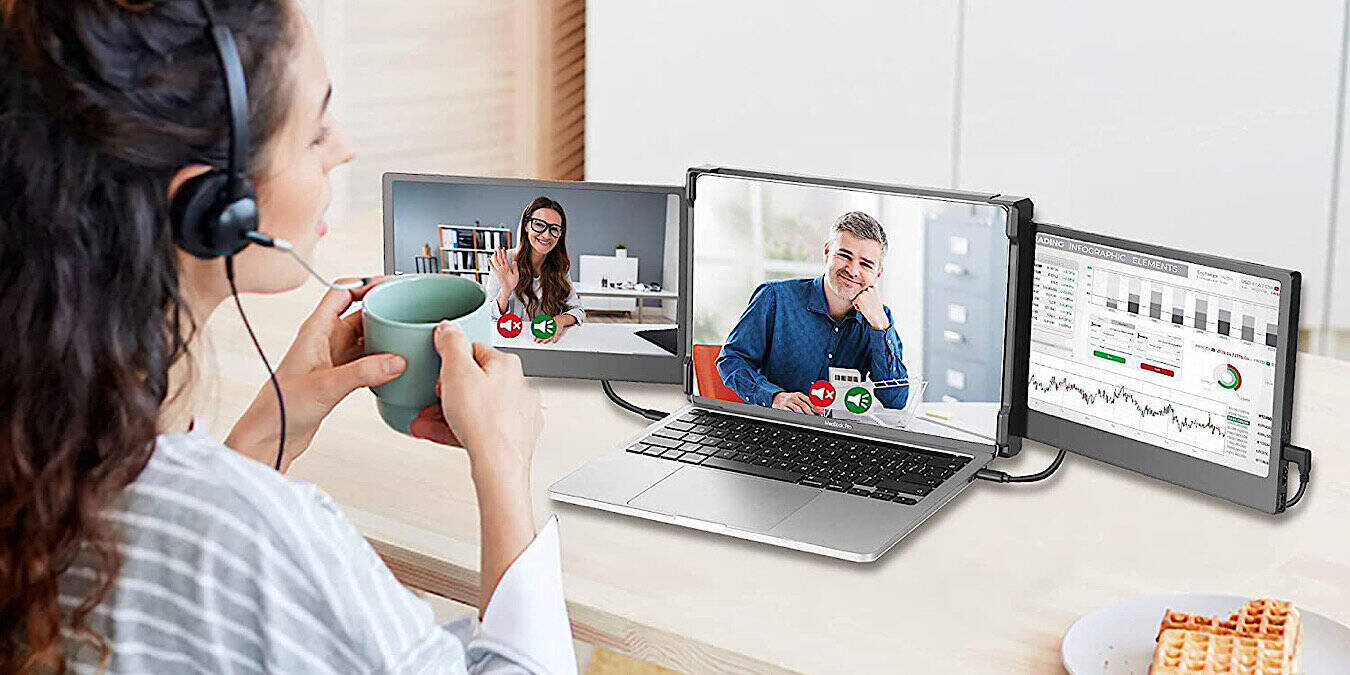
While having a double monitor on your computer used to seem like a luxury, more recently, it seems having a triple monitor has become more of the norm. If you’d like to leap into that fad but work on a laptop, worry not, as you can achieve the same effect with the OFIYAA P2 Triple Portable Monitor. It provides dual 11.6″ 1080P screens to add to the screen on your 13″ to 16″ laptop.

With no need for a driver, this monitor add-on is plug-and-play and portable, turning your single laptop screen into a triple display. It builds your laptop into a mobile studio for work and can improve your efficiency by up to 200 percent. Adjust the brightness, sound, contrast, and more on each screen.
Ofiyaa Triple Monitor Display

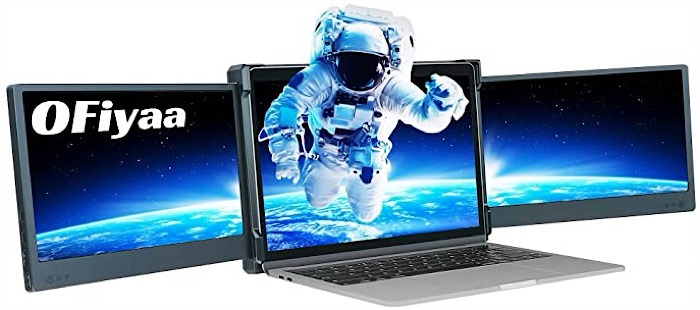
The OFIYAA P2 Triple Portable Monitor gives you four modes of use, with full 202º rotation and 180º display. It can slide to any side of your laptop and provide a 45º three-screen display, allowing you to find the best option for you. While it easily clamps onto the frame of a 13″ to 16″ laptop, it’s also suitable for desktops, set-top boxes, and gaming consoles.

Transfer video and data without the need for a docking station with the USB-A, HDMI, and USB-C ports. These displays are compatible with Mac, PC, Chrome, Windows, Linux, Android, PS4, Xbox, and Switch, and are also suitable for mobile phones with USB-C.

Take $89.95 off the price of this monitor add-on and pay just $339.15. Alternatively, add on just one screen and pay just $229.99.

OFIYAA P2 Triple Portable Monitor

Make Tech Easier may earn commission on products purchased through our links, which supports the work we do for our readers.

Subscribe to our newsletter!

Our latest tutorials delivered straight to your inbox

Laura Tucker Avatar

Read next

Content and cloud networks now account for three-quarters of used international bandwidth, while Google, Meta, Microsoft and Amazon own, co-own or buy capacity on a growing share of the 600-plus submarine cable systems carrying over 99 per cent of data between countries, a private map hidden below the wireless internet
The peak of Chimborazo in Ecuador sits about 2,072 metres closer to space than Everest’s summit — because Earth bulges at the equator, and Chimborazo stands almost directly on the bulge
Wi-Fi doesn’t actually slow down when a café gets crowded — the signal is fine, but every device has to wait its turn to speak on the same frequency, and the polite queuing is what you feel as lag
People who are truly pleasant and kind but have no close friends often spent decades being the one everyone called during a crisis — and somewhere along the way noticed almost none of those calls had reversed direction
Research suggests the feeling that time speeds up with age can be shaped by fewer temporal landmarks — the small disruptions to routine that give the brain something worth remembering
Ray-finned fishes evolved bioluminescence at least 27 chemistry and others by housing luminous bacteria, a repeated evolutionary experiment spread across deep-sea, inshore and reef lineages using different molecular machinery to make visible light
The Sun is actually white — the yellow we see is Earth’s atmosphere scattering the shorter blue wavelengths away before the light reaches our eyes, which is also why sunsets turn red
In 1988, a 23-year-old Cornell graduate student named Robert Morris released a self-replicating program to measure the size of the internet — within hours it had crashed roughly 6,000 of the 60,000 machines then online, and computer security became a field