
Get a KOKONI-EC1 App Control 3D Printer for Half Off

We may earn a commission from links on this page.
Deal pricing and availability subject to change after time of publication.
Kokoni 3d Printer Featured

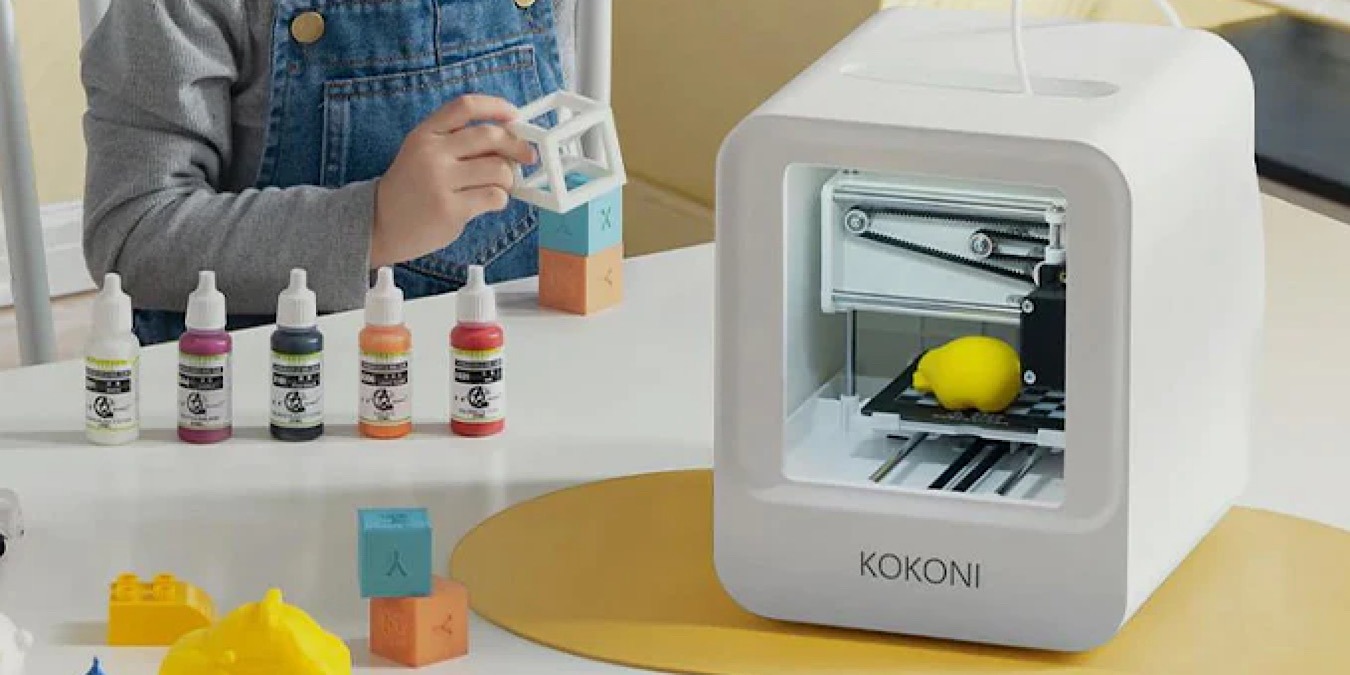
If you’ve been thinking about getting a 3D printer but were afraid to bite the bullet and buy one, this is a great time to do it. You can get the KOKONI-EC1 App Control 3D Printer for just $129. Get this easy-to-use, quiet, speedy 3D printer for half off.

It’s straightforward to set up the 3D printer, along with its hassle-free app. You don’t need to be an expert, as it’s great for beginners as well as pros. It has a space-efficient design, with quiet operation, while also being stylish.

Kokoni 3d Printer Sale

KOKONI developed an exclusive PLA filament that makes that process smoother and more precise, as well as non-toxic and safe, leaving no clogging in the printer. But you’re not confined to this PLA material, as the KOKONI-EC1 App Control 3D Printer works with other PLA materials as well, though the company does recommend their own for a better printout and to protect the printer.

You can print your projects in no time with a maximum printing speed of 80mm/s from a self-developed 0.4mm nozzle. Complete a small to medium project in just one hour. Connect the printer to Wi-Fi through a mobile app or your computer. When looking for designs to print, it supports STL and OBJ files.

Take $130 off the price of the printer and pay just $129 plus shipping.

KOKONI-EC1 App Control 3D Printer

Make Tech Easier may earn commission on products purchased through our links, which supports the work we do for our readers.

Subscribe to our newsletter!

Our latest tutorials delivered straight to your inbox

Laura Tucker Avatar

Read next

In 2016, archaeologists dated two rings of snapped stalagmites in France’s Bruniquel Cave to 176,500 years ago, evidence that Neanderthals had walked 336 metres into darkness with fire and built architecture deep underground long before modern humans reached Europe
Otto von Bismarck was 74 when Germany adopted the world’s first national old-age social insurance program in 1889, setting the pension age at 70 after years of fighting socialists with bans, laws, and a promise few workers would live long enough to use
When cosmonaut Valeri Polyakov stepped out of his Soyuz capsule in March 1995 after 437 consecutive days aboard Mir, doctors recorded him at several centimetres above his pre-flight height, and his spine had become so unaccustomed to gravity that the recovery team carried him to a chair rather than risk the compression of letting him walk.
When Harvard astronomer Cecilia Payne submitted her 1925 doctoral thesis arguing that the Sun was made almost entirely of hydrogen, the field’s senior figure Henry Norris Russell talked her into adding a line calling the result ‘almost certainly not real,’ and then published the same conclusion himself four years later to widespread acclaim.
When Edme Mariotte stared at marks on a wall in the 1660s, one mark vanished inside a six-degree hole where the optic nerve leaves the eye and the brain has been filling in wallpaper, sky, and faces ever since
When seismic waves from the Chicxulub impact reached what is now North Dakota roughly ten minutes after the asteroid struck, they appear to have triggered a ten-metre standing wave in an inland river that flung fish onto the bank and buried them under glass beads still falling from the sky.
When survivors near Lake Nyos woke on the morning of 22 August 1986, the cattle were dead in the fields, the birds had fallen out of the trees, and 1,746 of their neighbours were lying where they had stood the night before, with no fire, no flood, and no wound to explain it.
In 1959, a Soviet research team in Novosibirsk began breeding silver foxes for nothing but tameness, and within forty generations the animals had floppy ears, curled tails, piebald coats, and a bark, traits no one had selected for but which appeared on their own once fear was removed.