

Save $16 on FIIL T1X Earbuds with Smart Touch

We may earn a commission from links on this page.
Deal pricing and availability subject to change after time of publication.
Deal Fiil T1x Earbuds Featured

It may seem like earbuds could never fulfill the demands of great audio, but some of them may surprise you. With noise-reduction technology and 15 types of EQ sounds modes, the FIIL T1X Earbuds with Smart Touch have what it takes to deliver great sound. They have plenty of other great features, too.

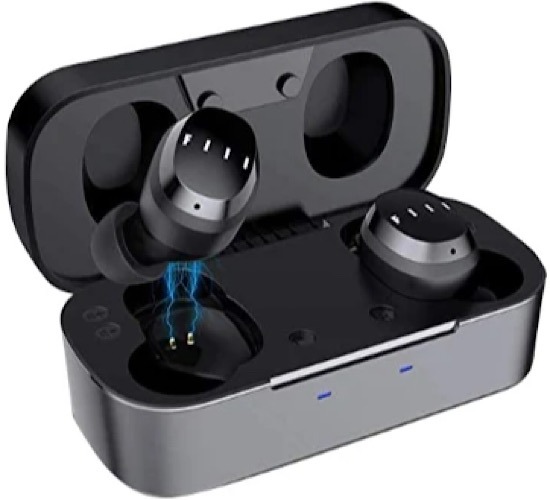
The earbuds provide an incredible HiFi sound with DSP voice noise-reduction technology, a 1/4-inch dynamic driver, and a built-in microphone. The FIIL+ app will provide you with 15 types of EQ sound modes.

The app also allows you to check the battery level, reset the sync, and do other basic operations. The FIIL T1X Earbuds with Smart Touch pair in one second with Bluetooth 5.0, LDS tech, and a stable connection. You simply need to open the case with your device near you.
Deal Fiil T1x Earbuds Case

They are sweatproof as well to allow you to wear them during your workout. There are also multiple sizes of ear tips and ear wings provided to ensure the earbuds stay put in your ears. Easily play and pause music and answer or hang up calls with the touch control. Additionally, they support Siri and Google Assistant.

The ultra-high-capacity charging case will give you two hours of playing time with just 10 minutes of charging. Altogether, the charging case and earbuds will give you up to 24 hours of play time. The case and earbuds can be fully charged in 40 minutes via USB-C.

These earbuds have already been dropped in price. An additional discount with the code WGFM7ZZD6T2D will give you $16 off altogether, to leave you paying just $35.99.

FIIL T1X Earbuds with Smart Touch

Make Tech Easier may earn commission on products purchased through our links, which supports the work we do for our readers.

Subscribe to our newsletter!

Our latest tutorials delivered straight to your inbox

Laura Tucker Avatar

Read next

Suzanne Simard sealed paper birch and Douglas fir seedlings inside plastic bags, fed them carbon-14 and carbon-13 dioxide, and nine days later found carbon had crossed between species through fungal threads in the British Columbia soil beneath her boots
A species of jellyfish called Turritopsis dohrnii can revert its adult cells back to a juvenile polyp stage when injured or starving, effectively restarting its life cycle, and biologists have so far failed to identify any natural limit to how many times it can do this.
French scientist Michel Siffre spent two months alone in a cave with no clock, no calendar, and no sunlight — and when his team finally told him the experiment was over, he thought he still had nearly a month left underground
When Cingular chief Stan Sigman backed the original iPhone before its 2007 unveiling, he accepted terms American carriers usually refused: no logo on the device, no control over its software, no preloaded apps, and a share of monthly subscriber revenue flowing back to Apple, after signing on without seeing a prototype
In 2016, archaeologists dated two rings of snapped stalagmites in France’s Bruniquel Cave to 176,500 years ago, evidence that Neanderthals had walked 336 metres into darkness with fire and built architecture deep underground long before modern humans reached Europe
Otto von Bismarck was 74 when Germany adopted the world’s first national old-age social insurance program in 1889, setting the pension age at 70 after years of fighting socialists with bans, laws, and a promise few workers would live long enough to use
When cosmonaut Valeri Polyakov stepped out of his Soyuz capsule in March 1995 after 437 consecutive days aboard Mir, doctors recorded him at several centimetres above his pre-flight height, and his spine had become so unaccustomed to gravity that the recovery team carried him to a chair rather than risk the compression of letting him walk.
When Harvard astronomer Cecilia Payne submitted her 1925 doctoral thesis arguing that the Sun was made almost entirely of hydrogen, the field’s senior figure Henry Norris Russell talked her into adding a line calling the result ‘almost certainly not real,’ and then published the same conclusion himself four years later to widespread acclaim.