
Keep Kids Busy This Summer with an Amazon Fire 8 Kids Tablet for $95

We may earn a commission from links on this page.
Deal pricing and availability subject to change after time of publication.
Amazon Fire 8 Kids Tablet Featured

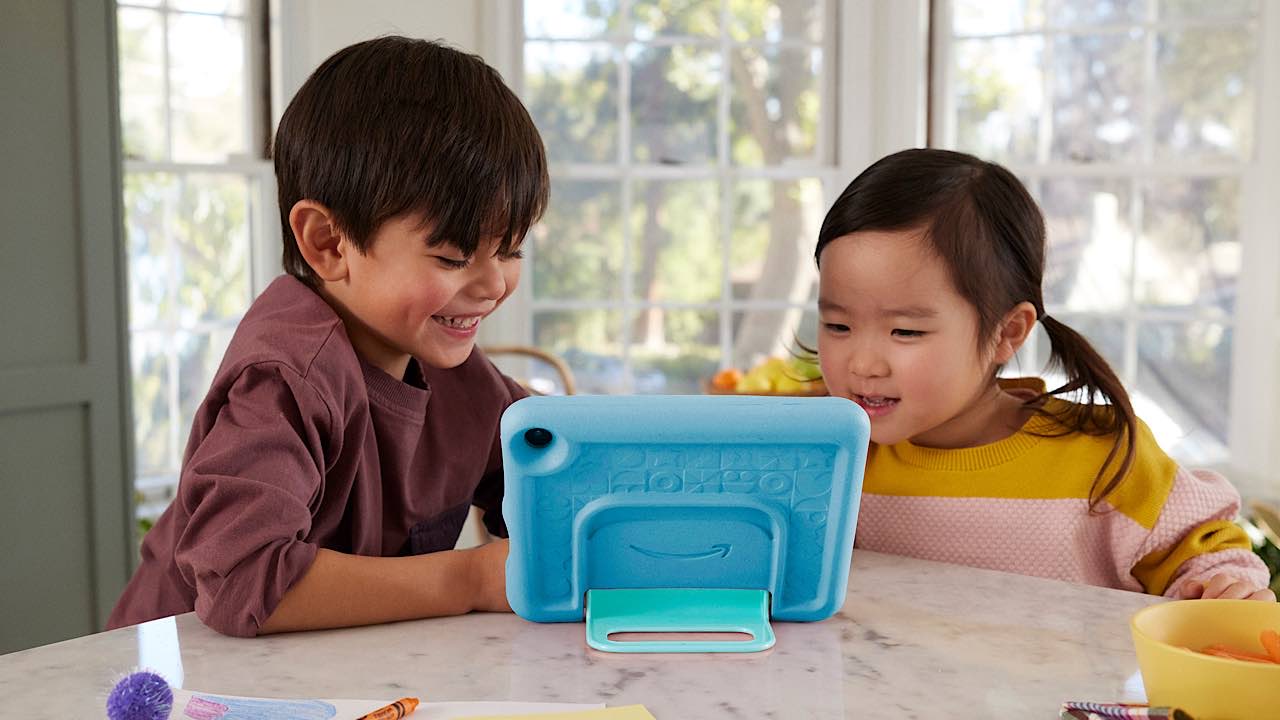
It’s great that kids can play outside during the summer in the fresh air. But sometimes you need to keep them busy inside as well. Get an Amazon Fire 8 Kids Tablet to help them get through those quiet days spent inside and save 37%.

Yes, that’s under $100 for a full-featured tablet – it’s not a toy. Meant for kids 3 to 7 years old, included in the price is a one-year subscription to Amazon Kids+ – content meant for that age range. The digital subscription includes access to age-appropriate content that’s ad-free, including STEM material. The subscription will automatically renew when the year is up for $5.99/month plus tax. Worry not, as you can cancel anytime you want.
Amazon Fire 8 Kids Tablet Breaks Replace It

You can review your child’s activity on the Amazing Fire 8 Kids Tablet remotely. Oversee it by setting time limits and prioritizing certain books and learning apps. The Amazon Family Trust is partnered with leaders in the area of child safety, privacy, and development.

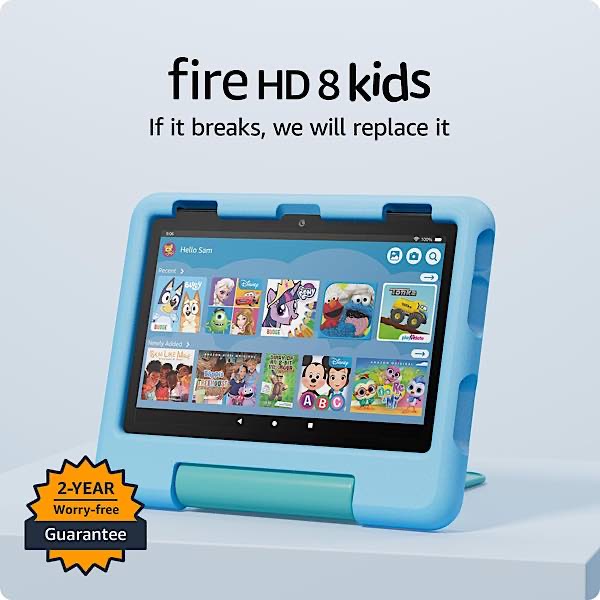
Also included is a childproof case with a built-in stand. It comes in your choice of design, including two color options and two patterns. Despite the childproof case. a two-year worry-free guarantee is included. You can return a broken tablet and get it replaced – for free, which is always a plus when kids are the users.
Amazon Fire 8 Kids Tablet Playing Games

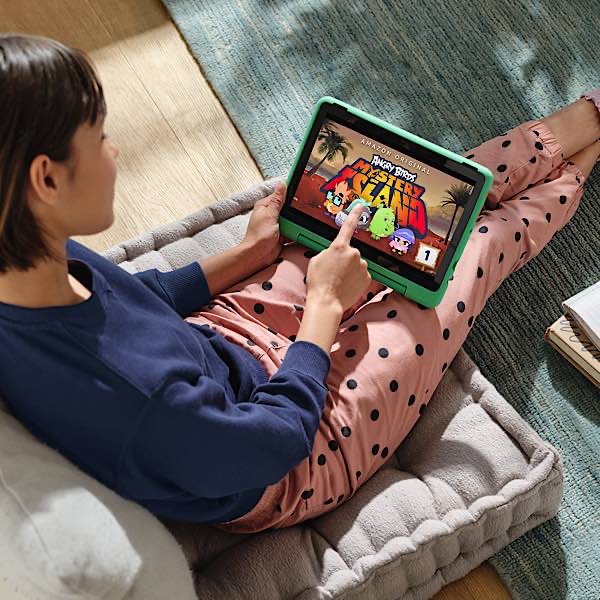
The tablet has a strengthened aluminosilicate screen, 3 GB RAM, which is 50% more than the previous release, 32 GB, and up to 1 TB of expandable storage. 13 hours of battery life should last your child the whole day.

Save $55 on this 32 GB tablet with a one-year subscription and pay just $94.99. Pay just 64 GB for 65 GB. A half-year subscription is offered as well. All options include a choice of case as well.

Amazon Fire 8 Kids Tablet

Make Tech Easier may earn commission on products purchased through our links, which supports the work we do for our readers.

Subscribe to our newsletter!

Our latest tutorials delivered straight to your inbox

Laura Tucker Avatar

Read next

Psychology suggests people who browse social media but never post or comment aren’t passive — they’ve simply opted out of the performance while retaining access to the information, which is a sign of quiet self-awareness
Toy Story 2 was nearly erased from existence when someone at Pixar accidentally ran a delete command on the film’s master files, wiping out roughly 90 percent of the project — and the only reason the production survived was that Galyn Susman, a technical director on maternity leave, had a working copy on a computer at her house.
A Japanese man named Jiroemon Kimura, who lived to 116, was born in 1897 when Queen Victoria still ruled and died in 2013, meaning a single human life personally overlapped with the invention of the airplane, the atomic bomb, the internet, and Instagram
The Hollywood sign originally read HOLLYWOODLAND when it was built in 1923 as a real estate advertisement for a housing development, and it was only meant to stand for 18 months, but nobody ever got around to taking it down and the city eventually adopted it as a landmark
In 1859 a storm on the Sun struck the Earth so hard that telegraph wires threw sparks and operators were shocked at their desks, and scientists warn the same event today would knock out power grids across entire continents.
Almost all of the world’s internet traffic does not travel by satellite but through fibre-optic cables lying on the ocean floor, a hidden web of wires crossing the deepest parts of the sea to connect the continents.
A four-month-old Chinese startup just launched a $118 AI collar that claims to translate dog and cat vocalizations into human sentences with 95% accuracy — an extraordinary consumer device that has secured $1 million in funding despite zero independent scientific proof that it actually works
NASA still maintains some of the Voyager spacecraft code in a 1970s-era programming language that almost nobody on Earth fully understands anymore, and the handful of engineers who do are now in their 80s.