
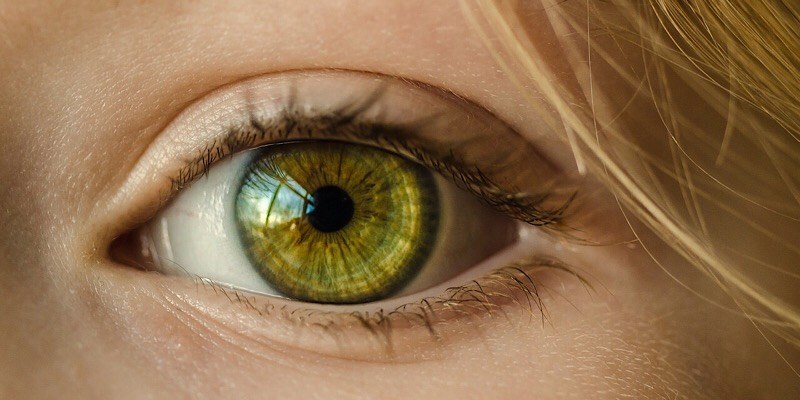

We know that a person’s eyes can be expressive, but they’re not only showing how we’re feeling, but our overall personality as well according to machine learning research. It was discovered that this new technology can detect four of the “Big Five” basic personality traits when looking into someone’s eyes.
The Research
Artificial intelligence was used to track and analyze the eye movements of 42 students. It was able to detect the personality traits of agreeableness, conscientiousness, extroversion, and neuroticism. What it can’t pick up is openness.
It’s believed that this could improve how people and machines interact. If the machines can learn about our personality traits, it may be able to learn how we would react to something and then do what we need it to do based on that.
“People are always looking for improved, personalized services,” said Tobias Loetscher, University of South Australia senior lecturer. He was the lead researcher for the global team that included his university, the University of Stuttgart, Flinders University, an the Max Planck Institute for Informatics in Germany.

“However, today’s robots and computers are not socially aware, so they cannot adapt to non-verbal cues. The research provides opportunities to develop robots and computers so that they can become more natural and better at interpreting human social signals.”
On the downside, this also implies that this technology could be implemented when people are unaware, causing privacy concerns.
Look what’s happening right now with facial recognition and how it’s now being used by the police to track us down. Imagine what could be done if they started tracking our eyes to learn how we were going to react.
What Your Eyes Say About You
The personality traits have been connected to the following movements:
- Look around more – curious
- Stare at abstract images for longer periods of time – open-minded
- Blink faster – neurotic
- Moving eyes from side to side more – open to new experiences
- Greater pupil size changes – more conscientious
- Spending less time looking at things that are negatively emotional – optimism

These, of course, aren’t hard and fast rules. If you are noticing yourself blinking quickly right now, don’t get worried thinking it must mean you’re neurotic. These are just tendencies they have found.
Being Cautious
As mentioned above, there is a downside. As great as all this technology is when it comes to helping us personally, there is always a chance for it to be used against us.
It doesn’t have to be for nefarious reasons. It might be very well-intentioned, but not everyone wants the intrusion as we have found here.
Again, it’s really interesting that they can determine such things, but do we really want them using artificial intelligence on us to determine our personality and how we’re going to react to a given situation?
Let us know what you think about this research in a comment below. I’ve seen you staring at the screenshots here. You must be open-minded; just don’t start blinking too quickly.