
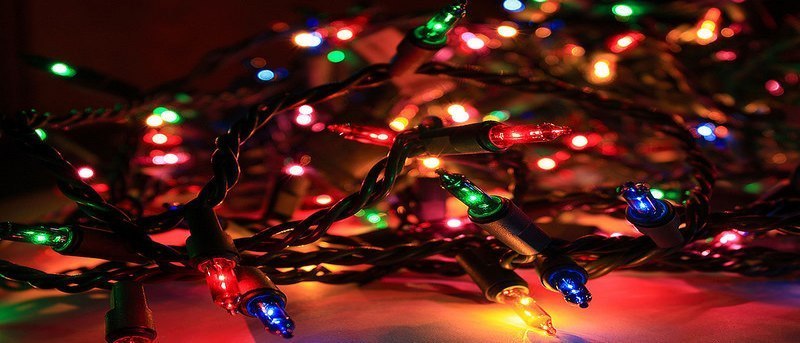

Every single year we hear the experts warn everyone how careful they should be with their Christmas lights since they could cause a short circuit. But you don’t hear them remind everyone how their Christmas lights kill their WiFi signal.
That’s right, those beautiful twinkling lights keep a dark secret that affects your Internet connection. The secret is that they give out their own waves that don’t let your Wi-Fi connection work to the fullest. You probably already have enough issues with your Internet provider during the rest of the year, and the last thing you need is for your Christmas lights to also hurt your connection.
How to Get a Better Singal
To get the most out of your WiFi signal, you may want to keep your router away from your Christmas lights, electronic devices and maybe even use the Ethernet cable. Put your router in an isolated area away from your everyday devices, so the baby monitor’s waves don’t prevent you from streaming the latest Big Bang Theory episode.
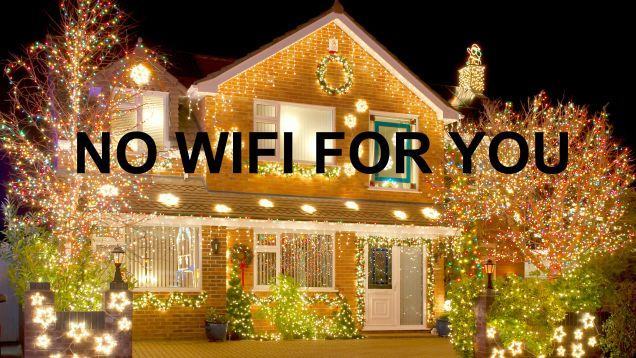
Your WiFi signal may also be affected by devices such as the microwave and any other devices that are being used at the moment. If you do need to go online, it would be best to do it when other members of your family are not using too many of these devices.
If you want to test this out yourself, you can place your router right next to the lights and measure your Wi-Fi using an app such as WiFi Analyzer (for Android). After that repeat what you did but with your router far away from your light or any electronic device that is being used. You might not notice an abysmal difference, but there will be some difference.
What You Don’t Want to Do
If you decorate your tree with a decent amount of lights, your WiFi signal might not be affected too much, but the more lights you add the bigger the interference is going to be. So making your tree the new sun wouldn’t be such a great idea, at least for your Internet connection. Christmas lights are usually unshielded, and that is why the lights can affect your signal.
You may also want to avoid having too many devices on (besides your lights) because your WiFi signal can completely disappear if too many signals are getting in the way. Since your Wifi and devices such as your smartphone work within a certain range on the electromagnetic spectrum, it is easy for their signals to get mixed up. The Christmas lights don’t directly harm your WiFi, but they do damage the Radio Frequency signals that are made by the flow of electricity.
You should also keep in mind that how thick the walls of your home are also impacts your WiFi’s signal if you have the router in another room. Also, if there is another WiFi signal that is too close to yours, that can also affect your signal. If you add this to your Christmas lights, you may wonder how you are still able to check your Instagram profile.
Blinking Christmas lights are also responsible since they disturb the electrical juice that is given to your router. The interference you may experience may not prevent you from web browsing, but there is a good chance that the voice communication software you are using will experience problems.
Conclusion
I don’t mean to ruin your holiday fun with this information, but at least you know that if you were to experience a dip in your WiFi signal, you know who might be responsible. If you liked the information, don’t forget to give it a share and let me know how many lights you are planning to put up this year in the comments.