
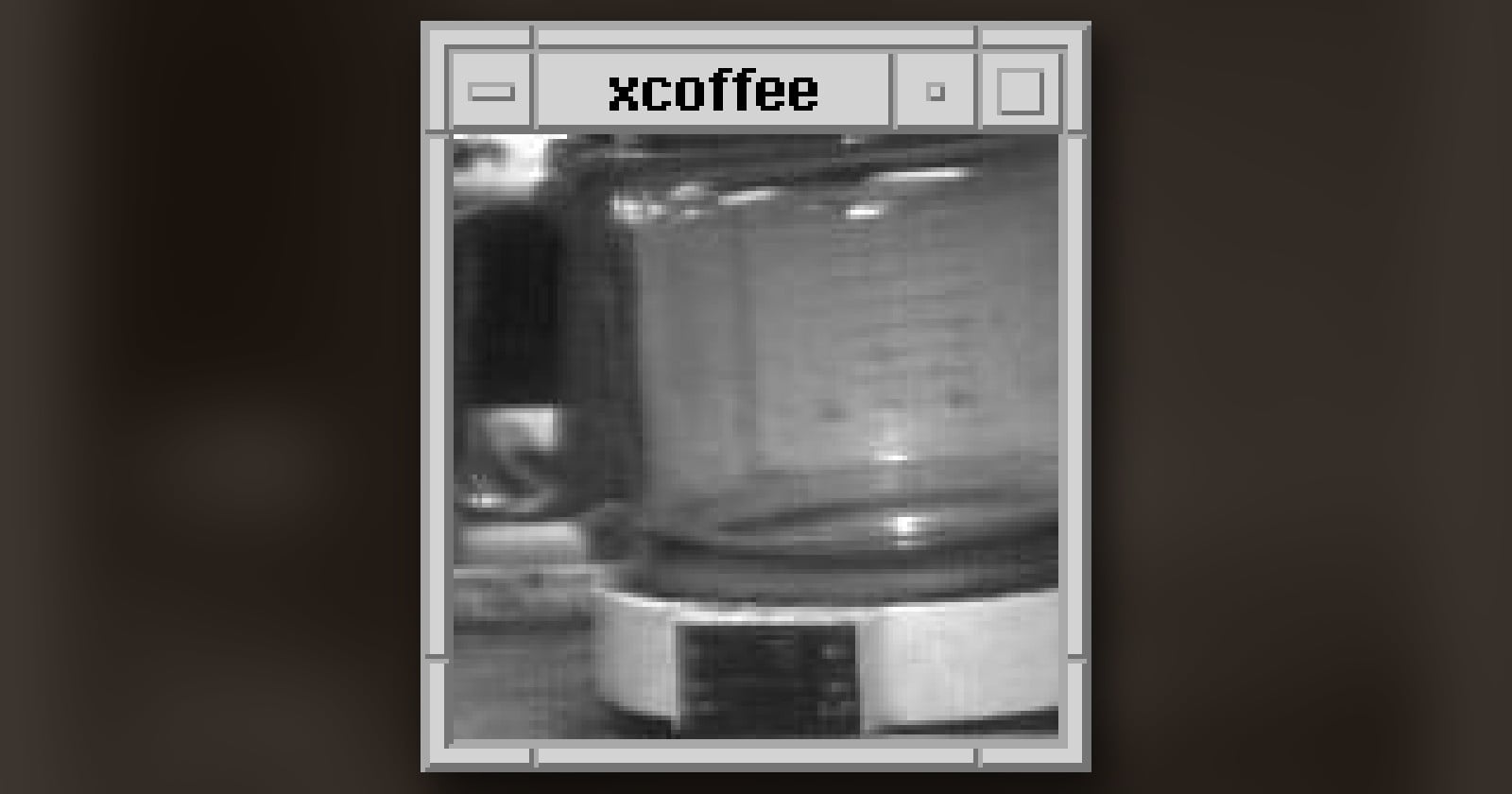


In the early 1990s, about fifteen researchers at the University of Cambridge Computer Laboratory shared a single filter coffee machine. It sat in a corridor outside the Trojan Room, and one pot only filled a few mugs. Some of the people who relied on it worked two or three flights of stairs away.
That created an unfair geography. People sitting near the machine could grab the fresh coffee as soon as it was brewed. Everyone else had to climb the stairs and hope, and the trip was often wasted. Co-creator Quentin Stafford-Fraser later noted that the all-night hackers in the Trojan Room tended to get there first.
The researchers didn’t need to watch the coffee machine. They needed to answer one question before leaving their desks: is there coffee in the pot right now? The fix they came up with is now remembered as the world’s first webcam.
What they built in about a day
In late 1991, Stafford-Fraser and his colleague Paul Jardetzky put the system together from parts the lab already had. According to Stafford-Fraser’s own account, the setup went like this:
- A camera was clamped in a laboratory retort stand and pointed at the coffee pot.
- Cables ran under the floor to an otherwise idle rack computer in the Trojan Room.
- That computer had a frame grabber, a piece of hardware that turns a video signal into a still digital image a computer can store and send.
- Jardetzky wrote a server program that captured images from the camera every few seconds at several resolutions.
- Stafford-Fraser wrote the client, called XCoffee, which showed an icon-sized picture of the pot in a corner of each colleague’s screen.
Both programs used the lab’s experimental networking hardware and software, which the researchers already worked with. Stafford-Fraser has written that a few friends “threw together a few odd bits of hardware and software for a joke,” and that it took a day or so to assemble.
Why three frames a minute was enough
The detail that looks most primitive today is the refresh rate. The image on people’s screens was grayscale and updated only about three times a minute. Stafford-Fraser’s explanation was simple: that was fine, because the pot filled rather slowly.
That was the refresh rate of the original desktop display. Cambridge’s later web setup captured a frame every second and supplied images in response to browser requests. Capturing a fresh frame each second did not mean every browser automatically displayed a new picture each second; capture and delivery were separate steps.
The researchers needed a recent view of the pot, and a small still image could provide that. It couldn’t guarantee there would still be coffee when they arrived, but it could save an obviously wasted trip.
1993: the coffee pot reaches the web
The XCoffee system worked well, but it had a limitation. To see the pot, you needed the special client program and access to the lab’s network. It was an internal tool for a small group.
That changed thanks to two other members of the lab, Daniel Gordon and Martyn Johnson. The original frame grabber eventually failed, and the project might have faded away had they not revived it with new hardware.
In 1993, browsers such as Mosaic were making images part of the web. In November that year, Gordon and Johnson adapted the coffee-pot system so that a browser could request its latest image.
As Stafford-Fraser put it, when your browser requests an image, “the server doesn’t have to return the same image every time.” Gordon modified the server to answer those requests. Each request could return an updated view of the pot instead of a fixed illustration.
That one change removed the need for any special software. Anyone with an image-capable browser and an internet connection could now check the coffee in Cambridge, whether they were two floors away or on another continent.
Easier access changed who used it
The difference in reach was enormous. XCoffee served a handful of researchers. The web version, whose images were captured by an Acorn Archimedes computer, passed one million image hits around 1996 and two million by 1998. These were requests for the image, rather than a count of individual viewers. The important change was access: people could view the pot through a web browser without installing XCoffee and the lab’s networking software.
Switching it off
In 2001, the Computer Laboratory prepared to move to a new building, and the camera’s days were numbered. The news drew wide coverage. That August, the lab’s longest-serving coffee machine was auctioned on eBay and sold to Spiegel Online for £3,350.
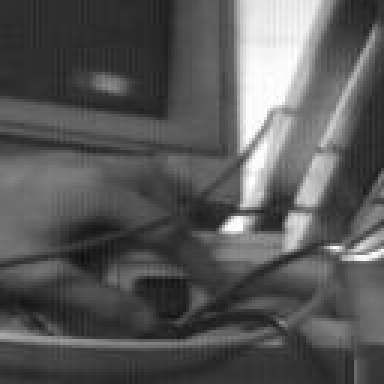
At 10:54 a.m. British Summer Time on August 22, 2001, Gordon, Johnson and Stafford-Fraser pressed the power switch on the Acorn that had run the camera for seven years and nine months. The final image captured their fingers on the button.

Writing before the shutdown in July 2001, Stafford-Fraser observed that the camera had become “famous for being famous,” and that putting something on the web was no longer news. His advice for anyone who wanted attention: “Switch it off.”
Feature image: XCoffee window by Quentin Stafford-Fraser, CC BY-SA 3.0, via Wikimedia Commons, enlarged and placed on a background.