
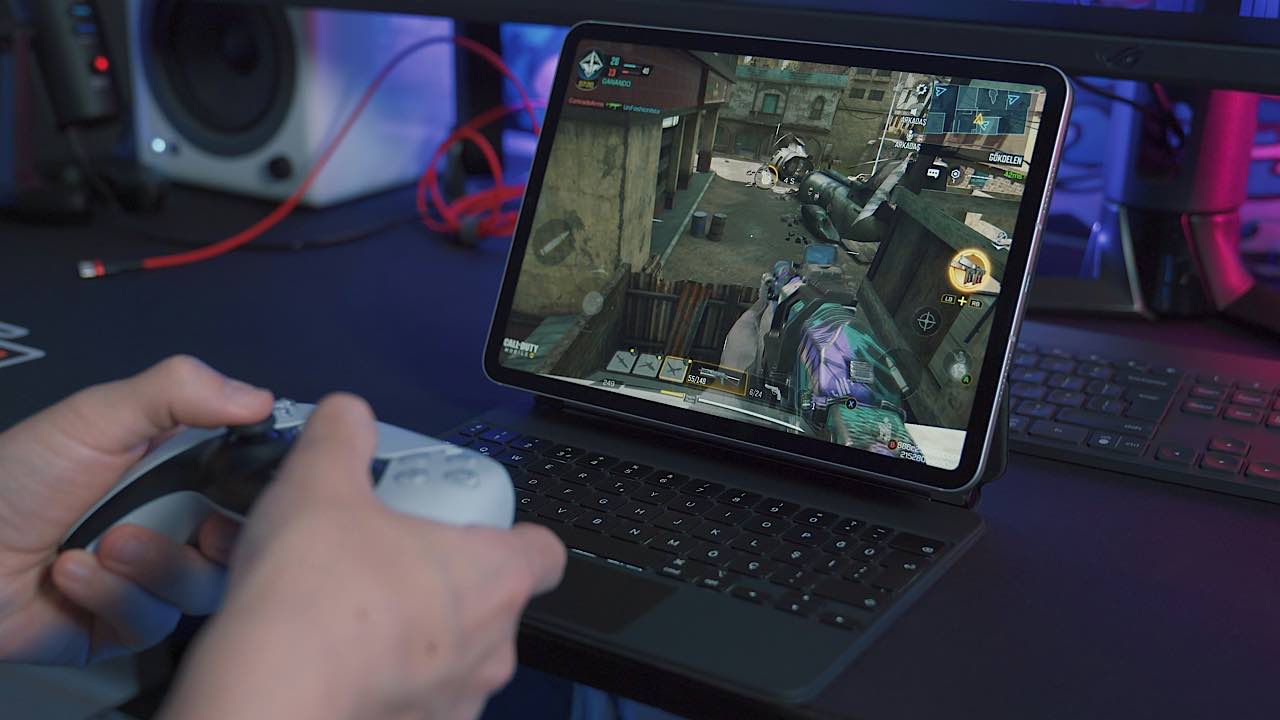

In simpler times, before the Internet, the new fall TV season was exciting news, as was the release of the summer blockbuster movies. Tech releases have overridden that, along with options to stream nearly anything you want. The latest big tech release was Call of Duty Black Ops 6, a huge download that may cost some users their data cap.
Call of Duty’s Enormous File Size
Activision couldn’t estimate how large the filesize would be for Call of Duty Black OPS 6 last June when it was taking preorders. Additionally, there are different options, such as Modern Warfare II, Modern Warfare III, Warzone, and various content and language packages.
Once it was released on October 25, the enormous filesize was learned. Along with the options, it also depends on which gaming system you use. It can be 84.4 GB to download just the game for PlayStation or as much as 102 GB to download it for PC.
But that’s just the game itself. If you download Modern Warfare II and III, the content packages, and languages, it can be as much as 300 GB. That’s a bit hard to wrap your head around. The first Mac I used in 1988 when I worked in desktop publishing had a hard drive that was 80 MB. That’s right: 80 MB.
When bosses weren’t looking, I played Scarab of Ra, which I had downloaded to my machine. I think I still may have it stored on a floppy somewhere. But now there’s no need to download it, as it can be played online, unlike Call of Duty Black Ops 6. It’s more than one thousand times larger than the storage of the first Mac I used and 700 times the storage of the first Mac I owned, a Macintosh Performa.
Good to know: think you need a dedicated PC for your new game? Learn how to budget for a gaming PC.
Large File Size Problematic with Data Caps
But you don’t just need to worry about whether your computer can handle such a download. You also have to worry whether your home Internet has data caps.
Data caps bring up another relic of the past for me. We used to have to plan when we would call someone long distance. We’d call at nighttime or on the weekends when the rates were cheaper. That’s no longer an issue, and frankly, data caps shouldn’t be either.
But Comcast likes its data caps, and perhaps that’s why it brought them back after putting them on hold during the pandemic. Comcast hands its users a 1.2 TB data cap. Sure, it seems like a tremendous amount of data, until you start looking at 102 GB downloads.

While Comcast isn’t quoting how many users downloaded the new Call of Duty game or whether they were downloading the massive 300 GB size or the smaller 84.4 GB, it did say that the Black Ops 6 release was behind 19 percent of the overall traffic on its network last week.
And that’s just Comcast. We only know the traffic numbers because they announced them while discussing how great they were. But it has to make you wonder how great it could have been if they didn’t have data caps and how great the numbers were for other Internet providers.
It also makes me wonder if they’re ever going to drop that data cap. If this game was so monstrous, you know there will eventually be other games that are even bigger downloads and even more taxing on users of Internet providers who have data caps.
Tip: is cloud gaming or a gaming PC better? We break down whether game streaming is your best option.
After you download Call of Duty Black Ops 6, if you’re dealing with a delay between the actions you’re performing and the on-screen response, learn how to reduce the input lag.
Image credit: Unsplash