

Cryptocurrency is getting more user-friendly, more accessible, and also much more regulated. This makes it a lot less “wild west” but also means it’s a bit harder to get started in crypto without going through the laborious KYC (Know Your Customer) requirements most exchanges have now been forced into adopting. Luckily, there are still ways to make peer-to-peer crypto purchases. If you’re just looking to remain anonymous (in the true spirit of crypto), you may want to check out these exchanges.
Also read: 5 of the Best Privacy-Centered Cryptocurrencies
Also read: How to Make Your First NFT
Bisq: decentralized exchange
If you want a fully decentralized option, you may prefer Bisq (formerly BitSquare). This is a fully automated, decentralized, open-source piece of software run using a Tor peer-to-peer network and governed by a DAO (decentralized autonomous organization).
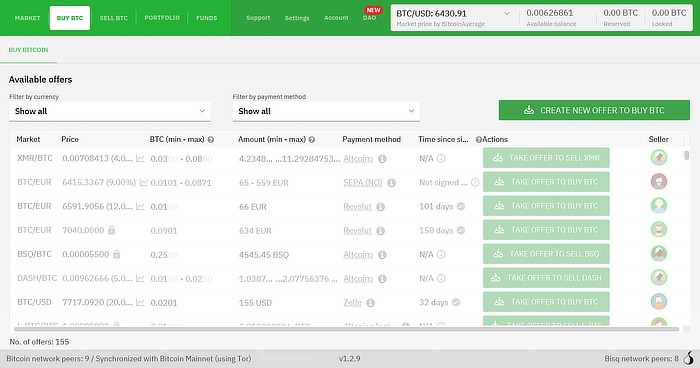
It has built-in anti-scam and dispute resolution methods, including security deposits, account signing, trade limits that increase over time, multi-signature addresses, and arbitrators/mediators that get paid to resolve disputes from the security deposits paid by the party found to be in the wrong.
The system works quite reliably and well, and the safety mechanisms keep it relatively scam-free. It will require a certain level of comfort with crypto and tech to use, since you have to download software and go through a few steps, but if you’re interested in buying cryptocurrency through a decentralized exchange, chances are that you mostly fulfill those prerequisites.
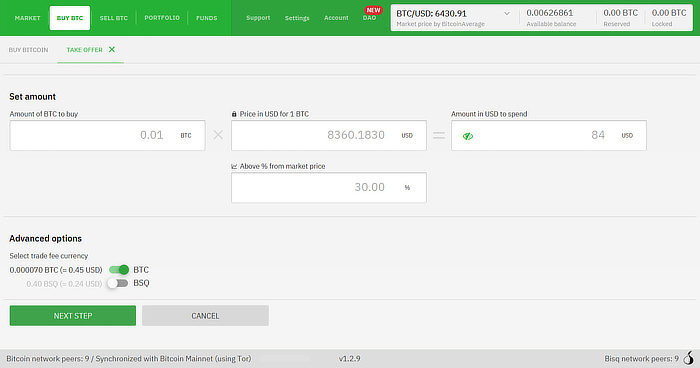
Here’s how to get started and make your first transaction:
- Download the software (available for most desktop OSes).
- Connect a national/fiat currency account (Zelle, Revolut, SEPA, bank transfer, Uphold, AliPay, Moneygram, face-to-face, etc.).
- Fund your Bisq wallet with Bitcoin (minimum of .006 to buy .001 BTC, which will be your initial trade limit).
- Find an offer to buy BTC at the quantity and price you want.
- Send the listed security deposit and transaction fees to the trade wallet where they’ll be held in escrow until the trade is complete. (You get them back if there aren’t any problems.)
- Confirm the trade, send the payment before the time limit runs out, and mark the payment as sent.
- When the seller receives your payment, they’ll release the Bitcoin and your security deposit.
The biggest issues you’ll face with Bisq are the relatively high prices and the limits you’ll initially have on your account. Due to the increased risk, sellers often mark up the market prices by up to 20 percent and find sellers who will sell you the .01 Bitcoin you need to get your account signed and marked as reliable. It can be difficult, especially if you want to pay a reasonable price. You can make your own buyer listing, though, listing the price and quantity of your choice and seeing if a seller bites.
Also read: 5 of the Best Bitcoin Exchanges to Trade Your Cryptocurrencies
Bitcoin ATMs
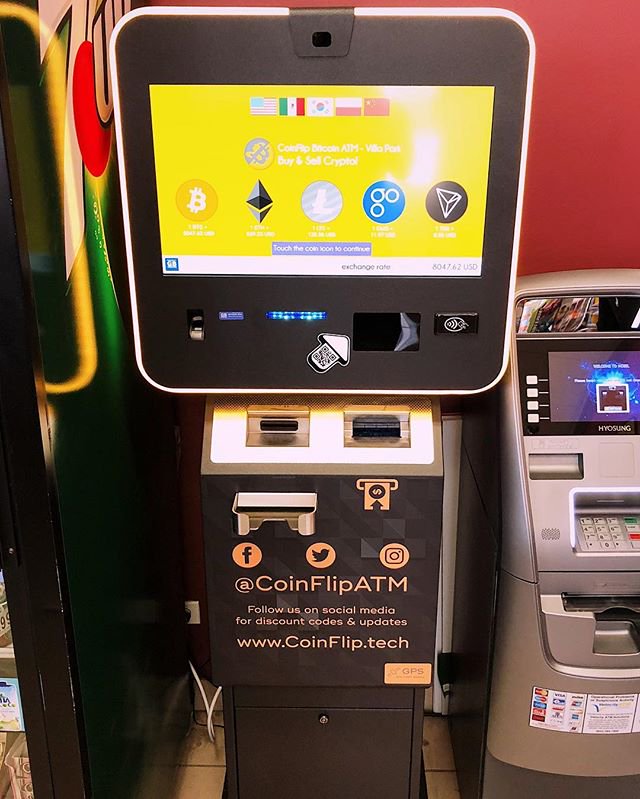
If you live near a major population center, you probably have a Bitcoin ATM somewhere nearby. These are straightforward, since you just go to them, follow the instructions on the screen, insert cash, and get your Bitcoin (or other crypto). No ID, no wait, just Bitcoins from a machine. These tend to come with a sizeable fee, though. I’ve seen them go as high as 20%, which makes them less of an option if you’re looking for a good deal. Always check the market price before using a crypto ATM so that you know if they’re charging you fairly.
You can find a fairly comprehensive map at Coin ATM Radar.
Others
No KYC
- HodlHodl: No KYC, fairly well-known and trustworthy. May not support U.S. trades.
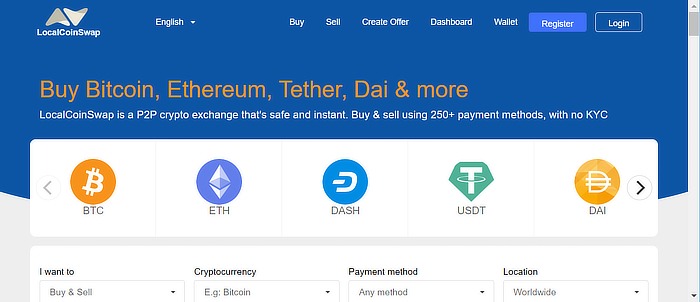
- LocalCoinSwap: KYC is purely optional (i.e., it’s there if you want the extra layer of protection). LocalCoinSwap is pretty popular and supports a lot of countries, cryptocurrencies, and payment options.
Some KYC
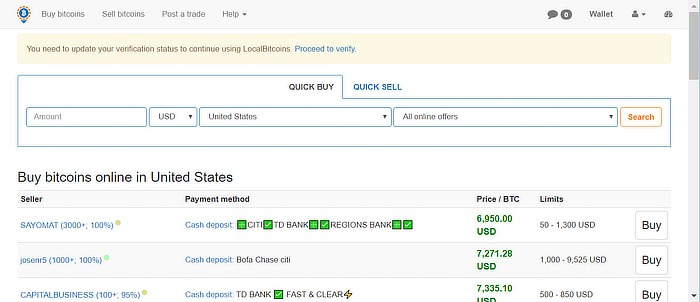
- Athena Bitcoin: KYC starting at $400 USD.
To KYC or not to KYC
Cryptocurrency exchanges don’t want to make life harder for legitimate crypto enthusiasts, but the regulations that many of them have to comply with typically result in some pretty onerous sign-up and verification processes.
If you don’t mind providing ID and going through some bureaucratic hassle, conventional exchanges with KYC are a fine way to get into crypto. If getting that stuff together is a challenge for you or you have a philosophical aversion to it, you’ll have to deal with a slight learning curve to use a no-KYC exchange. No matter what, it is always best to keep your cryptocurrency safe as they are often unrecoverable.