
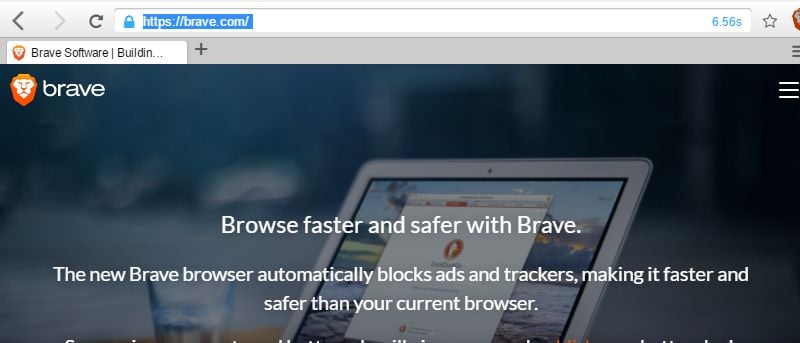

Each year new web browsers are launched, and older ones disappear. Brave is one of these new browsers, but it differs enough from the “big three” (Internet Explorer, Firefox, and Chrome) to be worthy of attention.
The unique selling point is privacy; with advertising on the Internet and tracking going hand-in-hand, Brave is designed to shirk these undesirable elements of Internet usage.
History
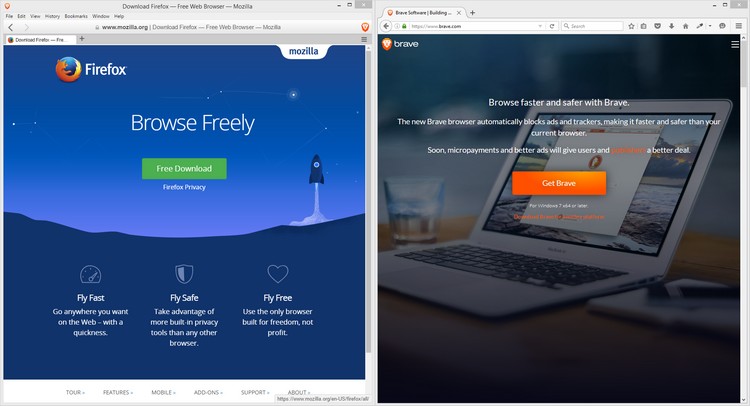
While Brave’s core concept sounds like a noble goal, it goes beyond this with the influence of Brendan Eich in its development. Eich was one of the Mozilla Project’s co-founders. A similar situation can be found with Vivaldi which was developed by the former Opera software team. While Vivaldi intends to continue with the Opera Software team’s vision of an ideal web browser, Brave focuses on privacy.
The ethos behind Brave’s design is to create a middle ground between advertisement, which can be targeted via a detailed snapshot of a user’s browsing history, and a desire for privacy among users. Web ads, as part of Brave’s end goal, would be targeted only through anonymized browsing history. In this manner the hope is for improved privacy online. The browser’s official “About” page gives more information.
Appearance
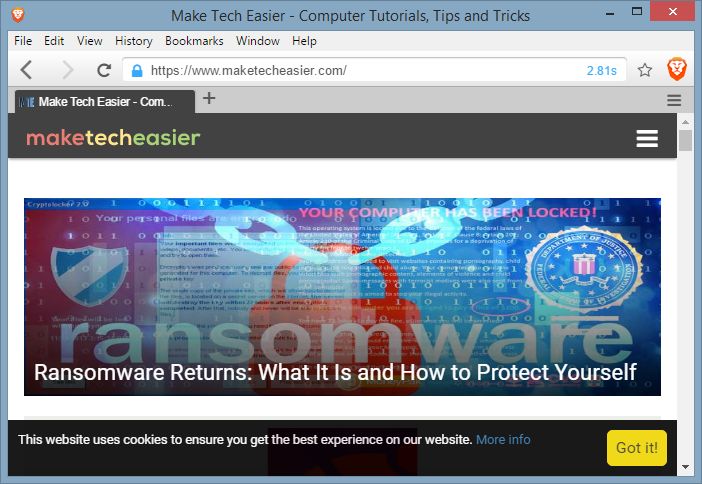
In a word, Brave’s appearance is “dated” or “dull.” There’s not a lot on-screen, but it couldn’t be described as minimalistic, drawing inspiration from older web browsers with its tabs running below the address bar. The juxtaposition of older layout with modern intent is jarring; it’s functional but not particularly attractive.

The address bar is odd, too, being centrally located. Its design does make sense when you move the cursor away from the bar, transforming it into something surprisingly attractive that we haven’t seen adopted elsewhere.
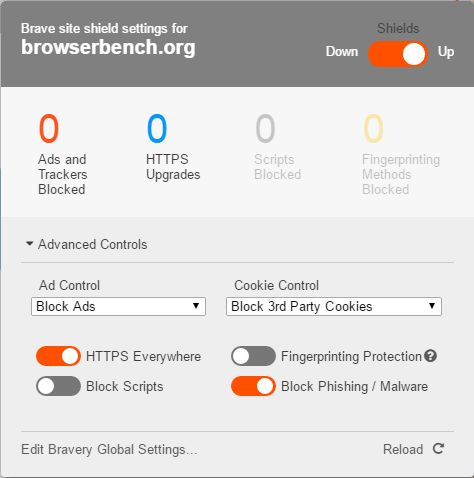
The logo on the right of the screen feels a little like branding, a reminder of the browser you’ve chosen to use, but it does serve a purpose, allowing you to alter the security settings on a per-website basis.
The pop-up from clicking this is artfully designed and could be a taste of what’s to come to the rest of the UI. We would hope similarly pleasant design could be a future feature of Brave: if the UI matters to you, and you’d like to use an underdog, Vivaldi would be a clear winner.

In fact there are elements of the UI which deviate enough to have us wondering if this isn’t the future of Brave. Depending on how many tabs you have open, it’ll split them across pages instead of allowing them to become tiny little elements as is the case with Chrome.
Performance
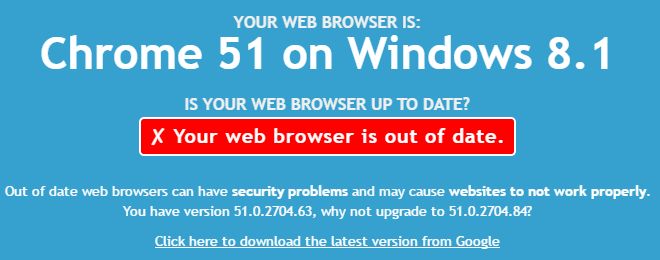
Brave, like Chrome, uses the Blink rendering engine. In fact, if you use a website like WhatIsMyBrowser.com, it’ll identify Brave as a version of Chrome. Given how it shares quite a lot with Chrome, you can be sure Brave’s performance is comparable.
One thing Brave does that we like is create a distinction between “Private” and “Session” tabs. Private browsing doesn’t go into your browsing history while “Session” tabs do – but they allow you to log into more than one account at a time while using the same browser. These tabs are subsequently denoted with an icon of a person, referencing the fact they run from different user profiles.

Session tabs are not commonly found in other browsers; the only example we could think of was Stainless, an OS X browser that has not been in active development for several years but that has a limited following among users of older Mac computers.
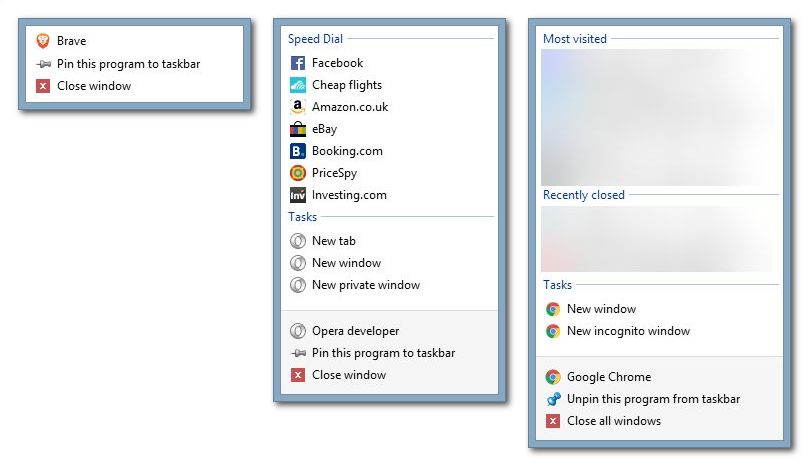
Depending on whether you use the jump lists introduced with Windows 7, you may find Brave to under-perform. At present it simply doesn’t have any non-default options in this area; compared with other browsers sharing the same rendering engine, you can see a major difference.
Conclusion
Brave’s release in 2016 coincides nicely with the increased concern about online privacy, but as of yet we’d struggle to recommend it as a go-to browser. If you’re interested in using something released recently and a little different, it is hard to look past Vivaldi.
Brave is far from a bad browser – merely one which has not reached total maturity just yet. Looking at the “About” information, you can see it’s only at version 0.10, so there is a lot of room for things to change as it is developed.