
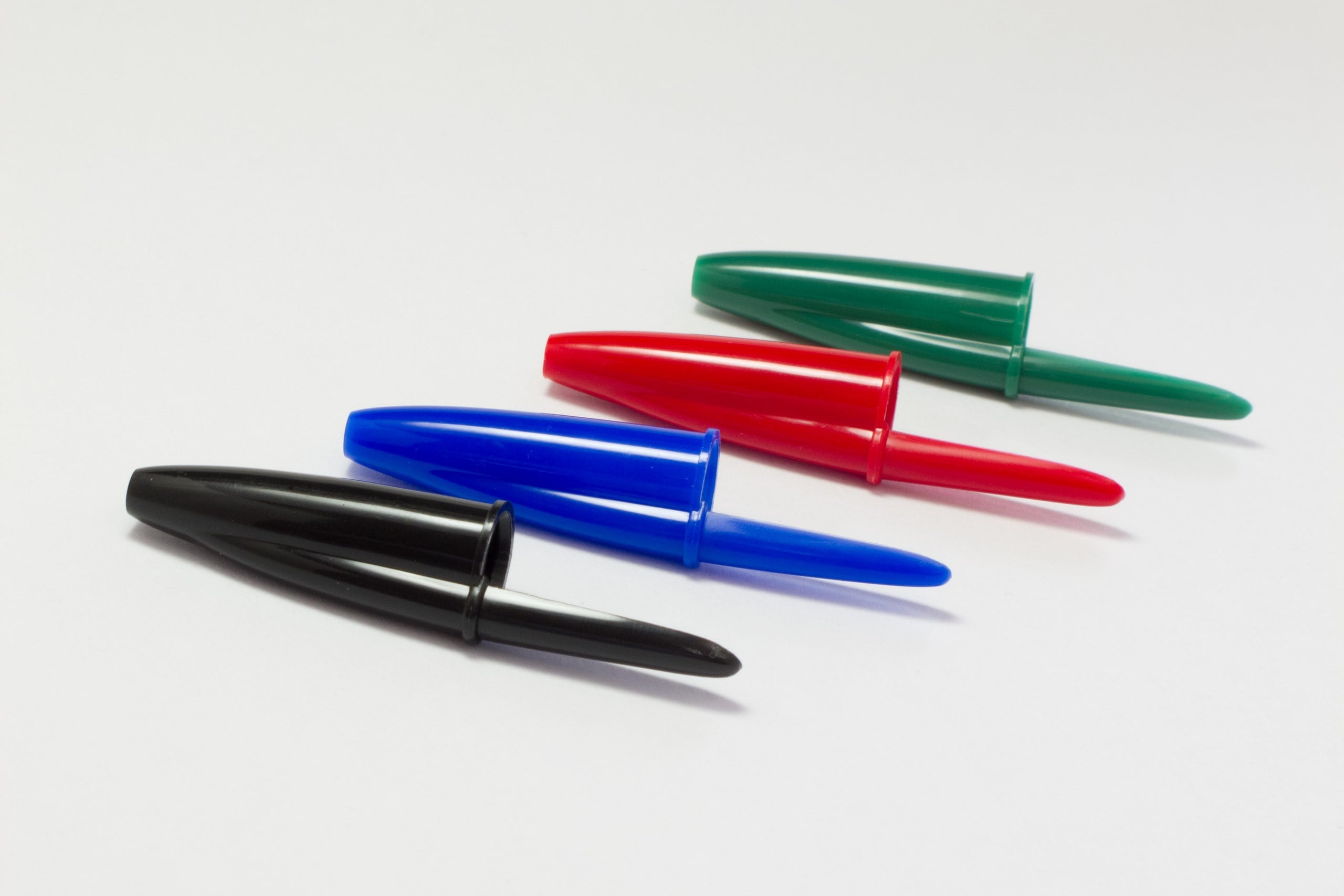


The cap of the BIC Cristal ballpoint has a hole in its top so that it meets ISO 11540 / BS 7272-1, the standards BIC’s technical data sheet lists for the cap. ISO 11540 and BS 7272-1 set requirements to reduce the risk of asphyxiation from caps on writing and marking instruments likely to be used by children up to the age of 14.
The sheet describes a “Ventilated cap” that “Reduces asphyxiation hazard by inhalation”.
Snopes, in a report dated 16 April 2024, said the practice appears to have begun in the United Kingdom, where British standard BS 7272 was adopted in 1990. Nine children there died choking on pen caps between 1970 and 1984, and a 2004 report said: “No such deaths have occurred since the U.K. adopted the international safety standard.”
BIC spokeswoman Astrid Canevet told Snopes in an email that the company began to perforate the caps of the Cristal that same year. “BIC, always concerned with the safety of its products and its consumers, decided to apply this British norm everywhere in the world,” she said.
A safety standard
ISO 11540 was first implemented in 1993 and was revised in 2014 and in 2021.
Canevet told Snopes that pen makers have several ways to comply. The cap might have a single hole, several holes placed at the top, which she said is often the case for markers, or a diameter of more than 16 mm, which she said is considered too large to be swallowed.
Most ballpoint pen makers comply with ISO 11540, Snopes said. BIC’s data sheet also lists BS 7272-2 for the Cristal’s welded polystyrene plug, which it says reduces the same hazard.
Two holes, two jobs
BIC’s FAQ, as quoted by Snopes, says the pen cap traditionally served only to protect the pen point. It says the vented caps “allow more air to circulate around the pen point when the pen is capped” and that this adds to the performance of the pen.
The second hole is in the clear hexagonal barrel and does a different job.
According to BIC’s 75th anniversary press kit, the hole in the barrel balances the pressure inside and outside the pen, pushes the ink towards the tip and prevents leakage. The data sheet calls it a venting hole and gives the same purpose, preventing leaks.
The pen that carries both holes dates from 1950. Marcel Bich, born in Turin in 1914, joined forces with Edouard Buffard in 1945 to set up a company making writing instrument parts in Clichy, outside Paris. Bich bought the patent for the pen developed by the Hungarian Laszlo Biro, and the Cristal left the Clichy factory in December 1950.
It cost 0.50 French francs and was refillable, and BIC says 10,000 were sold every day during the first year.
The Museum of Modern Art in New York and the Centre Georges Pompidou in Paris hold the Cristal in their permanent collections, and Snopes says it entered MoMA in 2001. The pen is 147 mm long and 8.3 mm in diameter, writes with a 1 mm tungsten carbide ball and is made in France.
Sources:
- BIC Cristal Original technical data sheet: https://static-content.cromwell.co.uk/pdfs/s/medusa_attachments/bic/bic8460170k_tds.pdf
- Snopes: https://www.snopes.com/fact-check/holes-pen-caps-prevent-choking/
- BIC Cristal 75th anniversary press kit: https://mediabic.bic.com/image/upload/v1758021347/Press_kit_BIC_Cristal_75_ans_EN_6d77fc7443.pdf