

There have been several businesses trying to get self-driving cars on the road. None of them are on the road in an official capacity yet, and they are still dealing with problems with the idea of it.
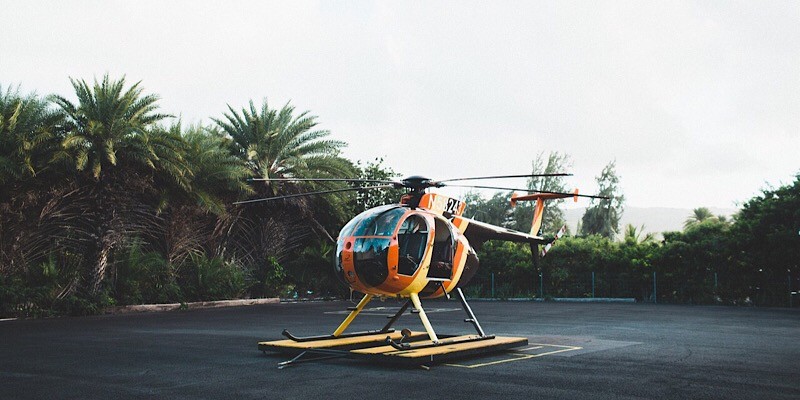
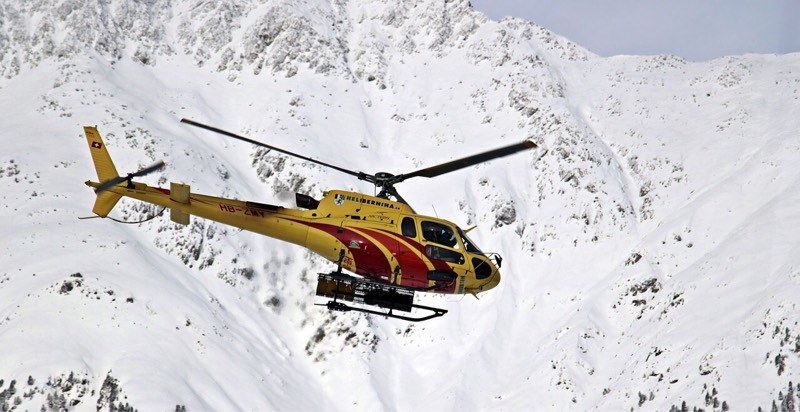
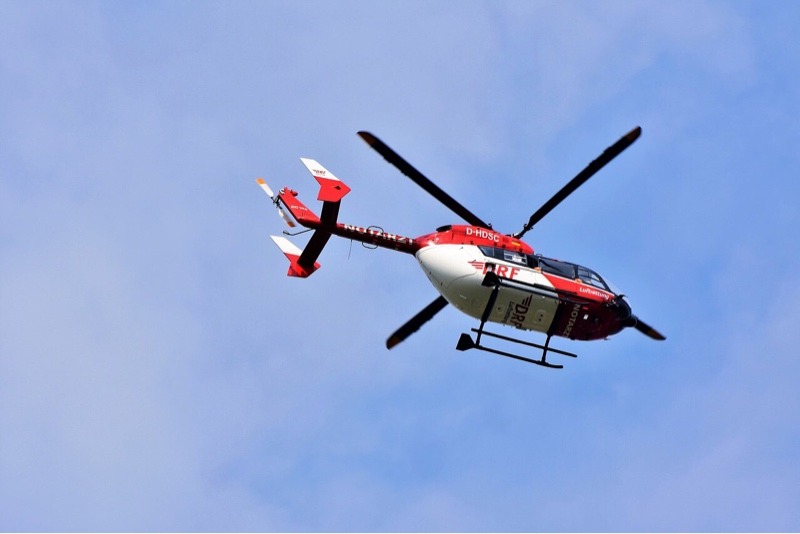
Despite that, there is interest in heading in a different direction with regards to driverless transportation. Officials are utilizing autonomous helicopters. For right now their use is being considered as first responders in emergencies. They want to set this in motion by next January. If all goes well, they’re hoping to expand into offering passenger service through autonomous aircraft.
Trial Run
East of San Francisco, California, a helicopter outfitted with a small black cube attached to its nose lifted into the air and hovered over the ground. This was during a week of testing for the emergency service, with the craft meant to aid in 911 calls.
Seasoned pilots are in control at this point, but a Silicon Valley startup, SkyRuse, plans to augment small helicopters and other passenger aircraft with hardware and software that will allow them to be un-piloted. They’re using much of the same technology used by driverless cars, including 360-degree cameras and radar sensors.
“There are many things that must come to fruition before autonomous aircraft start flying people,” explained the co-founder and chief executive of SkyRyse, Mark Groden. “But we are developing the technology that can take us there.”
They aren’t the only ones working on this technology. A subsidiary of defense contractor Lockheed Martin, Sikorsky, and another Silicon Valley startup, Xwing, are working on something very similar. Aurora and Boeing are looking into autonomous flight in connection with electrical aircraft they hope to use for “flying taxi services.” Uber is wanting to offer an air taxi as well in the next five to ten years, with the thought of removing pilots from the experience eventually.
Pilots cost money and need a good amount of rest between flights. But autonomous flights can perhaps usher in a new kind of passenger service or may even change current air travel. But this ongoing process will take a while to achieve.
“This is not just about building something that can fly by itself,” said chief executive Dan Patt of Vecna, a robotics company. His company previously worked with Sikorsky and others while he was with Darpa, a research arm of the Defense Department. “It is about building a body of evidence that this is a safe way to fly.”
It’s thought this could be an easier process than working with driverless cars, as autonomous aircraft work in the open sky, rather than roads, dealing with pedestrians and other vehicles.
Existing Programs
Autonomous flight is already seen with drones. The Silicon Valley startup Skydio, founded by Google engineers, sells a $2,500 drone that can follow you through the forest. The company’s chief executive, Adam Bry, also worked on Google’s delivery drone project. He feels the same technology, using digital cameras and mathematical systems that analyze images in real time, are well-suited to passenger aircraft.
“The technical challenge is simple in a lot of ways,” said Bry. “Nobody wants these things whipping through the forest as fast as they can go. They just want them to fly reliably, carry people from point A to point B, and deal with takeoff and landing.”
Still Some Kinks to Work Out
Dealing with uncertainly that is seen in takeoffs and landings, as well as random events that can cause aircraft crashes, can be difficult. Passenger flight is also very regulated. These companies could have difficulty using their technology in a public airspace.
SkyRuse has $25 million in funding to help them work out these kinks They’ll be working with the City of Tracy’s emergency service and will work with current regulations, only moving slightly toward autonomy. The engineers, meanwhile, are creating conditions through a process similar to virtual reality to build systems to work with the simulations.
Would you trust autonomous flights more than you trust autonomous cars? What do you think of this process? Let us know by adding your comments below.