
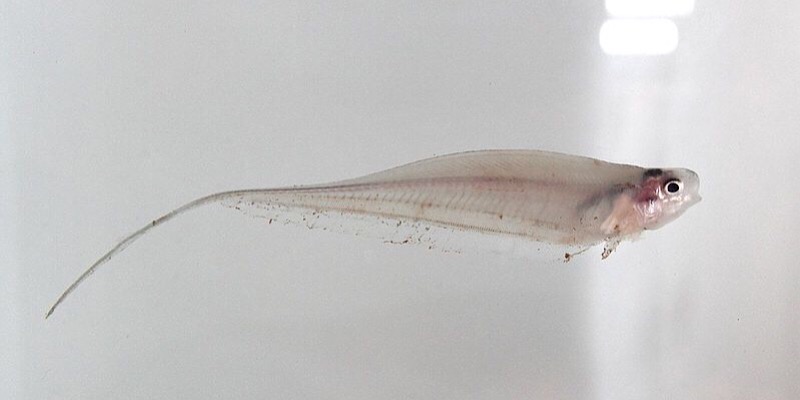

There have been many creative uses for augmented reality, though we may tend to think of it mostly in terms of gaming such as with Pokemon GO. One interesting real-world usage of it involved researchers creating an AR fish tank that fooled the electric sensing organs of the glass knifefish into thinking it was dealing with a real environment. This allowed the researchers to study how this particular fish stays safe.
Creating an AR Fish World
The glass knifefish stays hidden by moving from various holes and homes. But in creating an AR world for the fish, the researchers were able to see the methods the fish implements to stay hidden.
“What is most exciting is that this study has allowed us to explore feedback in ways that we have been dreaming about for over ten years,” said Associate Professor Eric Fortune of NJIT.
This is perhaps the first study where augmented reality has been used to probe, in real time, this fundamental process of movement-based active sensing, which nearly all animals use to perceive the environment around them.”
The fish didn’t have the benefit of using a smartphone to move through its AR world like someone playing Pokemon Go. Rather, it moved through a tank that simulated the inclusion of refuge moving around in the water
“We’ve known for a long time that these fish will follow the position of their refuge, but more recently we discovered that they generate small movements that reminded us of the tiny movements that are seen in human eyes,” explained Fortune.
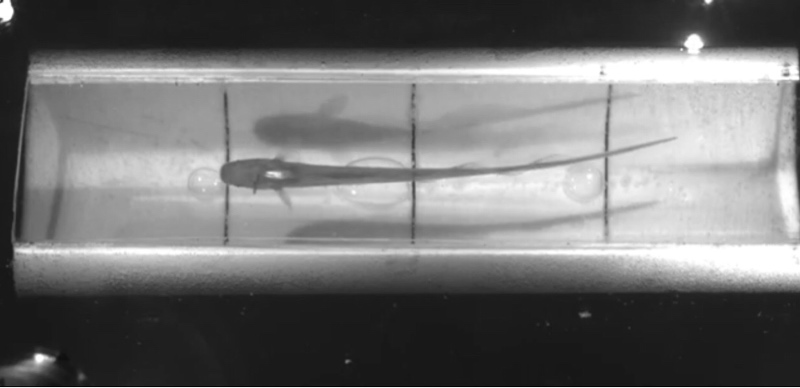
“That led us to devise our augmented reality system and see if we could experimentally perturb the relationship between the sensory and motor systems of these fish without completely unlinking them. Until now, this was very hard to do.”
The researchers created the AR environment by putting the fish inside a tube. The motion of the tube was synced to the eyes of the fish. As it swam, the team would observe it to see what it would do when it could see that it was affecting the motion of the refuge.
When the refuge was synced to the fish’s motion, they saw that the fish could tell that its environment wasn’t real. The fish knew it was swimming in some type of a virtual environment.
“It turns out the fish behave differently when the stimulus is controlled by the individual versus when the stimulus is played back to them,” relayed Fortune.
“This experiment demonstrates that the phenomenon that we are observing is due to feedback the fish receives from its own movement. Essentially, the animal seems to know that it is controlling the sensory world around it.”
Furthermore
The researchers are hoping that similar experiments will take place to learn about human vision to learn more about the neurobiology in people. They’re also hoping to use the data to develop “more powerful feedback control systems.”
Are you surprised to learn a fish can detect AR? What other AR experiments do you think they can conduct to learn more about human vision? Let us know your thoughts below in the comments.
Image Credit: Clinton and Charles Robertson via Wikimedia Commons and Fish in AR via YouTube