
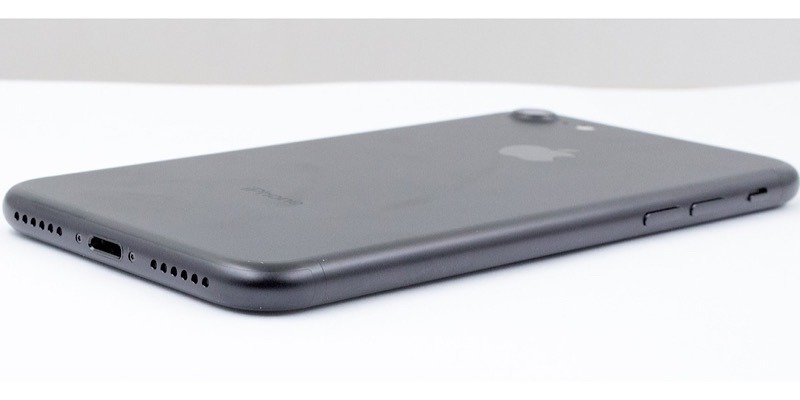

You may believe that with the advancements in facial recognition and its focus on eliminating the Home button that Touch ID is a dead issue with Apple, but that doesn’t seem to be the case. The company is still working on ways to involve fingerprint-recognition technology on their future devices. What they’re working on would allow devices to still read your fingerprint, despite no appearance of a home button.
Fingerprint Sensor Technology
For a few years Touch ID was the hot thing with Apple’s iPhone and iPads. The home button was used to sign in to your device as well as your online accounts. But that soon became yesterday’s technology as they moved toward Face ID, a facial recognition system.
This newer technology is in effect across many devices from other companies as well. Apple implemented it into their iPhones and iPads. It was a good fit for them as they were also going for edge-to-edge screens that eliminated the home button.
But it turns out Touch ID may not be dead just yet. [They just had two patents approved](https://www.idropnews.com/news/touch-id-isnt-dead-yet-heres-why-apple-wont-give-up-on-its-aging-tech/104548/) for an acoustic imaging system that would be able to still read a fingerprint, yet it would be done through the display instead, assumably because of the lack of a home button.
Acoustical imaging is seen as an alternative method of recognition. Samsung has already used an ultrasonic method of recognition in recent devices, including the Galaxy S10.
Interestingly, Apple filed for these patents initially in 2016, before they made the switch to facial recognition. There have also been previous reports that Apple was working on in-display fingerprint reading.

It appears that while they focus on the expensive Face ID tech for their higher-end devices, they may consider still using some type of fingerprint recognition on their lower-end devices. Or they could also leave the option up to consumers and give both options on a device.
It was also reported last year that Apple was shopping around for a company to help them produce components for an ultrasonic, in-display fingerprint reader, and that was before the patents were approved.
The Future of Fingerprint Technology
What does this mean for the future of fingerprint technology? It’s apparently not dead and perhaps just going through growing pains. Apple is still working on it, and Samsung is already utilizing something similar.
That said, I’m not sure I want to go back to something I have to “touch.” I have a 2018 iPad Pro with Face ID while still using an iPhone 7 with Touch ID. I much prefer the Face ID. I’m just automatically logged in to frequently-visited apps and websites sometimes without me having to do anything if the passwords are already saved on the site or in the app — no tapping, no nothing. but on my phone I still have to stick my thumb on the home button.
But, of course, maybe that’s the idea, as I would be more inclined to buy a more top-of-the-line device rather than a lower-end one so that I could keep my Face ID.
Do you prefer facial recognition or fingerprint recognition? Would you want to have an in-display fingerprint reader? Tell us how you feel about a possible new and improved Touch ID in the comments below.