


It was a little surprising earlier this week when Apple announced that it would be expanding its podcasts to being available on the Web, rather than just Apple devices. The reasoning then became more clear. A new study shows that Apple has lost a lot of ground with their podcasts, now with fewer listeners than Spotify and YouTube.
Apple Podcasts Accessible on the Web
Apple has a very early history with podcasts. They’ve always been available on Apple’s devices, as well as CarPlay. And that’s always been somewhat of an overall strategy with Apple, to keep their services on their devices, as that leads to more people buying their devices.
However, they’re starting to stray from that. Apple Maps is now on the Web, obviously trying to compete with Google Maps. And this week, it was announced that Apple Podcasts can now be accessed on the Web. You can listen in through any web browser on any device.
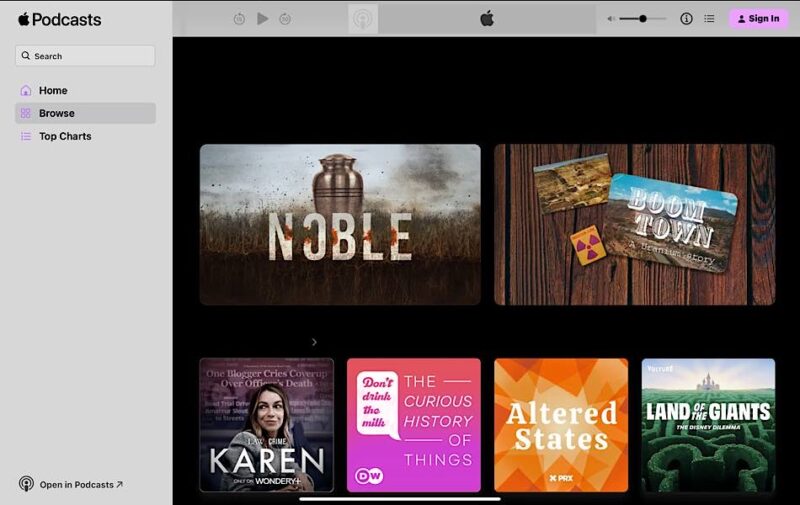
That came as a bit of a surprise, but it seemed like it was a way to compete with Spotify, who is often seen as their main competitor with podcasts, as well as with other streaming services, such as music.
Podcasts seemed to grow in popularity during the pandemic. With more celebrities stuck at home, they were less likely to go on a talk show. Instead, celebrities started hosting their own podcasts and inviting their friends.
And now Apple is pushing the boundaries again, leading its podcasts into an all-new area.
Apple Loses Ground to YouTube and Spotify
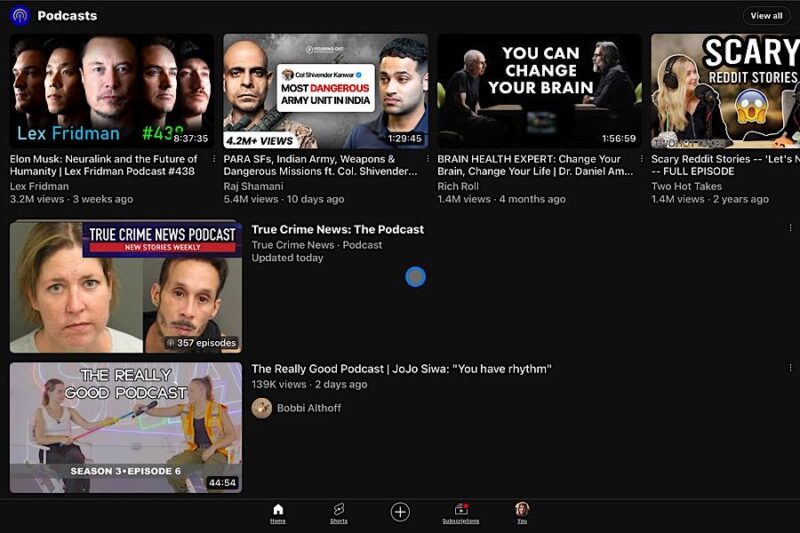
But the podcast streamer taking market share from Apple isn’t necessarily Spotify. YouTube now has more of the podcast market share than either Spotify or Apple. Interestingly, YouTube podcasts can be heard more often on desktops computers and TVs than mobile devices.
A look back at the stats shows that in July 2019, Apple had 29% of the podcast audience, while Spotify had 16%, and YouTube had only 15%. But one year later, deep into the pandemic, Apple’s podcast share dropped to 25%, while Spotify’s rose to 21%, and YouTube’s rose to 18%. Apple was starting to lose ground.
It should be noted that this was after popular political host Joe Rogan moved to having Spotify exclusivity in May 2020. It had a little bit of a domino effect, too, as other artists soon started following Rogan’s lead.
Two years later, in April 2022, Apple’s share had dropped down to just 15% – down 10% in a year! Spotify’s percentage was just a little higher at 23%, but YouTube’s percentage was now 25%! One year later, it was Spotify losing. Apple was up to 16%, Spotify was down to 17%, and YouTube was up to 29%.
And now, a year later, in April 2024, Apple’s share is down to just 12%, Spotify’s is back up to 21%, and YouTube’s is up at 31%.
Apple clearly needed to do something. Is Apple jumping the shark by putting its formerly popular podcast network on the Web? While that will help, YouTube also has a benefit neither Spotify nor Apple has: visuals. Rather than just being vocal shows, YouTube has visuals attached, so users can watch their favorite podcasts rather than just listen in.
Will Apple get 29% of the market back? Probably not. But it may be able to at least improve on its 12%. It probably won’t reach the popularity of its iCloud storage service either. Regardless of where you listen, check out some of the best tech podcasts.
Image credit: Unsplash. All screenshots by Laura Tucker.