

Last month, Apple announced that iOS 16.1 would include Clean Energy Charging but declined to give many details about it. With the release of the 16.1 update this week, Apple published more information, yet it is still scant.
What Is Clean Energy Charging on an iPhone?
The goal of Clean Energy Charging is to “reduce your carbon footprint by selectively charging when lower carbon-emission electricity is available.”
Any time we can leave a lesser carbon footprint, it’s great, but how does it do that? That’s what Apple left out of the earlier Clean Energy Charging announcement.
When your iPhone has Clean Energy Enabled and is connected to a charger, it learns about the carbon emissions in your local energy grid, then figures out when there will be cleaner energy production and chooses to charge your phone during that time.
The feature won’t be available to everyone – only to users in the United States. It’s a shame it’s not available worldwide, but Americans are the most wasteful with energy anyway, other than China, and the U.S has the largest iPhone market share, toppled only by Chicago and India. It would seem Americans are in need of this feature.
Apple’s Clean Energy Charging feature works alongside Optimized Battery Charging. Lithium-ion batteries chemically age differently than the age since they were manufactured or installed. It has more to do with wear and tear than chronological age.
Optimized Battery Charging tries to improve the age by reducing wear and tear. Machine learning tracks your typical charging times and won’t allow your iPhone to charge beyond 80% if it is plugged in for a long time and will then charge your phone to 100% before you unplug it. Similarly, Clean Energy Charging only kicks in when you are typically charging your phone for an extended period.
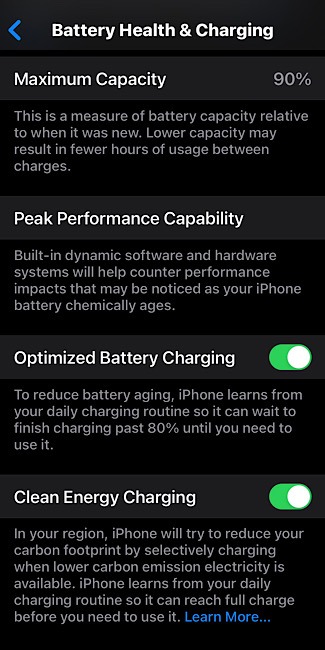
Typically, when you update to iOS 16.1, Clean Energy Charging should be enabled by default. Ensure it is on by going to “Settings ->Battery -> Battery Health & Charging.”
There are other settings that you need to have enabled as well, according to Apple. It’s also possible to override it if you don’t want to wait for your phone to fully charge. You just need to look for the notification on your Lock Screen that shows when your iPhone will be fully charged. Do a long tap on the notification, then tap “Charge Now.”
Other New iOS 16.1 Features
iOS 16.1 has other great new features to go along with Clean Energy Charging. It is adding iCloud Shared Photo Library, passkey support, and Live Activities to the Lock Screen. Apple Fitness+ is now supported on an iPhone, even if you don’t have an Apple Watch.
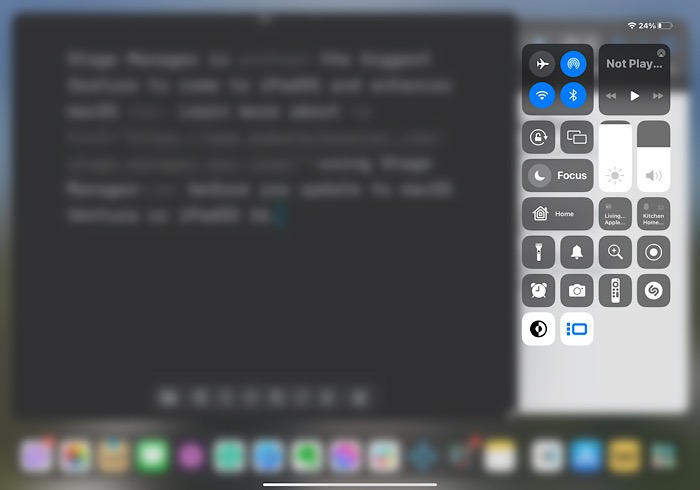
Apple also released iPadOS 16 with Stage Manager, new options for Messages and Mai., Visual Look Up and Live Text, and the Weather app. macOS Ventura was released too and includes Continuity Camera, Passkey, Mail and Messages improvements, iCloud Shared Photo Library, and Stage Manager.
Stage Manager is perhaps the biggest feature to come to iPadOS and enhances macOS too. Learn more about using Stage Manager before you update to macOS Ventura or iPadOS 16.
Image credit: Unsplash. All screenshots by Laura Tucker.