

The fight between Apple and law enforcement over iPhone data is a long one – and it’s about to get worse. Apple is going to expand its end-to-end encryption through Advanced Data Protection, an optional service. It’s also adding other security options for individuals who use their iPhones to exchange more sensitive data.
Read on to find out other ways you can protect your iPhone’s privacy while you wait for this new feature to be publicly released.
Apple’s Advanced Data Protection
Apple has had many tussles with law enforcement. There have been very dangerous criminals suspected of crimes, such as a California mass shooting that ended in the suspects’ deaths. An iPhone was left behind, and law enforcement wanted Apple to break into the phone to get answers. Apple refused – and it wasn’t the only time.
With Advanced Data Protection, Apple is somewhat removing itself from the equation. It’s expanding the end-to-end encryption with an optional feature that will make it impossible for Apple to provide that information to law enforcement.

“At Apple, we are unwavering in our commitment to provide our users with the best data security in the world. We constantly identify and mitigate emerging threats to their personal data on device and in the cloud,” said Craig Federighi, Apple’s senior vice president of Software Engineering.
He added that Apple’s security teams “work tirelessly to keep users’ data safe, and Advanced Data Protection, as well as iMessage Contact Key Verification and Security Keys, will provide users with “three powerful new tools to further protect their most sensitive data and communications.”
Ivan Krstić, the head of Security Engineering and Architecture at Apple, said that “Advanced Data Protection is Apple’s highest level of cloud data security, giving users the choice to protect the vast majority of their most sensitive iCloud data with end-to-end encryption so that it can only be decrypted on their trusted devices.”
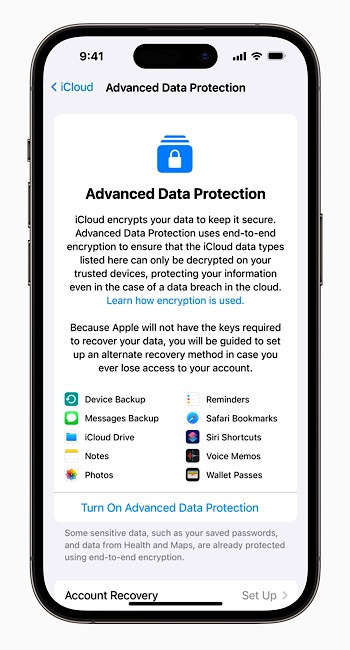
While 14 data categories are already encrypted end to end by default, such as passwords, iCloud Keychain, and Health, users who opt in to Advanced Data Protection can protect information in 23 categories, including iCloud Backup, Notes, and Photos. Mail, Contacts, and Calendar will not receive further protection out of a need to work with other systems globally.
With data breaches tripling between 2013 and 2021, and 1.1 billion personal records left unprotected in just 2021, there’s a clear need for such a service. Advanced Data Protection is already available through the beta program in the U.S., and it’s expected to be available to all U.S. users by the end of the calendar year, while the rest of the world should see it in early 2023.
Apple’s Other New Data Safety Programs
Along with Advanced Data Protection, Apple will also be offering Security Keys and iMessage Contact Key Verification. However, these programs won’t affect most users.
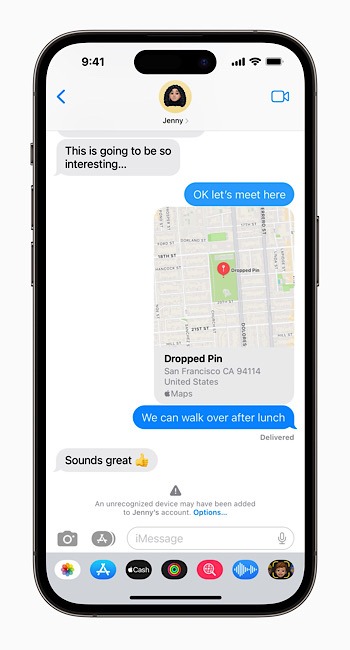
Lockdown Mode already offers an extreme level of security to journalists, human rights activists, and diplomats who are exchanging sensitive information. iMessage Contact Key Verification provides those same users with further verification that they are messaging with who they intend to. Users will receive alerts if an “advanced adversary” reaches the cloud servers and begins eavesdropping.
Security Keys for Apple ID provides users with a physical security key that is necessary to sign in to their Apple ID account. Users can take advantage of third-party hardware security keys to offer this protection. This feature is also for users who have a public profile that could potentially put them in harm’s way.
Obviously, Apple knows offering its users more privacy is its bread and butter. Yet, it does upset the apple cart with advertisers. Last year, they started shying away from Apple and working more with Android after Apple gave its users more privacy control.
Image credit: Unsplash