

Have you been keeping tabs on Android Q lately? It’s the tentative name for Android’s tenth version, which is still under development before it’s released properly to the public. People have been slowly gathering information on the new operating system, finding new features such as a built-in dark mode. One recent commit to the Android Q operating system has people a little concerned; it looks as if the new version of Android will come with some nasty carrier locking systems within it.
What Was Added?
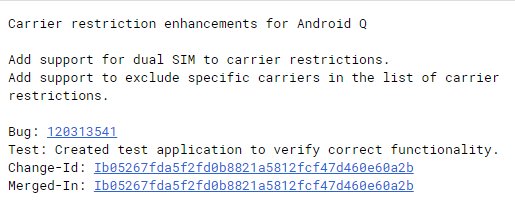
The red flags went up when people noticed a new commit to the Android system called ”
Carrier restriction enhancements for Android Q”. There were four in total, all of which were made on the 19th of January 2019.

When you take a look at the commits, they all say the same thing; that carrier restrictions have been added to dual SIM phones, and added support for carriers to blacklist specific networks from using the phone. This has caused a bit of a stir in the Android community, who are seeing a potential shift towards more restrictions on what network they use with their phones.
What Could This Mean?
Of course, there’s not a lot of information to go off of with these updates. Despite this, we can make some educated guesses on what they might mean, and what could entail for the future of Android Q. With the new dual SIM lock, carriers may have the ability to set different restrictions for each slot on the SIM. We could see the rise of phones that allow you to use any network in the second SIM slot, just as long as you use the main carrier’s SIM in the first slot.

The whitelist and blacklist for network operators is a little more worrisome. In some cases, people can use a different carrier on a locked phone, as long as they use the same network. For example, in the UK, GiffGaff uses O2’s network, so O2-locked phones can use GiffGaff as their carrier. We’ve talked about how smaller companies can use the same network as larger carriers and often give their customers a cheaper rate than their “parent network”, as they dodge a lot of the overheads.
With this update, a network owner could lock the phone away from these smaller companies, even though they use the same network. This would then funnel customers through the larger company’s tariffs, and stop users from migrating to the cheaper alternatives.
Details Still Unclear
While these predictions may sound dire, they are only that — predictions. There’s not a lot of definitive information we can glean off of two vague commit notes, so it’s all speculation. It does, however, mean that you should do a little more investigation before picking up an Android Q phone. We’ll be sure to lay out all the details once they become more definitive!
Locked Away
Android Q has recently received an update that gives carriers more freedom to lock down the phones that they sell. While we’re still not sure on how draconian these methods will be, it’s a worrisome development for people who treasure the freedom of choosing your own carrier for your phone.
Does this update worry you? Or is this simply making a mountain out of a molehill? Let us know below!