
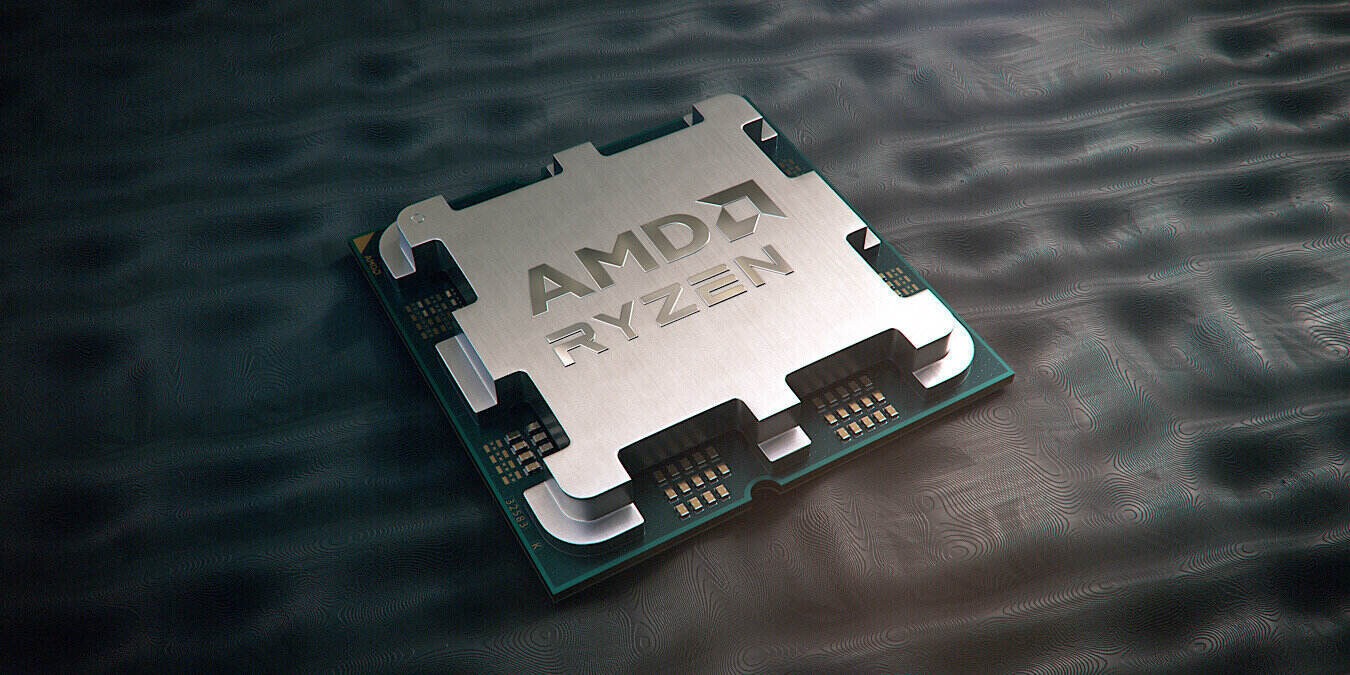

We’ve been hearing about artificial intelligence (AI) for some time now. But most of it has been about creative outputs and knowledge, including the prized software of the moment, ChatGPT. But to take AI even further, you need the hardware to run it. It’s going in that direction with the announcement of AMD Ryzen AI.
AMD Ryzen AI Hardware
Recognizing that AI is “the most transformational technology in 50 years” and “the future of innovation,” AMD Ryzen has already put out the software necessary to pull this feat off.
AMD Ryzen AI is a two-step effort by the company. Step 1 is making the hardware available for consumers, and step 2 is aimed at developers.
The AI PC was launched earlier this year, meaning not only is it already available, but you may already have it on the PC you’re using to read this article.
Millions of these processors have been sold, including the world’s first dedicated AI engine on an x86 processor. These processors were included in machines by Acer, ASUS, Dell, Lenovo, and HP. Have an ASUS ROG Zephyrus G14, Lenovo Legion Slim, or Acer Nitro 16/17? Then you already have machinery capable of this AI.
FYI: if you already have an AMD Ryzen processor, learn how to overclock and undervolt your CPU.
AMD Ryzen AI Software
If you’re already staring at the machinery in your living room or office, with AMD Ryzen AI included, then all you need now is the software to use with it to accomplish great things.
This brings us to that all-important second step of the adoption strategy. AMD Ryzen is working with some of the major software players to ensure their software is optimized for this new platform and making it available to everyone.
Partners already working with AMD Ryzen AI include Adobe, Microsoft, Avid, and Zoom.
If you’re asking what you’ll be able to do with this new technology, just look at the more than 100 AI-driven experiences with Adobe products.
Photoshop, for example, incorporated AI into its neural filters for things like skin smoothing and JPEG artifact removal, as well as a backdrop creator, font matching tools, and sky replacement.
Additionally, AMD Ryzen AI is being used in scene edit detection, speech-to-text, and voice activity detection in Premiere Pro. It’s also doing great things with After Effects, Lightroom/ACR, and Black Magic DaVinci Resolve.
The future of AMD Ryzen AI
But this is in no way the end of the road for AMD Ryzen AI; in fact, it’s just the beginning. There’s even been a development flow laid out by AMD Ryzen, with trained models (TensorFlow, PyTorch, and ONNX) that are used as a starting point for developers to run on their machines powered by AMD Ryzen AI.
As artificial intelligence is a relatively new technology, there’s no telling what direction it will go next. One thing is for sure: it doesn’t appear that it will end soon, and each step it takes seems more exciting than the last.
AMD Ryzen AI is a true microcosm of AI as a whole. Once developers can play around with it, they may take it in a variety of directions. It’s something you’ll want to keep your eye on, especially if you’re already working on an AI PC.
Are you hoping that AMD Ryzen AI will go in the direction of gaming? Read our analysis of whether AMD Ryzen is good for gaming.
Image credit: AMD