
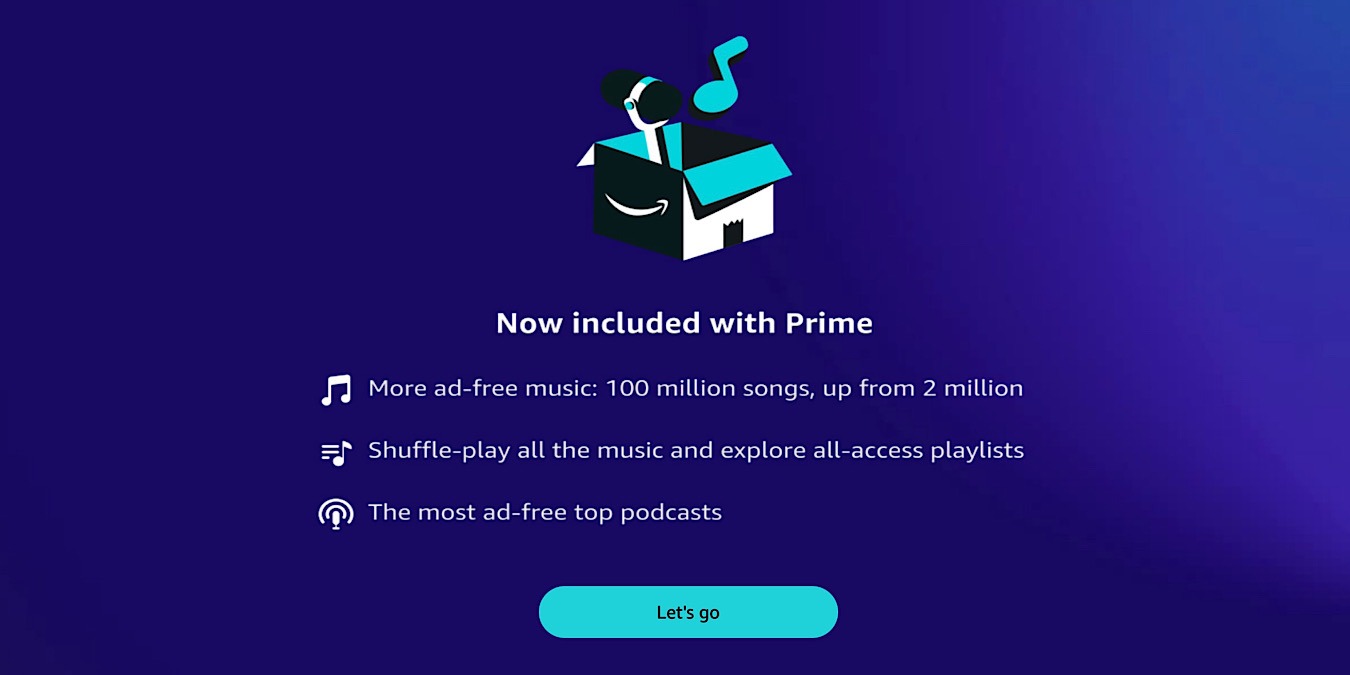

Many Amazon Prime members would agree that if there is one disappointing thing about the service, it’s that the music on offer is rather limited. Amazon released great news for those members on November 1, as Prime members will now get to enjoy the entire 100-million song catalog. Additionally, they’ll get better access to podcasts.
Check out this list if you’re looking for music streaming alternatives.
Amazon Music Changes
I have two Amazon Echo speakers in my house, an Apple HomePod speaker in the garage, and two Amazon Fire TVs. We often listen to music through Alexa on Amazon or Siri on the HomePod, iPhone, or iPad. I’ve also been an Amazon Prime member for several years. For that monthly $14.99 fee, it seems the music could be opened a tad bit more.
Repeatedly, we come across songs we can’t play. That part of the Amazon Music catalog wasn’t open to Prime members. Additionally, full albums couldn’t be played. However, I was able to connect my Apple Music subscription to Alexa. Often when I ask Alexa to play a song, it’s playing through Apple Music, not Alexa, and I get full content that way.
Tip: If you’re wondering whether Apple Music or Spotify suits you better, check out this comparison of the two music streaming sites.
That all changed on November 1, as Amazon announced that “Prime members will enjoy an increase from 2 million to 100 million songs in shuffle mode, ad-free, and at no additional cost to their membership.”
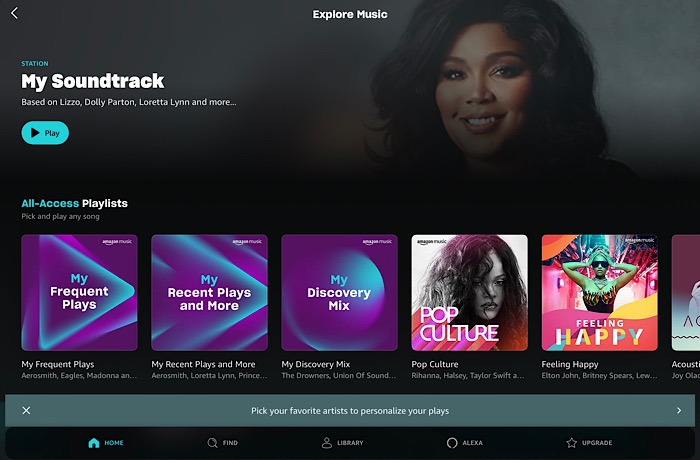
Yet, that comes with a caveat: Amazon can’t give away the farm, as they have to leave something for the Prime Unlimited subscriptions. While you have access to all 100 million songs, it’s only through playlists, albums, and shuffle. You still won’t have access to all of them individually.
Prime Access to Podcasts
“We can’t wait for members to experience not only a massively expanded catalog of songs but also the largest selection of ad-free top podcasts anywhere, at no additional cost to their membership,” said Amazon Music VP Steve Boom.
I’ve always found it easier to listen to my podcasts on Apple and other third-party apps than on Amazon. I’ve searched on my Fire TV and just found the process difficult. But I’ll try the process again based on the changes Amazon is making – specifically that they’ll be ad-free, which is always a bonus, no matter the product.
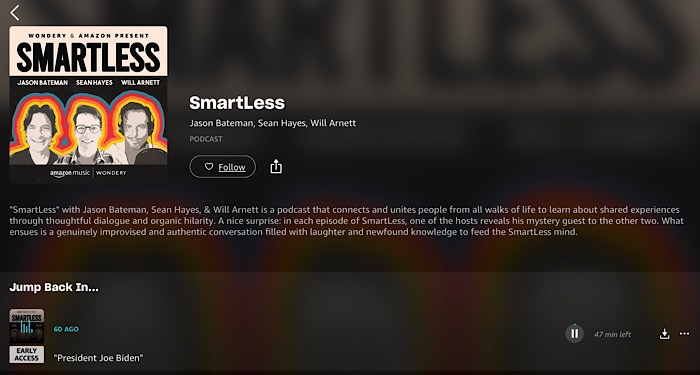
Those ad-free, on-demand podcasts will include offerings from CNN, NPR, The New York Times, and ESPN. This is in addition to the Wondery podcast catalog that includes SmartLess, Dr. Death, and more. Amazon is also adding exclusive shows, including MrBallen Podcast: Strange, Dark & Mysterious Stories and a weekly JJ Redick-hosted episode of The Old Man and the Three.
A new podcast feature allows users to preview a short snippet of a podcast episode to see if it’s worth their while before committing. There is also a Podcast Previews feature that introduces a curated list of podcasts to users.
You’ll have to see whether the changes Amazon Music has made will entice you to leave Spotify, Apple Music, and other music streaming services behind. If you don’t already have an Amazon Prime membership, along with the music, it includes one- or two-day delivery on select Prime products, which now include medication and groceries as well. There is also Prime TV and movies to go along with the music and podcasts.
Read on to decide whether Netflix or Amazon Prime Video is for you.
All screenshots by Laura Tucker.