


Believe it or not, there used to be a time in the not-so-distant past when websites were mainly just chunks of text. No fancy images, GIFs, annoying advertisements or auto-playing videos. In the early days of the Web, this simplicity was a necessity. Slow Internet speeds, technological restrictions and expensive server costs limited the functionality of a website.

Today, with high-speed Internet and advanced hardware, websites are flashier than the Las Vegas Strip. With high definition video, interactive elements and hi-res graphics, modern websites require a hefty amount of data compared to websites of the past. As you might have guessed, this can be problematic for people with slow Internet speeds or limited data. As a result, low-bandwidth websites are making a comeback, at least in the realm of news and journalism. These text-only sites are experiencing a resurgence, but are they for everybody?
Also read: What “Bandwidth Throttling” Means and Why ISPs Do It
What Purpose do Low-Bandwidth Websites Serve?
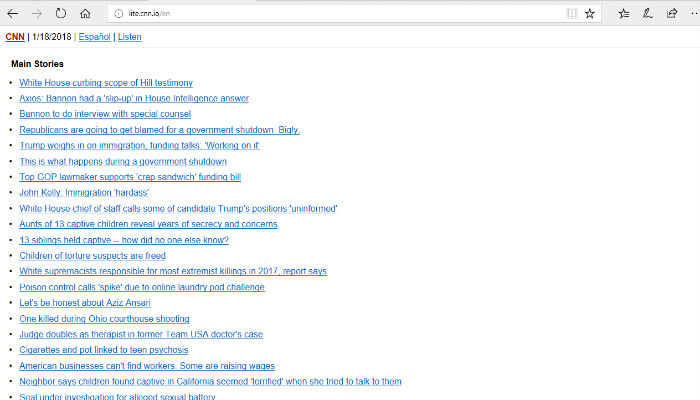
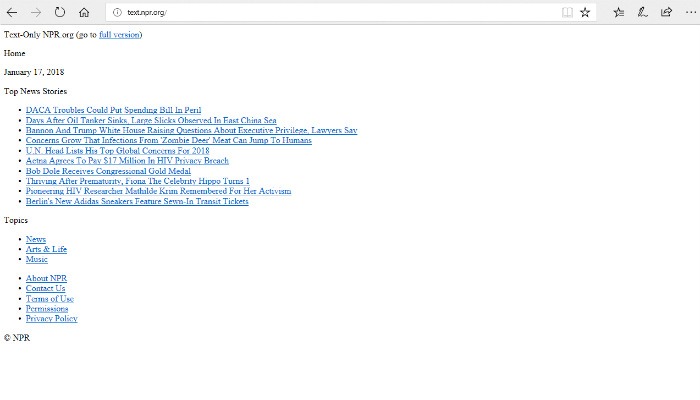
Low-bandwidth sites trim all of the fat. This means that there are zero ads, no images, and no video. Furthermore, they cut out all user interactivity. What you’re left with is just the text of the site minus all of the bells and whistles.
The main reason low-bandwidth sites are cropping up among news organizations is to provide people who have weak Internet connectivity stay informed. Slow or patchy Internet is a problem faced by people who have been impacted by a natural disaster, like the hurricanes that hit Texas, Florida and Costa Rica last year. When Mother Nature takes out the infrastructure, data and power is often at a premium. Low-bandwidth sites can deliver important information to those impacted without chewing up data or battery life.
Low-bandwidth versions of sites can also be beneficial for people who live in extreme rural areas. Back in 2015, CNN found that approximately 2.1 million people in the US still used dial-up Internet. Modern websites would be painfully slow to load on 56k, making text-only low bandwidth sites preferable. In addition, people in emerging markets who have slower Internet speeds benefit as well.
Why Would You Want to Use a Low-Bandwidth Site?
If you haven’t been impacted by a natural disaster or live in a remote area, you still might want to consider using a low-bandwidth news site for a number of reasons.
First of all, modern websites are often littered with advertisements. Sometimes these ads are so intrusive that they cover up content or obnoxiously play audio or video without your consent. As we mentioned earlier, low-bandwidth sites eliminate all ads. This means that you only see the content you came there for and nothing else.
In addition, because things like graphics, images, video and ads have all been removed, loading times are non-existent. Modern websites can be data intensive, meaning content can take a while to appear, especially on slower networks. Low-bandwidth sites are designed specifically to avoid this problem, with entire web pages being only a few kilobytes in size.
Furthermore, low-bandwidth sites don’t require a ton of data. This means that you can safely browse them without the fear of running over your data allowances.
Which Sites Have Low-Bandwidth Alternatives?
1. CNN
In the wake of Hurricane Irma, CNN unveiled a low-bandwidth version of its website. The decision to do so was applauded, as it gave people with unreliable Internet connectivity access to news stories. This text-only site features the same stories found on CNN.com, minus the images and videos.
2. NPR
Similar to CNN, NPR also maintains a version of its website that is completely free of ads, images and videos.
4. Facebook
Facebook has opted to create an entirely different version of its mobile app targeted at users in emerging markets. The Facebook Lite app is a significantly smaller download and is optimized for 2G speeds.
5. Twitter
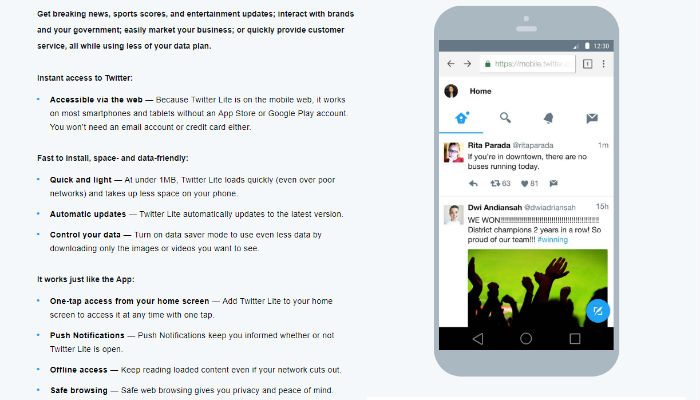
Instead of developing an entirely different app to service low-bandwidth users, Twitter has instead designed a website called Twitter Lite. This site gives users access to Twitter in a faster, data-friendly way. The decision to create a website, eliminates the need to download an app.
6. Google News
In an effort to appeal to users with slower data speeds, Google integrated a “lite” mode for their popular News and Weather app. Users are able to toggle “lite” mode on and off at will.
7. The Age
Like CNN and NPR, Australian newspaper The Age has also developed a text-only version of its site. Crikey, that’s a bloody fast loading website!
There are, of course, much more low-bandwidth sites that we didn’t mention. Do you use low-bandwidth sites? If so, why? Are there any low-bandwidth or text only sites that we forgot to mention? Let us know in the comments!