
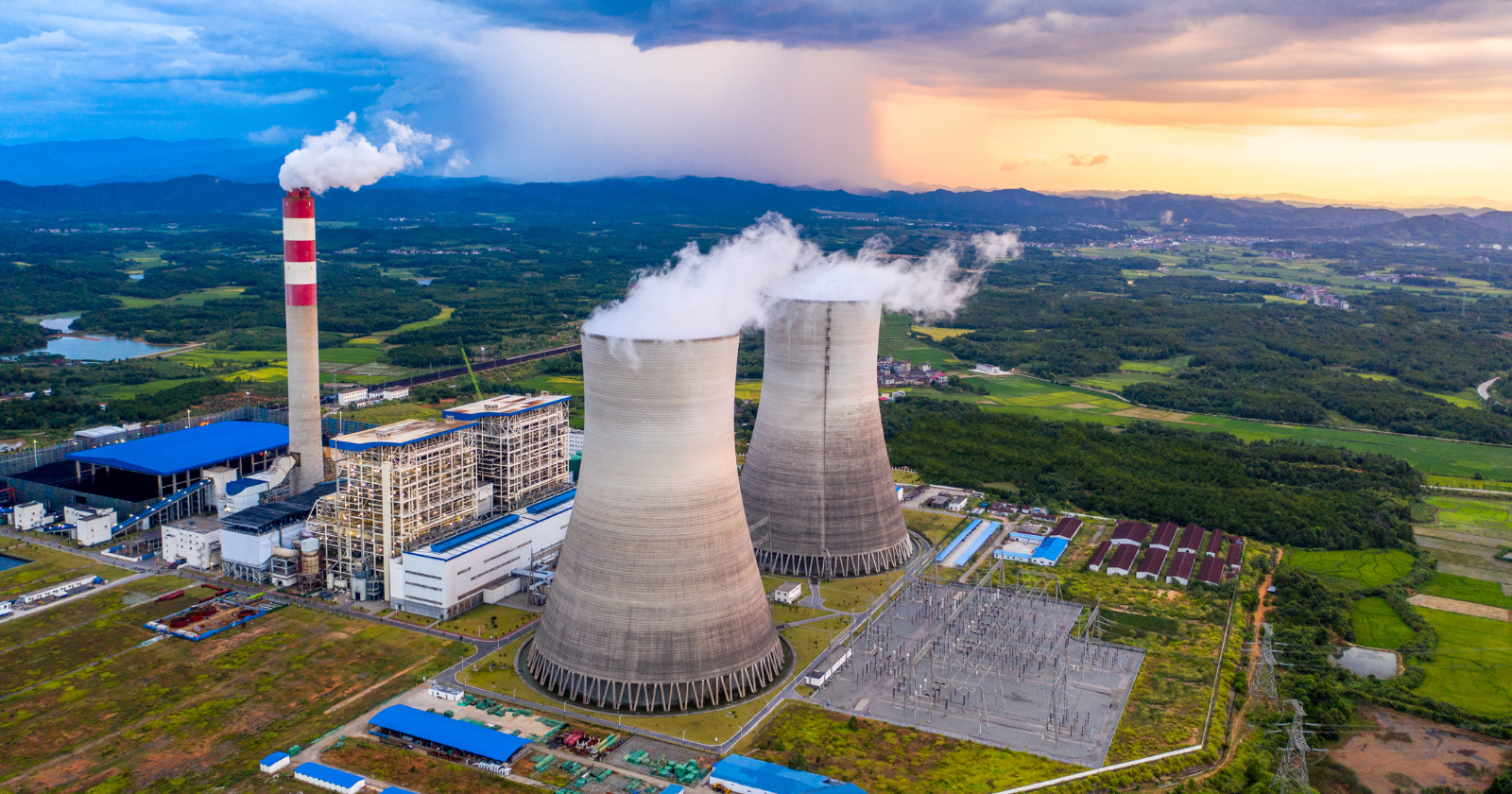

Along the Ohio River south of Moundsville, West Virginia, two enormous concrete cooling towers rise over the Mitchell coal plant. Each is about 376 feet tall and 288 feet across at the base, with the classic hourglass shape most people associate with power stations.
One of them is falling apart. Earlier this month, Kentucky’s utility regulator approved a plan to replace it, at a cost of $191 million, for a plant that’s currently scheduled to close in 2040.
Cracks that kept spreading
The Mitchell plant went into service in 1971. It’s co-owned by two subsidiaries of American Electric Power, Kentucky Power and Wheeling Power, with each owning half. Its two generating units can produce about 1,560 megawatts, and each unit has its own cooling tower.
The trouble is with the tower serving Unit 2. A project to reinforce it started in 2024. But by July 2025, contractors had found more cracking and deterioration than expected, which would have meant more work, more delays and higher costs.
The utilities concluded that patching it up wasn’t a viable long-term option. Kentucky’s Public Service Commission agreed. In its order, the commission said the utility had presented credible evidence that the tower no longer meets its design loads, poses a safety hazard and could fail catastrophically in extreme weather.
What a cooling tower actually does
A coal plant works by burning coal to boil water, and the steam spins turbines that generate electricity. After the steam passes through the turbines, it has to be cooled back into water so it can be reused. That takes a huge amount of cooling water, and the cooling tower is where that water sheds its heat.
The Mitchell towers are “natural draft” towers. Warm water is sprayed inside the base, and as it cools, it warms the air around it. Warm air rises, pulling cooler air in through the bottom without any fans. The towers’ curved, hourglass shape is efficient structurally and helps draw air upward. Those big white plumes you see aren’t smoke, but water vapor.
Concrete towers like this face constant stress. They stand in wet, warm conditions for decades, go through freeze and thaw cycles, and have to withstand strong winds. Over time, water can seep into the concrete and corrode the steel reinforcing bars inside. As the steel rusts, it expands, cracking the concrete from within. After 55 years, that kind of damage adds up.
A smaller, fan-driven replacement
Instead of building another giant concrete hourglass, the utilities plan to put up a “mechanical draft” cooling tower. These towers use large electric fans to push air through, rather than relying on natural airflow. That means they can be much shorter and more compact, and quicker to build.
The trade-off is that the fans use electricity, which slightly reduces the plant’s net power output, and they need ongoing maintenance. Under the plan, the old Unit 2 tower will be partially demolished once the new one is running, then fully demolished when the plant eventually retires.
The total cost is about $191 million, split evenly between Kentucky Power and Wheeling Power. Kentucky’s approval depends in part on the utility using a $51 million grant from the US Department of Energy, part of a federal program aimed at keeping coal plants running. That grant brings down the cost for Kentucky customers.
The 2040 problem
Here’s what makes the project controversial. Mitchell is currently scheduled to shut down in 2040. A Sierra Club witness pointed out to Kentucky regulators that if the new tower comes online as planned, it would be only about 12 years old when the plant closes. Cooling towers typically last for decades.
Critics also note that Mitchell runs far less than many coal plants. In recent years it has operated at around a quarter of its full capacity on average. Environmental groups argued that customers would be better off retiring Unit 2 or replacing the plant with a mix of natural gas, renewables and battery storage.
Kentucky Power sees it differently. The company has said the new tower gives it the option to keep the plant running beyond 2040 if needed. Without it, Unit 2 would likely have to shut down well before then, cutting the utility’s generating capacity at a time when electricity demand is rising.
Why regulators said yes
Even Kentucky’s commission seemed uneasy. At a hearing in July, the commission’s chair described the project as “unpopular,” since customers will see higher bills to pay for it. But regulators also had to weigh the risk of losing a large chunk of generating capacity quickly, and what it would cost to replace it.
The decision reflects a wider tension in the US power system. Many utilities are under pressure to keep older plants open as electricity demand climbs, partly because of data centers and new industry. At the same time, those plants keep getting older, and keeping them safe and running gets more expensive.
For now, Mitchell’s old tower is getting a successor. Whether that new tower ends up with a short life or a long one may depend less on its concrete and fans than on decisions made about the plant over the next 14 years.