

The whole thing started with a flier and a brush-off.
A donation request for a charity helping the blind had been dropped at the Banerjee house in Santa Clara, California, and 12-year-old Shubham read it and asked his parents a simple question: how do blind people actually read? His parents, busy, gave the answer every modern parent gives. “Google it.”
So he did. And what he found sent him to the kitchen table with a box of LEGO.
The “Google it” that backfired beautifully
Shubham’s search turned up two facts. The first was that blind people read braille — raised dot patterns felt with the fingertips. The second was the one that lodged in his head: the machines that print braille, called embossers, were expensive. Widely reported coverage at the time put the entry price at around $2,000 and up — a figure repeated so consistently it became the number everyone quoted.
Two thousand dollars struck a seventh-grader as absurd for a machine that just punches dots into paper. “I just thought that price should not be there,” he said. In much of the world, that cost put braille printing out of reach entirely.
He decided to build a cheaper one. For a school science fair.
A printer made of LEGO
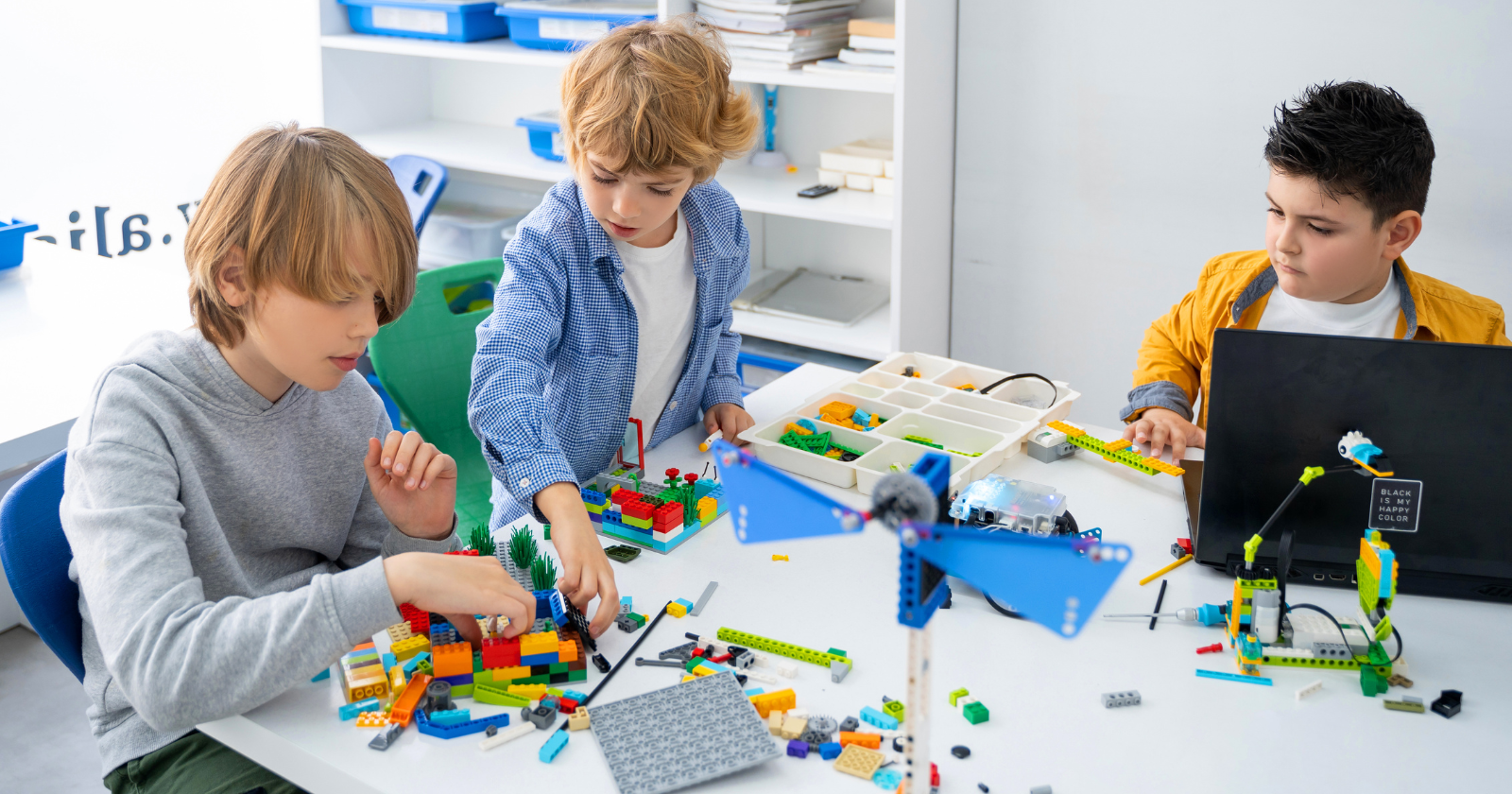
His raw material was a LEGO Mindstorms EV3 kit — the programmable robotics set that retails for $349 — plus about $5 of extra bits from the hardware store. Working at the family’s kitchen table, iterating through version after version, he assembled a small machine that could punch braille characters into a strip of paper. He called it Braigo, a mash-up of “braille” and “LEGO.”
It was not going to match a commercial embosser on speed or durability, and it didn’t need to. It printed real braille dots, and it cost about a sixth of the cheapest professional machine. For a science-fair project built from a toy, that was a genuinely startling result — a kid had collapsed a $2,000 price tag to a few hundred dollars using parts millions of families already own.
The project won awards, drew enthusiastic support from the blind community, and in June 2014 landed Shubham at the White House Maker Faire — the kind of exposure that turns a school project into a story with real momentum.
From kitchen table to company
Here’s the part worth telling honestly, because retellings tend to jump straight from “LEGO printer” to “Intel invested,” skipping the step in between.
The first money wasn’t Intel’s. It was family savings. Convinced their son was onto something, Shubham’s parents put $35,000 of their own money into founding Braigo Labs in the summer of 2014 — the seed capital was a household’s, not a corporation’s. His father, notably, was an engineer who worked at Intel, which is part of how the idea reached the right eyes.
With that backing, Shubham built a more serious second version. Braigo 2.0 abandoned the LEGO for a modified off-the-shelf desktop printer and a newly released Intel chip, and it could translate electronic text into braille and print it from a computer or phone — a real product rather than a science-fair proof.
The youngest venture bet in the Valley
Then Intel Capital, the chip giant’s investment arm, looked at what this kid had built and did something unusual: in November 2014 it put an undisclosed sum into Braigo Labs. By Intel’s own reckoning, that made Shubham Banerjee — then 13 — the youngest person ever to receive venture-capital funding. Reuters reported that both Banerjee and Intel declined to name the figure, with one source putting it in the low hundreds of thousands.
Strip the fairy-tale gloss off and what remains is still remarkable, and it’s really a story about a question nobody wanted to answer. Two adults, handed a child’s curiosity about how blind people read, deflected it with “Google it” — and the deflection, instead of ending the matter, handed the kid the entire internet and a problem worth solving. He found a $2,000 injustice, undercut it with a toy, and turned a science-fair table into a company a Fortune 500 chipmaker wanted a stake in.
The commercial braille-printer market didn’t get instantly disrupted; hardware is hard, and cheap embossers remain a genuine unmet need. But the point of the story was never really the printer. It was the sequence: a flier, a question, a brush-off, and a twelve-year-old who took “Google it” as a dare instead of a dismissal. The most valuable thing at that kitchen table was never the LEGO. It was a kid who refused to accept that $2,000 was simply the price of reading.