
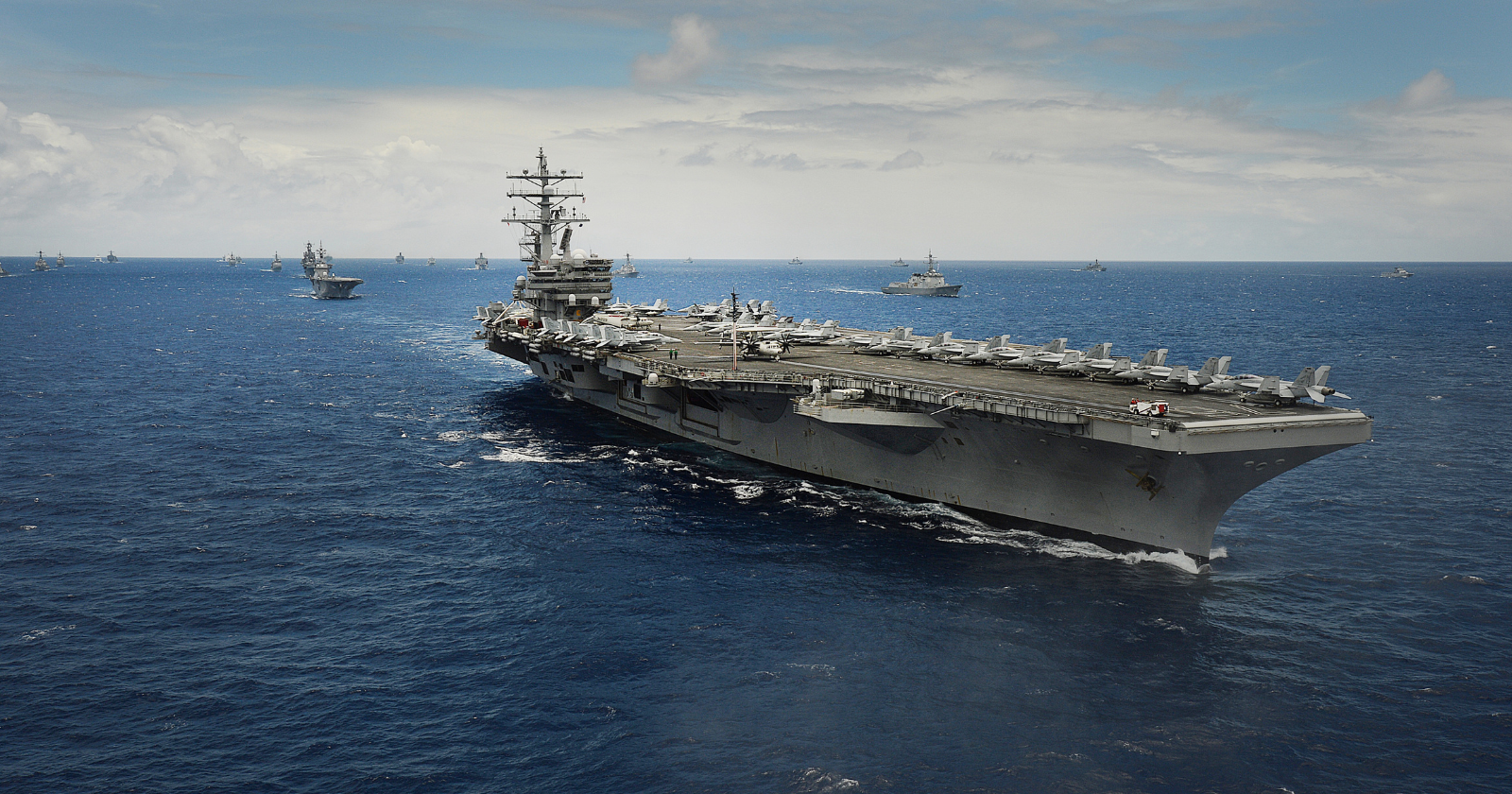

On October 13, the US Navy’s 251st birthday, a stealth fighter came in low over the Atlantic, dropped its tailhook and slammed onto the deck of the future USS John F. Kennedy. A cable caught the hook and dragged the jet to a stop in a couple of seconds.
It was the first time an F-35C had ever landed on a Ford-class carrier, the Navy’s newest and most expensive type of warship. A second F-35C flew alongside, carrying three inert 500-pound JDAM bombs under its wings. The next day, an F-35C was launched off the ship’s electromagnetic catapult for the first time.
A new carrier, built around new tech
The John F. Kennedy (CVN 79) is the second ship in the Ford class, which is meant to replace the older Nimitz-class carriers that have served since the 1970s. The ships displace about 100,000 tons and are built by Newport News Shipbuilding in Virginia.
The biggest changes are in how the ships launch and recover aircraft. Older carriers use steam catapults to fling jets off the deck and hydraulic systems to stop them on landing. Ford-class carriers replace both with newer technology: the Electromagnetic Aircraft Launch System (EMALS), which uses linear electric motors instead of steam, and Advanced Arresting Gear (AAG), which uses electric motors and computer control to stop landing aircraft more smoothly.
In theory, these systems put less stress on aircraft, can be fine-tuned for different jets and drones, and need fewer crew to run. In practice, they’ve been a major source of trouble. Reliability problems with EMALS, AAG and the ship’s advanced weapons elevators dogged the first Ford-class carrier, the USS Gerald R. Ford, and slowed the whole program.
Why the F-35C needed special treatment
The F-35C is the carrier version of the F-35 stealth fighter, with bigger wings, a stronger tailhook and beefier landing gear. But fitting it onto a carrier isn’t as simple as letting it land.
The jet needs more than a deck and a wire. Ships have to be modified with secure spaces for handling the aircraft’s classified data and mission systems, computer networks that link to the F-35’s maintenance and logistics software, and facilities for repairing its special stealth coatings. The F-35C’s engine exhaust is also hot enough that carriers need tougher jet blast deflectors, the panels that pop up behind a jet on the catapult to protect sailors and equipment.
The Navy’s original plan was to deliver the Kennedy first and add many of those upgrades later. Congress didn’t like that. Lawmakers were frustrated that the Navy’s newest carriers couldn’t operate its newest fighter, and in the 2020 defense bill they required the Kennedy to be able to deploy with F-35Cs before completing its post-delivery shakedown period.
Late, and getting later
That decision, together with problems on the launch, arresting and elevator systems, pushed the schedule back repeatedly. The Navy switched to a “single-phase” delivery in 2020, building in the F-35C upgrades and other work that would normally happen after delivery. Delivery slipped from 2024 to 2025, then to March 2027, largely to finish certifying the Advanced Arresting Gear and the weapons elevators.
The Navy took preliminary acceptance of the ship on September 29, 2026, after sea trials in August. That lets the crew take the ship to sea and run tests like this one while the shipyard finishes its remaining work. Formal delivery is still expected in spring 2027.
What the test actually checks
The F-35C landing was part of what the Navy calls Aircraft Compatibility Testing. A team from the F-35 Integrated Test Force at Naval Air Station Patuxent River is using specially instrumented jets to record exactly how the ship’s launch and recovery equipment behaves with each aircraft type.
The test jets are covered in black-and-white markings that work like targets for high-speed cameras. They give engineers precise visual reference points, so they can measure the aircraft’s position and movement during each landing and launch. Sensors on board the jet record loads on the airframe and landing gear.
The inert bombs on the second jet matter too. Carriers don’t just recover clean, empty fighters. Jets often come back with unused weapons still attached, which changes their weight and handling, and the arresting gear has to cope with that safely. Testing with realistic loads helps engineers confirm the system can handle the full range of situations it will face in service.
A milestone, not the finish line
One landing and one catapult shot don’t make the F-35C fully operational on the Kennedy. The ship still needs to show it can launch and recover the jets reliably, day after day, alongside the rest of an air wing. Maintenance spaces, data systems and crews all need to work together at sea.
The test also comes as other navies move quickly. China’s newest carrier, the Fujian, has already shown electromagnetic catapult launches and arrested landings with several aircraft types, including its own J-35 stealth fighter.
For the US Navy, though, the October 13 landing finally closes a gap Congress complained about years ago. The service’s newest carrier has now caught the service’s newest fighter, even if the ship is arriving years later than planned.