
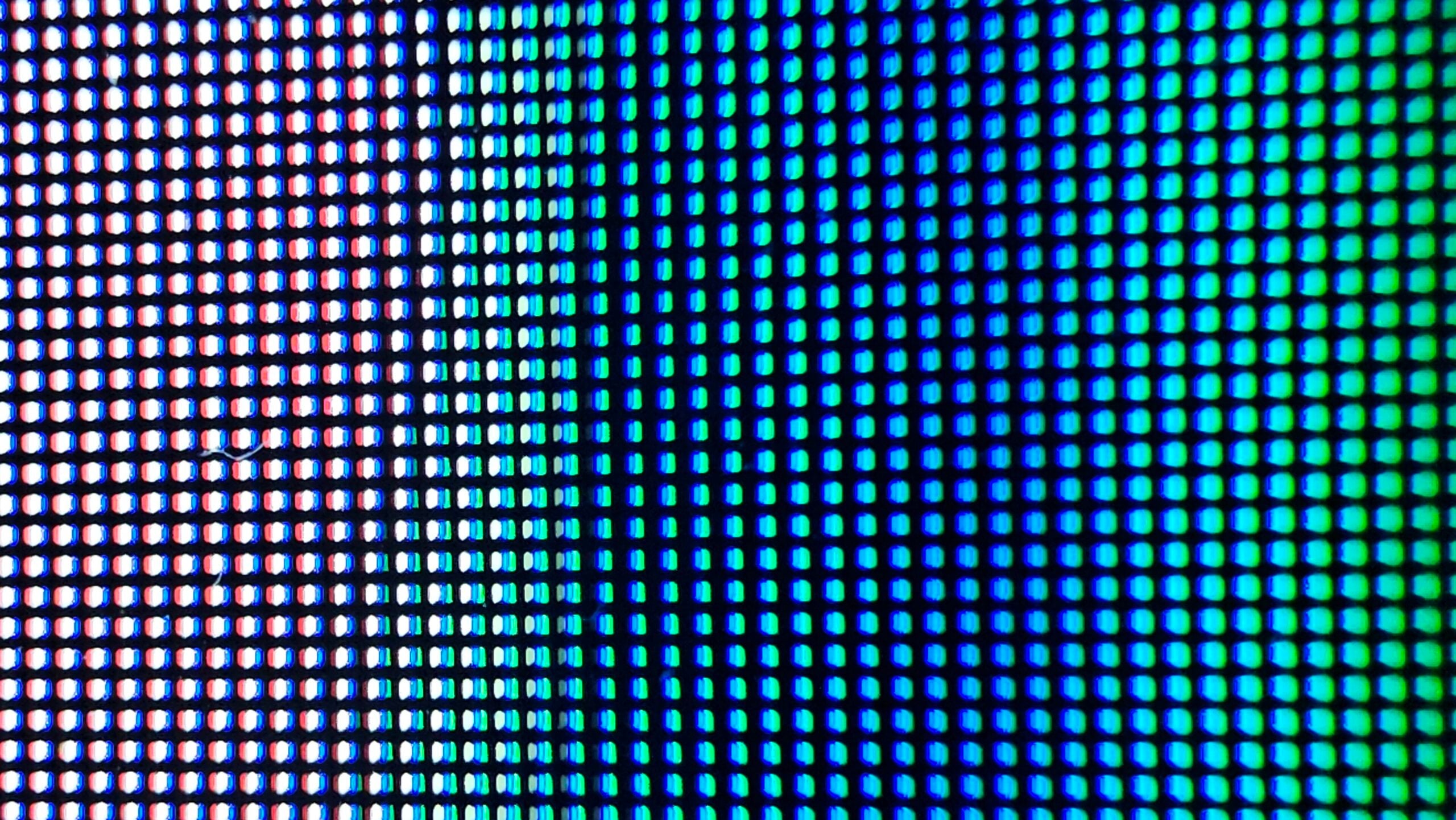


RTINGS found edge rot, dead pixels, clusters of dead pixels and other visible deterioration along the edges of the panel, on 14 of the 16 LG Display WOLED TVs it ran for 18,000 hours in its Accelerated Longevity Test, according to its investigation published in November 2026.
The sets were 2020 to 2023 models fitted with WOLED panels made by LG Display and sold under the LG, Sony and Vizio brands. RTINGS said 18,000 hours of use is equivalent to ten years in the typical US household. TweakTown, reporting the findings, noted that no model from 2024 onward was tested.
Nine of the ten TVs with LG Display’s earlier-generation WBC panels developed edge rot, as did five of the six with newer WBE panels. The three QD-OLED sets in the test, which use Samsung Display panels, showed none.
What RTINGS means by edge rot
Edge rot is RTINGS’ own descriptive term for dead pixels, clusters of dead pixels and other visible deterioration concentrated along an OLED panel’s edges. The company said the term describes the symptoms it observed rather than confirmed causes, and that the name comes from an appearance “reminiscent of mold on a wall”.
The defects differ from the persistent image patterns associated with burn-in. RTINGS said they are not caused by watching static content and cannot be avoided by watching mixed content, and that edge rot does not appear to be preventable by user intervention, including watching varied content.
Severity ranged from a few dead pixels that were difficult to spot outside test patterns to severe damage along the screen’s edges. The TVs remain usable while the defects develop, and RTINGS said its results are not a prediction of whether any individual WOLED will develop the same problem.
Two sets owned by RTINGS employees, a 2020 LG GX and a 2021 LG C1, show significant edge rot after use in regular household conditions.
Which sets showed the damage
Among the WBC-panel TVs, RTINGS classified the LG BX, the Vizio OLED, the LG A1, the LG C1 and the Sony A80J as severe. The LG CX, the Sony A8H and the LG B1 were rated significant, and the 2022 LG B2 mild. The 2022 LG A2 was the only WBC set with no edge rot.
Among the WBE panels, which use deuterium in the OLED emissive layer, the Sony A90J was rated severe, the LG G1 and LG G2 significant, and the LG C2 and Sony A90K mild. RTINGS said eight of the ten WBC units were classified significant or severe, against three of the six WBE units.
The 2023 LG G3 had no edge rot. Aside from burn-in from running CNN for 18,000 hours, its panel was in perfect condition, with no dead pixels or other visible issues. It was the only 2023 WOLED in the test, and RTINGS tested no TV from 2024 onwards.
The QD-OLED units, the Samsung S95B, the Sony A95K and the Samsung S95C, had no edge rot and no dead pixels, their only fault being burn-in from running CNN. RTINGS said three units are too few to establish that QD-OLED is immune to the issue, and that QD-OLED is newer to the market.
Three OLED monitors were also reviewed for edge rot: the Dell Alienware AW3423DWF, the LG 27GR95QE-B and the Samsung Odyssey OLED G85SB S34BG85. None showed it. RTINGS called that sample tiny and asked monitor owners to report similar problems.
LG’s statement and what is still unknown
RTINGS asked LG Display and Samsung Display for comment three days before publication. LG said: “LG Electronics and LG Display are aware of the phenomenon referenced by RTINGS and have found that it may occur in a very small number of OLED products under prolonged exposure to high-temperature, high-humidity, or other harsh environmental conditions. LG OLED products are designed to deliver exceptional picture quality and reliability, and this phenomenon is not expected under normal everyday viewing conditions.”
Samsung Display said its Thin Film Encapsulation architecture “effectively blocks moisture ingress right at the edge of the panel—eliminating the root cause of border degradation and ensuring long-term edge-to-edge uniformity where traditional structures falter”.
The causes RTINGS gives are what it believes may be happening, not confirmed findings. Based on discussions with industry experts, it said the damage may come from contamination during manufacturing, defects in the encapsulation of some OLED displays, or degradation of that encapsulation over time, with a combination of those factors or other mechanisms it has not yet identified also possible.
Confirming the cause would require specialised failure analysis, including microscopic inspection of the panel’s internal layers, which RTINGS said is beyond its current testing capabilities. The company also drew a distinction between calendar age, which its test evidence links to edge delamination, and operating hours, which it links to pixels dying out where there is no obvious delamination near the panel edges.
RTINGS said WOLED panels made by LG Display have a higher chance of pixel failures over the long term than OLED panels from other manufacturers, and that the results describe how WOLEDs have performed in the past rather than how current panels, including Tandem RGB WOLED, will perform. It said there are indications that panels manufactured from 2024 onwards have had substantial changes that should guard against the issue, but that it is rating newer WOLEDs the same as older ones as a precaution.
In its Expected Reliability scoring, introduced with the Panel Reliability Risk Factors test in TV Test Bench 2.3.1, WOLEDs score slightly lower than their QD-OLED peers. Burn-in aside, RTINGS said OLED TVs have the fewest complete failures overall compared with LCDs, and it still considers WOLEDs a strong pick for overall reliability.
Its Longevity 3.0 test is running newer sets: the 48-inch LG C6 and the LG G6, both with RGB Tandem WOLED panels, the 65-inch LG C6 and the 42-inch and 65-inch LG C5 with WBE panels, the LG G5 with an RGB Tandem panel, and the Samsung S95H, S90F and S95F QD-OLEDs. RTINGS said it will track whether edge defects appear and how they evolve over time.