
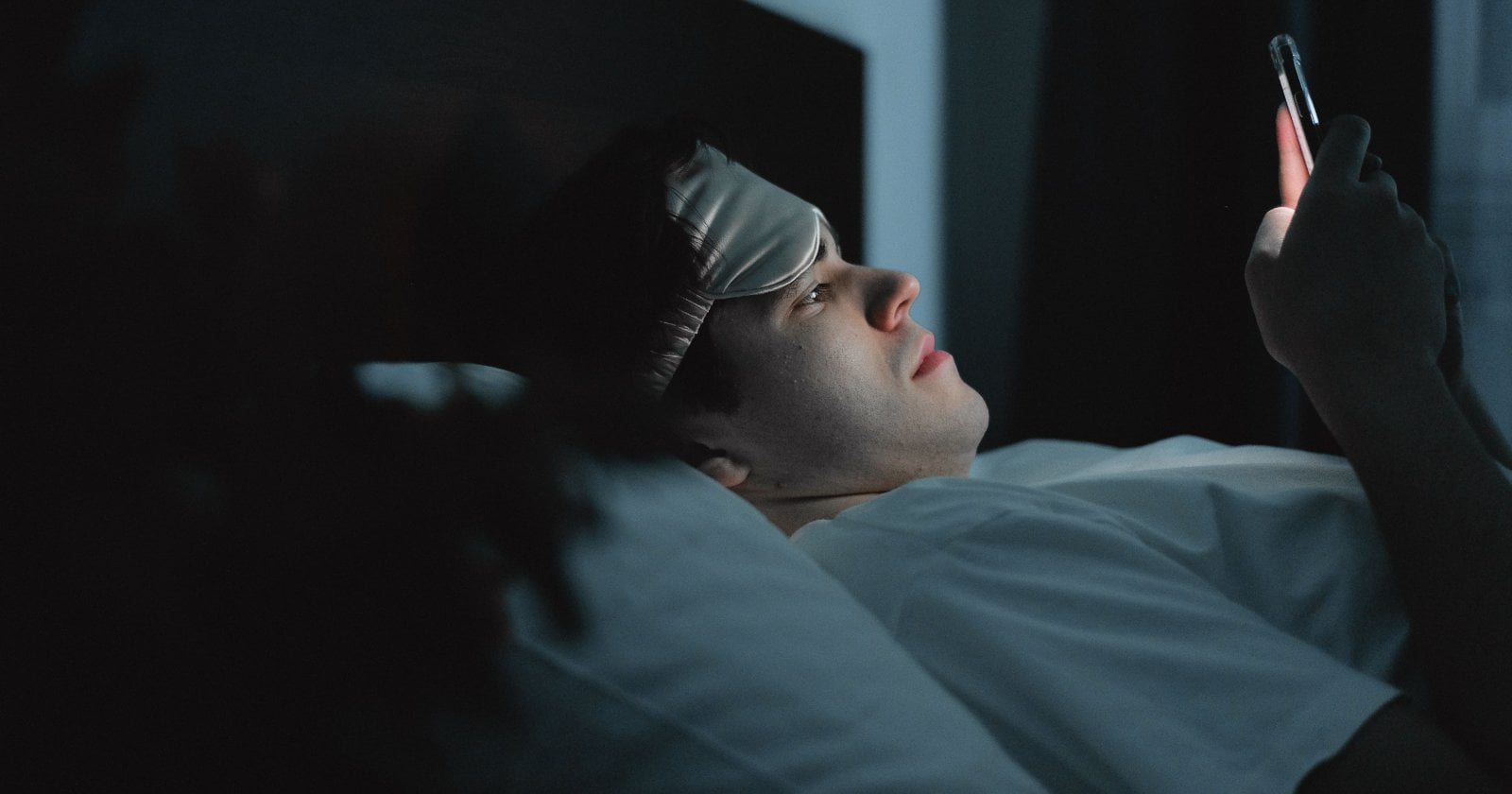

I’d take a quick break from work and open Instagram. Just a quick break. A minute or two later I’d be watching Reels, which as far as I can tell is exactly what you are supposed to end up doing.
Twenty minutes after that I would surface, zoned out, with no idea where the time had gone. I would not even be able to tell you what I had just watched.
I was becoming addicted to my phone. It happened slowly, and I am a little ashamed to admit it. There was no single moment where I noticed. There was just a long stretch of months where that scene kept playing out, and I had stopped asking why.
What finally prompted me to do something was reading Stolen Focus by Johann Hari. It isn’t really a book about phones, more a wide-ranging argument about why our ability to pay attention is collapsing, and it is a great read for that reason alone. But somewhere in the middle of it I put the book down and looked at the thing on the table next to me, and I did not like what I saw.
So I thought it over. My first instinct was the romantic one. Replace the smartphone with an old Nokia. Carry a dedicated camera. Dig out an old iPod for music. Keep a notebook in my pocket. It sounds lovely, and I will admit it was appealing.
Then I broke it down, and it fell apart. When you actually list what you would be giving up, you end up missing things that are pretty essential. For me those were Google Maps, WhatsApp to talk to my family when I’m away from home, and my banking app. There is no elegant analog substitute for any of those, as far as I can see.
I came to the conclusion that giving up the smartphone was simply impractical. So instead I set about turning my Samsung into something closer to a dumb phone.
Today, I go over the five changes I made. They have massively reduced my screen time, and while I am not out of the woods yet, they have reduced my dependence on the thing in a way I can feel.
It has been freeing. None of it cost a cent(in fact I think I’m saving money), and you can do all of it today.
1. Delete apps that rely on reels
This one is obvious, and it was the biggest. The scene I opened with was the whole problem, and it was never the messages or the photos from friends that got me. It was Reels, every time.
And it isn’t only Instagram. Plenty of apps are now built around the same endless scroll of short videos, so the rule I settled on was broader than one app: if its main feed is reels, it comes off the phone.
I haven’t had the Facebook app on my phone in a long time, and I have never had TikTok. I would imagine they cause the same problem.
The research suggests I’m not imagining the problem itself. A 2025 meta-analysis in Psychological Bulletin pooled 71 studies covering just under 100,000 people and looked at what short-form video use goes along with. The authors found that it was associated with poorer cognition, poorer attention, poorer inhibitory control (your ability to stop yourself acting on an impulse) , and last but not least, poorer mental health. That’s quite a list, right?
I’m not a psychologist, and this is a review of associations, not proof that the videos cause the damage. It could just as easily be that people who already struggle to focus are drawn to the format. But it matched my own experience closely enough that I stopped needing to be convinced.
Instagram is gone. I sometimes reach for it but I when I do, I’m glad it’s not there.
2. Limit shorts on YouTube
I thought about deleting YouTube too, and I still might. But I like watching documentaries, golf videos, that sort of thing, and I don’t see a big problem with it once the watching is chosen. If I have to search for something and I sit through a long video I’m actually interested in, I don’t mind that at all.
The problem is again Shorts.
What I found is that you can rein them in without touching the rest of the app. In the YouTube app, go to your profile, then Settings, then Time management, and you will find a Shorts feed limit. You can set it to zero minutes. There is also an option in the feed itself to show fewer Shorts, which is worth tapping too. The limit is a soft one, so the app will let you dismiss the reminder if you insist, but that small pause has been enough for me. This has helped massively.
3. Unsubscribe from almost everything
I need email but I don’t like getting notifications all the time. I thought about disabling notifications for it and checking once a day, which is the standard advice. But the more I looked at my inbox the more I realized the real issue wasn’t how often I checked. It was that I don’t actually get that many important emails a day, and they were buried under things I had signed up for and forgotten.
So instead I went through every subscription I had and unsubscribed from pretty much all of them. Now what lands in my inbox is work mail from actual people, emails from my bank, and the occasional update on something I might need to know. Perfect. I am not missing out on anything, and I am massively less distracted.
4. Turn off every notification you don’t need
I went through the notification settings app by app and switched off everything that wasn’t a person trying to reach me. The ones that surprised me were the transport apps. I had ride and travel apps that would send me promotional updates, offers and reminders, each one a small buzz that pulled my eyes to the screen and, more often than not, kept them there for a few seconds afterwards.
The test I used was simple. Would I be upset if I only saw this an hour later, when I chose to open the app? If not, the notification was gone.
5. Add friction
The last change was really a handful of small ones, all with the same goal: make the phone less inviting to pick up and less rewarding when you do.
On my Samsung, if you wanted to see some news, a feed of it, you just swiped sideways with your thumb and there was a never-ending stream of things to look at.
I like having news, so I didn’t get rid of it. I just removed the shortcut. Now I have to open an app and go looking for it, and so far I have found myself doing that far less often. That tiny bit of extra effort is the whole trick.
Then I made the screen itself dull. I use a plain black background with no wallpaper.
And I hid most of my apps in folders, so that when I open the phone I see only the essentials. Everything else is two taps away, which is just enough.
A phone that looks boring gets treated like a tool. A phone that looks like a slot machine gets treated like one.
A bonus one: cancel the subscriptions you forgot about
This is perhaps more about taking control of my finances than my phone, but it came out of the same clean-up and it felt like the same job. While I was going through everything, I canceled a bunch of things I was paying for and simply no longer needed. Apple TV, which I don’t watch. A design program I had needed for exactly one month and then forgot to cancel. A few work tools I no longer used. The phone had been billing me every month for a version of my life I wasn’t living.
I am not out of the woods. I still reach for the phone while the kettle boils, with nothing in particular to check. But the pull is weaker than it was, and the phone is closer to what it was supposed to be, a useful object I pick up for a reason and put down when the reason is done.