

At the end of the fall 1971 semester, three Carleton College seniors who were student teaching in Minneapolis printed out the code of a classroom game they had written, then deleted it from the school district’s mainframe. Slate interviewed Don Rawitsch, the game’s inventor, for its 50th anniversary in 2021. His copy of the printout, it reported, then sat in a folder in his bedroom desk for three years.
The game was The Oregon Trail. The Strong National Museum of Play, which inducted it into the World Video Game Hall of Fame in 2016, says more than 65 million copies have been sold. It came back because Rawitsch, home with a cold over Thanksgiving weekend in 1974, typed that printout into a computer again, line by line.
A game that ran on paper
Rawitsch was 21 and had been assigned an eighth-grade history unit on westward expansion at Jordan Junior High, according to The 74. He started with a board game about the wagon route west. His apartment-mates, Bill Heinemann and Paul Dillenberger, were math majors who also taught in city schools. Both had learned BASIC, so the three decided to build a computer game instead, according to Philip Bouchard, who later led the team behind the 1985 version.
Rawitsch needed it in two weeks, Bouchard writes, and Heinemann and Dillenberger did the programming at night. The 74, which puts the deadline at 10 days, says they coded it on a teletype at Bryant Junior High, where the two of them taught.
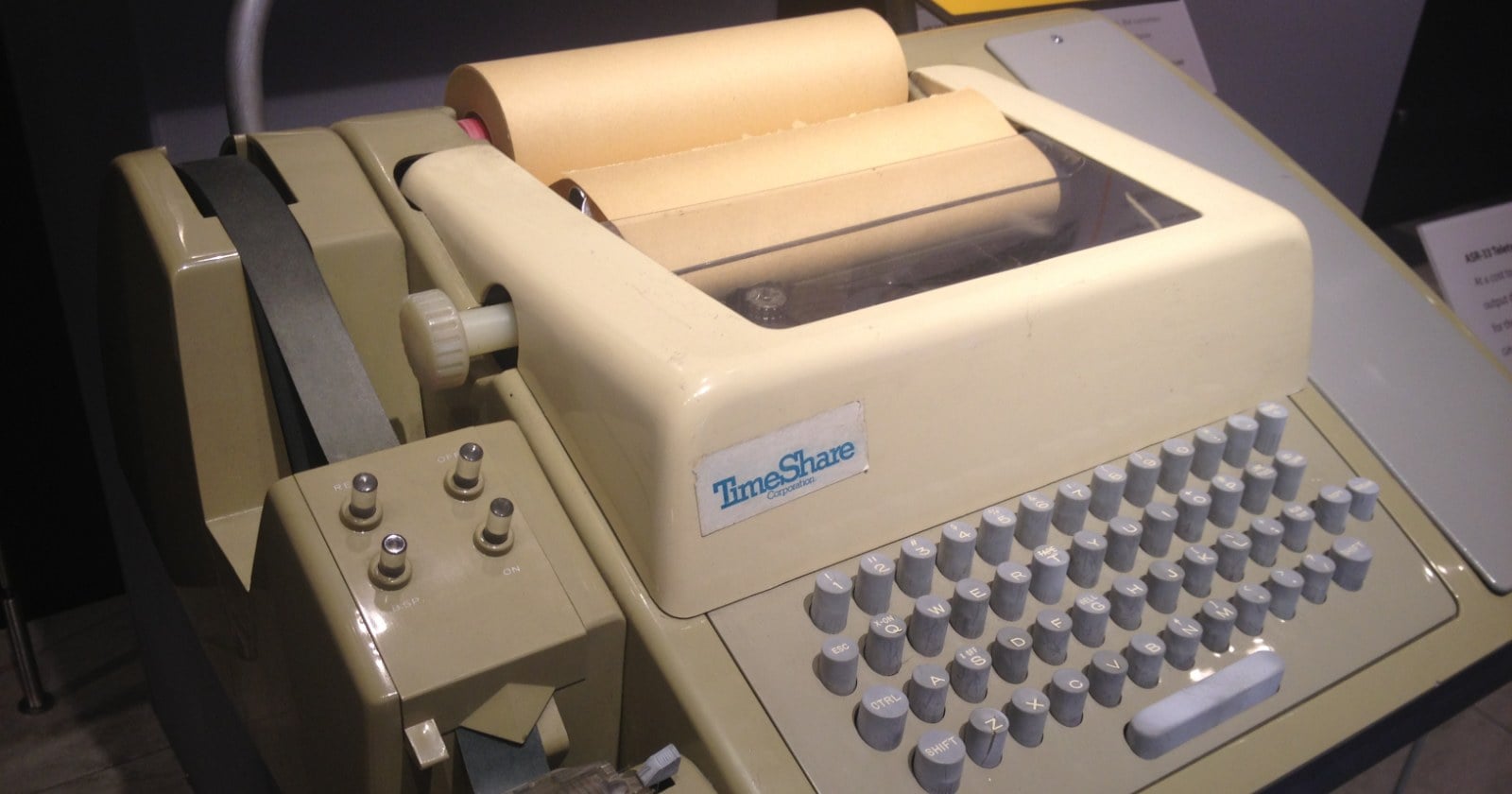
The students would play it across town, on the teletype at Jordan, and there was no screen to play it on. As Slate describes it, Jordan’s machine had no monitor and was linked by phone line to a mainframe in downtown Minneapolis. Between uses it lived in the janitorial closet. A teletype is a keyboard and printer working off a roll of paper, so whatever a player typed, and whatever the program answered, came out on that roll.
His class first played the game on Friday, December 3, 1971. Rawitsch said in the Slate interview that “probably 90 percent” of his students had never had a chance to use the school’s one computer.
Deleted at the end of term
Rawitsch’s own account of the deletion is blunt. “We printed out the code and carried it away on paper, but we deleted the files,” he told Vice’s Motherboard in 2017. “The game was lost for a couple of years.”
They left with more than one printout. The 74 says the trio printed “a few copies of the 800 or so lines of code” and took the scrolls home. Rawitsch calls them “the sacred scrolls of ‘The Oregon Trail,'” Business Insider reported from his talk at the Game Developers Conference. By those accounts the code was never down to a single printout, though PC Gamer‘s 2017 headline calls it “the only copy.”
The way back ran through the Minnesota Educational Computing Consortium, or MECC, which the Minnesota legislature created in 1973. In Bouchard’s account, it ran a time-sharing system for the state’s public schools. Time-sharing let many schools use one central computer at once, each through its own terminal. Rawitsch was hired there in October 1974, he told Slate, and when MECC put out a call for products, he volunteered to dig out the paper roll and type in the code, according to The 74.
Thanksgiving, a cold and the kitchen phone
“So over Thanksgiving weekend I had a cold and I had nothing else to do,” he told Slate. He brought a portable terminal home, and “from the kitchen phone, I connected to the MECC computer and typed in line by line the code” from the printout. By his own count to Motherboard, it came to 800 lines.
Slate’s writer raised the idea of overtime pay for the holiday. “No,” Rawitsch said, laughing, “there was just no cognizance of that. I considered myself to be an educator.”
What changed on the way back
With the code back on a computer, he reworked the game. He read pioneer diaries “all the way through and kept track of the things that really did happen,” he told The A.V. Club in 2015, scoring how often each kind of event came up. PC Gamer says he counted illnesses, deaths and successful trips and studied weather conditions. Then, in Bouchard’s words, he “adjusted the frequency and details of the random events that occurred in the game.”
The diaries also described Native Americans helping travelers, so he added an event in which they approach a struggling party and offer food or supplies, according to The A.V. Club. In 1975 he made the program available to everyone on MECC’s system.
In 1978 Rawitsch published the program’s code in the May–June issue of Creative Computing magazine. An archived scan of the issue is online, and a GitHub repository preserves a transcription of the listing.
Never paid, still played
The three “never saw a dime” from the game, according to The 74, because they gave it to MECC in 1974 without expecting to be repaid. “Paul and Bill and I, when you get right down to it, we were teachers,” Rawitsch told Slate. Getting rich “would have been nice, but not as important as having donated something to the world of education.”
The game kept going without them. MECC’s completely new Apple II version, the one Bouchard led, arrived in 1985. By 1989 it was in classrooms in one in three US school districts, according to the Minnesota Historical Society’s MNopedia, which also gives the 65 million sales figure as of 2017. Readers can still play a version of it today: Gameloft’s remake has been on Apple Arcade since 2021, and it is on Make Tech Easier’s list of the best Apple Arcade games.
Some of the paper survived, too. The Strong’s MECC collection lists a “snippet of an original Oregon Trail Mod33 Teletypewriter paper roll” that “contains the line-by-line code,” with no date or version given. And at the same talk where he described the sacred scrolls, Rawitsch said Heinemann still had his, Business Insider reported.
Featured image: A Teletype ASR-33 terminal on display at the Computer History Museum (representative of the teletype terminals the game was first played on). Photo: ArnoldReinhold / Wikimedia Commons, CC BY-SA 3.0; cropped and resized.