
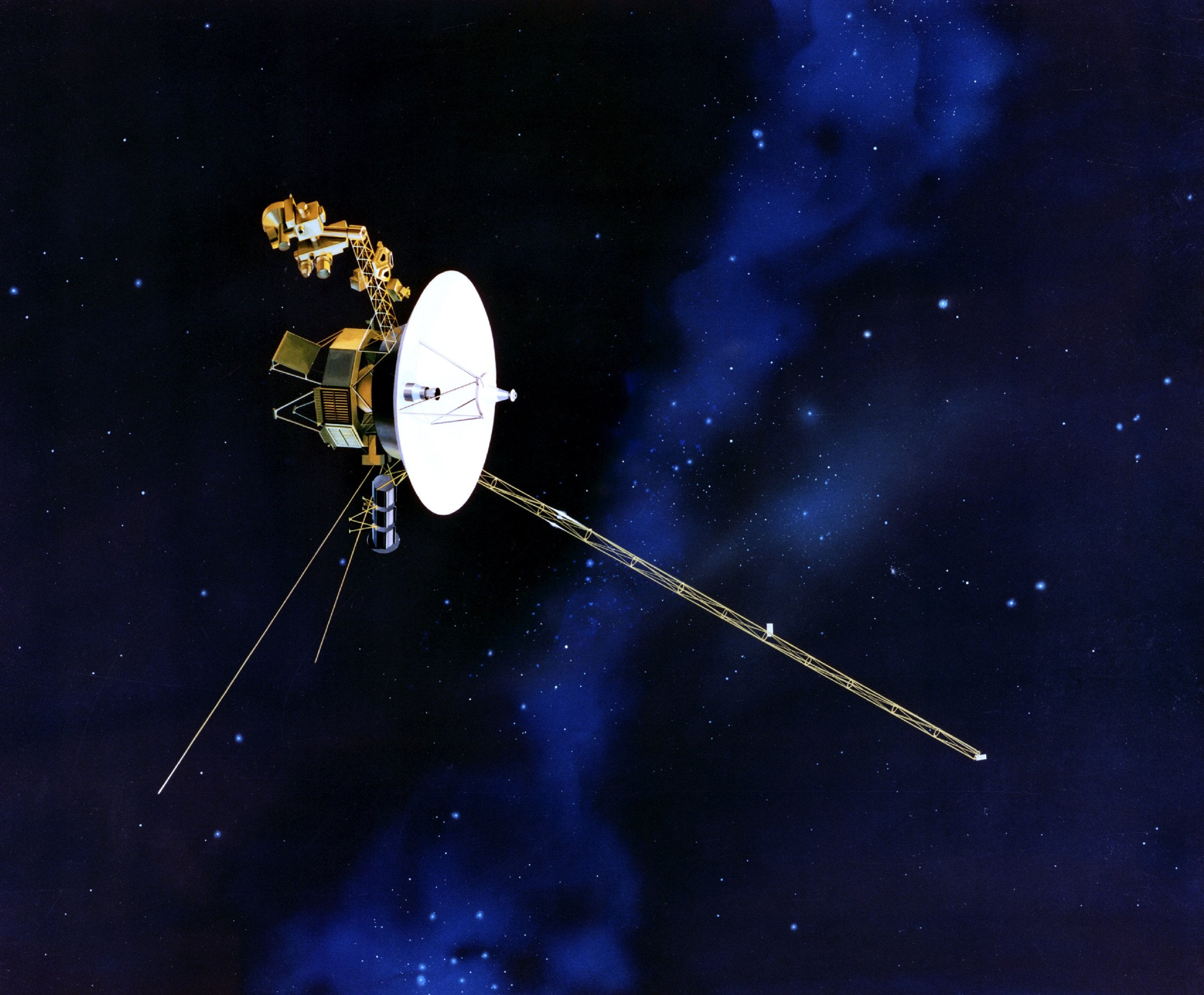


NASA’s Deep Space Network could not detect Voyager 1’s radio signal on 18 and 19 October 2026, and the signal came back on 20 October before engineers had sent any commands, NASA’s Jet Propulsion Laboratory said in a release on 29 October 2026.
The probe launched in 1977 and is about 16 billion miles from Earth.
The network’s antennas, spread across three facilities around the globe, listened for the probe during two scheduled communications attempts 24 hours apart and heard nothing. The signal reappeared 24 hours after the second attempt, and the team has stayed in contact with the spacecraft since then.
The spacecraft switched its own thrusters
Engineers are still investigating what caused the loss of contact. So far they have determined that one group of thrusters went offline and the backup thrusters turned on. That swap is programmed to happen automatically if the spacecraft’s computers detect something amiss with the active thrusters.
JPL calls this automatic response fault protection. It puts the probe into a safe, or stable, configuration and pauses normal operations, giving engineers time to diagnose the issue.
“This is the first time we’ve seen the spacecraft do something like this, but we are also at a point in the mission where we have to expect the unexpected,” Kareem Badaruddin, Voyager mission manager at JPL, said.
“We’re relieved to be back in contact with Voyager 1 and are eager to understand what happened,” he said.
One light-day out
Voyager 1 is moving at 38,000 mph. On 18 November 2026 it will be 16.09 billion miles (25.89 billion km) from Earth, the distance light travels in one day. Radio waves sent to the probe take 24 hours to reach it, and the return signal takes another 24 hours.
“If you want to say ‘hello’ to Voyager, you send your message and then you go home and you wait two days before you finally get a response,” Suzanne Dodd, Voyager project manager at JPL, said.
The spacecraft has travelled farther than any other human-made object, and nothing aboard it will change when it passes that distance.
The communications pause came after a separate job in early September 2026, when engineers turned off three devices on Voyager 1 and replaced them with three lower-power alternatives. Nicknamed the “Big Bang”, the swap was completed about six weeks after the team did the same on Voyager 2.
The six devices help keep the spacecraft warm enough to operate, and the three swaps had to happen at the same time so heat stayed properly distributed. Both Voyagers draw power from radioisotope thermoelectric generators, which turn heat from decaying plutonium into electricity, and each probe loses about 4 watts a year.
The mission launched with 10 dedicated science instruments, and the dwindling power supply has forced the team to turn off two of them in recent years.
Sources:
- NASA JPL news release 2026-078: https://www.jpl.nasa.gov/news/nasas-voyager-1-conserves-power-resolves-brief-communications-pause/