
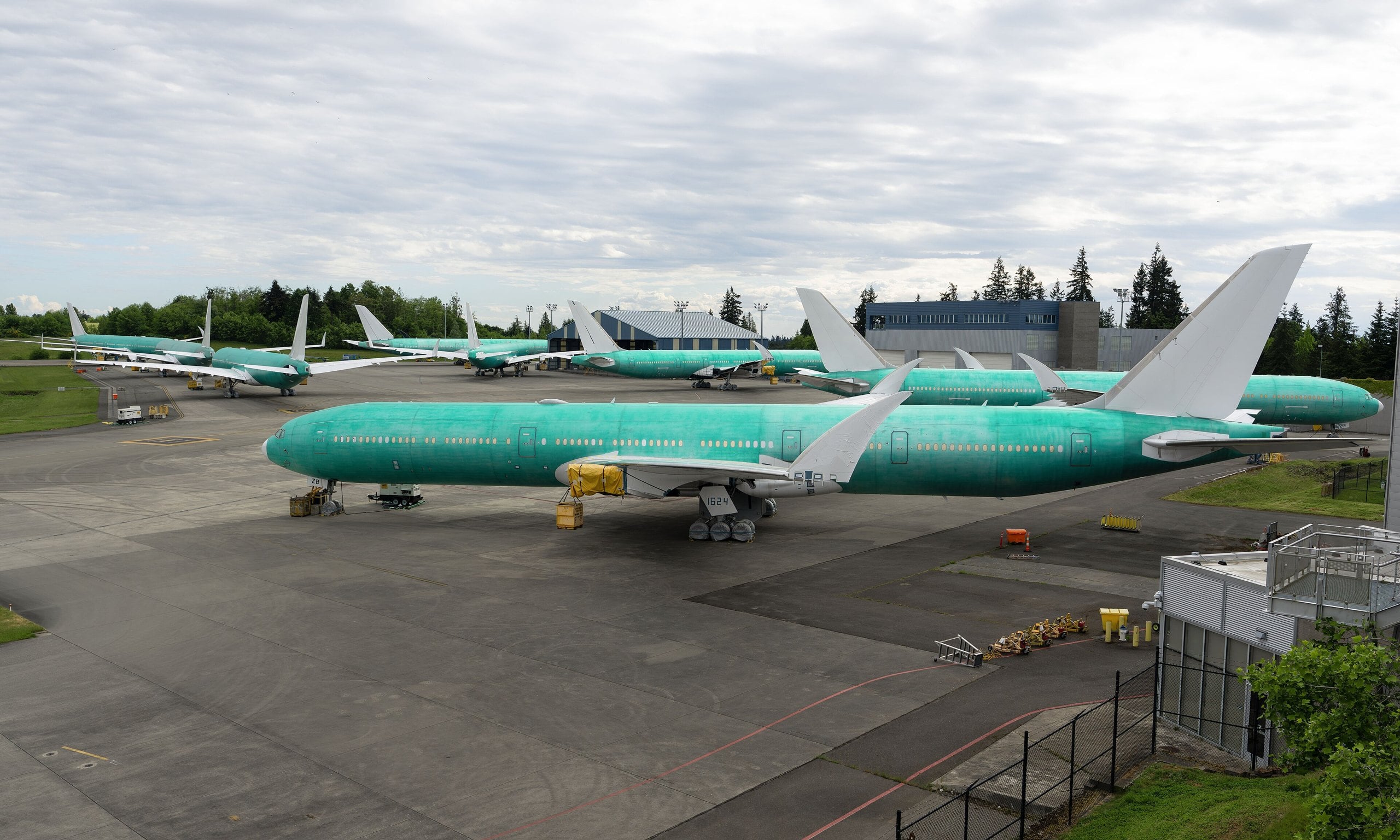


The GE9X on Boeing’s 777-9 has a fan 134 inches across, wider than a Boeing 737 fuselage, and GE Aerospace calls it “the largest and most powerful commercial aircraft engine ever built”, yet the FAA will not certify the jet until it approves a redesigned mid-seal, an agency official told FlightGlobal, Air Data News reported on 23 October 2026.
GE Aerospace is seeking approval of the redesigned seal by the end of 2026.
Boeing continues to target the first 777-9 delivery in 2027 and expects the aircraft to enter service that year, about seven years later than originally planned.
The certification programme began FAA flight testing in July 2024 and has run into several delays since. Boeing has kept building 777-9s while certification continues, and GE is supplying engines for those aircraft before the new seal is approved.
The engine
GE’s own figures give a sense of the scale. The engine is 220 inches long, weighs about 21,000 lb and contains 35,370 parts. Its 134-inch front fan gives a bypass ratio of roughly 10:1, and GE says the fan has six fewer blades than the GE90 engine it builds on.
GE rates the GE9X at 134,300 pounds of thrust, which it calls a world record.
Boeing lists the GE9X as the only engine for the 777-9. The aircraft is 251 ft 9 in long with a wingspan of 235 ft 5 in when the wingtips are extended, according to Boeing’s specifications. The tips fold on the ground, bringing the span to 212 ft 9 in.
The seal
The mid-seal connects sections of the engine. GE found a durability problem with the part in 2026 after a crack was discovered during an engine shop visit, and the seal had not shown the durability GE expected. The company determined the root cause, redesigned the part and completed internal testing before adding it to production engines.
GE paused GE9X deliveries while it worked on the problem.
Deliveries of engines fitted with the new seal to Boeing resumed in the third quarter of 2026. GE confirmed those shipments in its financial results but will not book their financial impact until the seal is certified.
Chief financial officer Rahul Ghai said in September 2026 that the company had a high degree of confidence in the new design after completing its testing.
The seal does not need to be fitted to the engines used in the aircraft’s Extended-range Twin-engine Operational Performance Standards (ETOPS) testing. In September 2026 Boeing said the FAA needed to approve GE’s certification plan for the part before the ETOPS flight tests could go ahead. GE then said the tests could run with the earlier seal.
The FAA statement sets a separate bar for the type certificate itself. The GE9X received its own FAA type certification in September 2020.
Sources: