
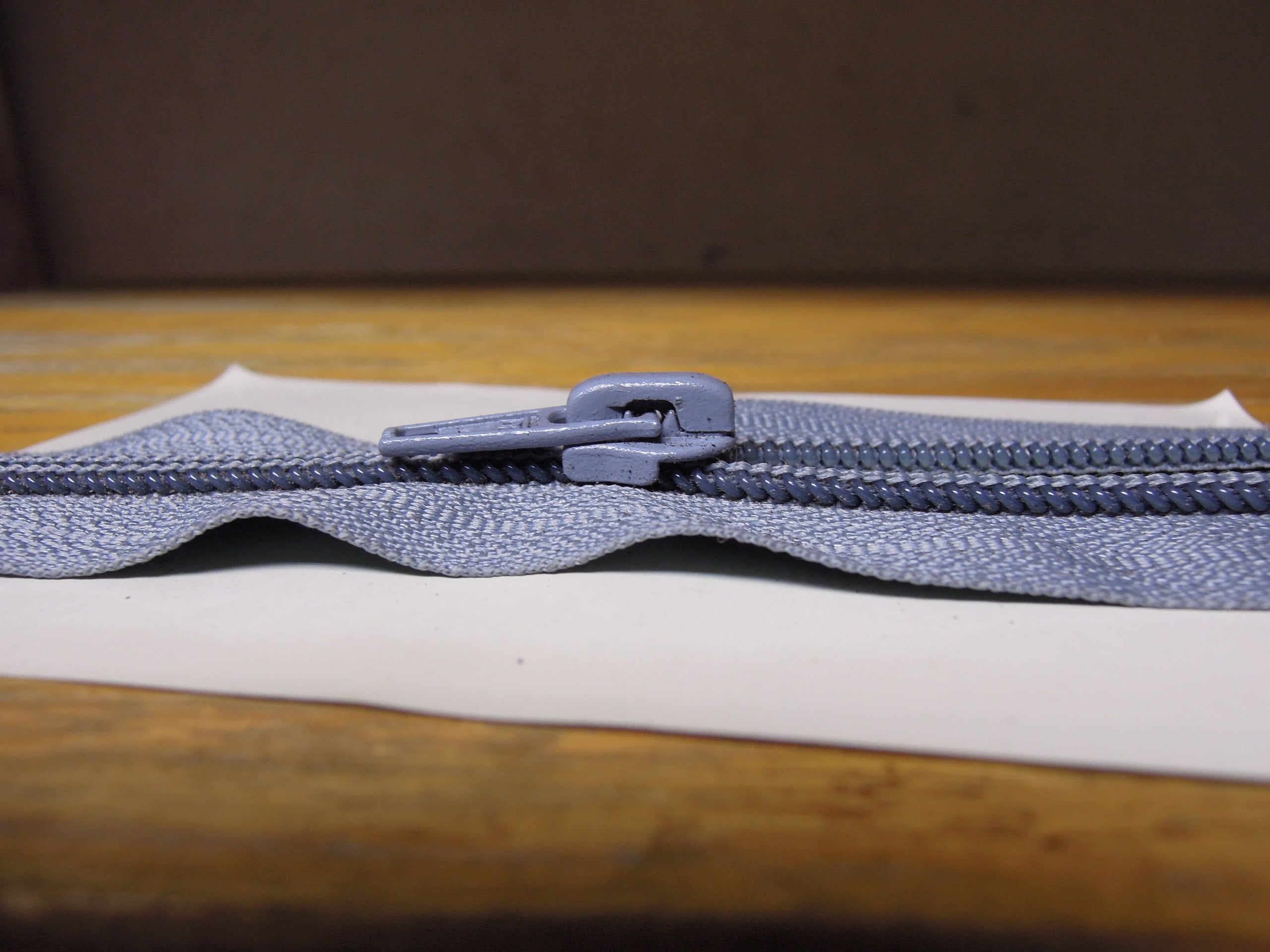


On 20 March 1917 Gideon Sundback was granted US patent 1,219,881 for his separable fastener, the second version of his hookless fastener, which he called “Hookless Number 2”, according to the Smithsonian’s National Museum of American History. He had filed the application on 27 August 1915.
The patent covered the device that became the zipper, although the word did not yet exist.
Hookless Number 2
Sundback was an electrical engineer at the Universal Fastener Company. According to Smithsonian Libraries, he worked on the design by increasing the number of fastening elements and enlarging the opening for the teeth. His design had two facing rows of teeth pulled into a single piece by the slider.
By December 1913 he had created the modern zipper, the library’s blog says.
An Origins article by Alison Pion, published by Ohio State, traces the fastener back to Whitcomb Judson, a Chicago mechanical engineer who was awarded a patent for a “clasp-locker” on 29 August 1893. Pion writes that Sundback abandoned Judson’s hook-and-eye design in 1913 and produced a smaller and more reliable fastener.
The first orders came from the US Army, which used the fasteners on clothing and equipment during the First World War and on boots, money belts and tobacco pouches, Pion writes.
Early garments with the fastener were hard to look after. Pion writes that the metal rusted easily, so it had to be unstitched before a garment was washed and stitched back in afterwards. Each garment came with a small instruction manual explaining how to work and maintain the fastener.
A name from a boot
The name arrived six years after the patent. The term was not coined until 1923, when the B.F. Goodrich Company developed rubber galoshes with the new hookless fasteners and renamed them “Zipper Boots”, according to the Origins article.
Pion writes that Mr Goodrich himself is credited with the name, taken from the “z-z-zip” sound the fasteners made when he closed his boots. The National Museum of American History also credits Goodrich with first coining the term.
The word belonged to the boot first and the fastener took it afterwards. Smithsonian Libraries says Goodrich renamed the fastener to zipper and the name stuck. The main uses at that point were boots and tobacco pouches, and the blog says it would be another 20 years before the fashion industry promoted the closure on garments.
The two sources differ on when clothing adopted it. Pion writes that the zipper was a common fastener on clothing by the late 1920s. The National Museum of American History says it was not widely used on clothing until the 1930s, when it replaced buttons as men’s fly closures.
In 1935 the designer Elsa Schiaparelli introduced a spring line of clothes that The New Yorker described as “dripping with zippers”, according to Pion.
The patent model Sundback submitted is held by the National Museum of American History, which dates its making to 1914.
Sources:
- Smithsonian National Museum of American History: https://www.si.edu/object/sundbacks-modern-slide-zipper-patent-model-1915%3Anmah_860486
- Smithsonian Libraries: https://blog.library.si.edu/blog/2010/05/03/the-up-an-down-history-of-the-zipper/
- Ohio State Origins: https://origins.osu.edu/sites/default/files/2021-09/Volume1Issue4Article13.pdf