

Kishi Station sits at the end of the Kishigawa Line, a 14.3-kilometre single-track branch that runs east from Wakayama City through rice paddies and low hills into Kinokawa. In April 2006 the station’s last human staff were removed to trim operating costs, and it kept running as an unmanned stop. The line was losing money heavily, ridership had slid to roughly 1.9 million passengers a year, and the branch had been on a closure track for years.
The next year, the station acquired a new stationmaster. She was a calico cat.
The line that was supposed to close
The Kishigawa Line had been shrinking for three decades. According to a study of the line’s rescue published by Wakayama University, annual ridership peaked at 3.614 million in the 1974 financial year, fell past 2.5 million by 1985, recovered briefly to 2.739 million in 1996, then resumed its slide after new road links opened along the corridor. By the 2004 financial year it was 1.926 million, roughly 70 per cent of the 1995 level.
Rural depopulation, private cars and school consolidation had drained the passenger base. In October 2003 Nankai Electric Railway told the prefecture and the municipalities it was reviewing options that included abandonment, and in September 2004 it filed formal notice to withdraw.
What saved the branch first was not a cat but a public tender and a residents’ campaign. A citizens’ group, the Association to Build the Future of the Kishigawa Line, pushed hard enough that the local authorities agreed to buy the trackbed from Nankai and seek a replacement operator. Nine bidders applied. Okayama Electric Tramway, part of the Okayama-based Ryobi Group, was selected in April 2005 and established a wholly owned subsidiary, Wakayama Electric Railway, that June. Nankai ran the last train on 31 March 2006. The new company began operating the following morning, 1 April 2006.
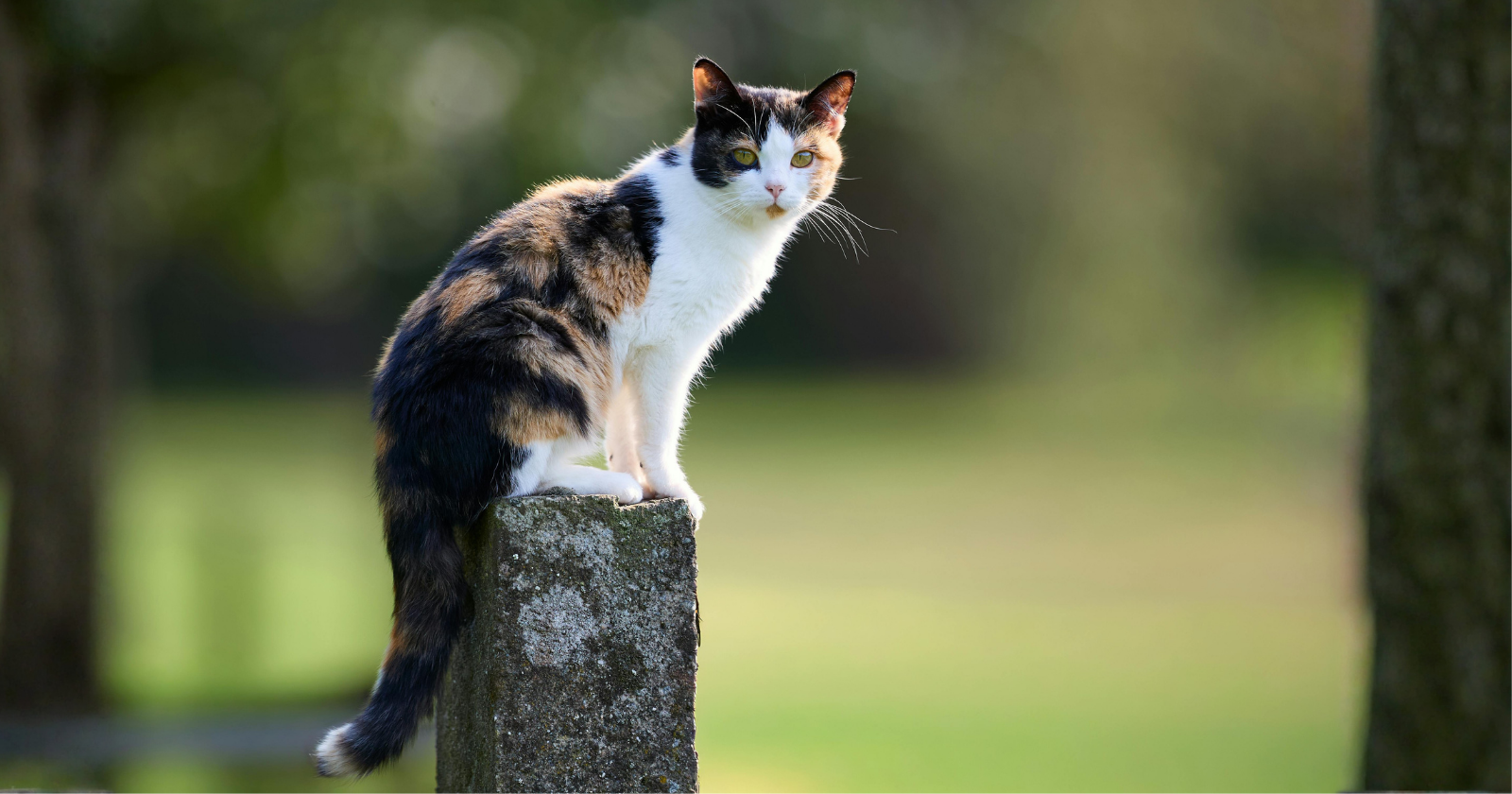
Cutting staff was one of the new operator’s first economies. Kishi and most of the line’s other stations went unmanned, and the company instead designated people from businesses near each station as honorary stationmasters. At Kishi that was Toshiko Koyama, who ran the kiosk by the entrance and looked after a group of stray cats living beside the tracks. One of them was a calico born on 29 April 1999, named Tama.
How a cat became stationmaster
The cats had a problem. The cat house Koyama had built for them stood on land that had passed into public ownership, and the city wanted it cleared.
On the day the new company opened, at the ceremony marking the handover, Koyama approached Wakayama Electric Railway’s president, Mitsunobu Kojima, and asked him to let the cats stay at the station. Kojima went to look at Tama. He saw a maneki-neko, the beckoning cat that Japanese shopkeepers put by the door to draw customers in.
On 5 January 2007 Tama was appointed stationmaster of Kishi Station. Her mother, Miiko, and another of the cats, Chibi, were made assistant stationmasters the same day. Her duties, as the company described them, were to greet passengers. Her salary was paid in cat food, with a gold name tag for her collar.
The uniform was not a joke prop. A stationmaster’s cap was made to fit a cat’s head, and a summer version followed in July 2008. Her office was the station’s old ticket booth, converted. Photographs of a calico in a railway cap, sitting behind glass a few feet from the gate, went through Japanese television and then, within months, international wire copy.
The important part is what happened next.
What the numbers actually showed
Ridership stopped falling. Passenger numbers for January 2007 came in 17 per cent above January 2006. For the financial year to March 2007 the line was up about 10 per cent on the year before. By mid-2008 the Associated Press reported the line carrying about 2.1 million a year, against annual losses that had been running near 4.9 million dollars.
The longer arc is firmer still. Figures reported by Kyodo News and cited by Fortune put ridership at 1.92 million in the 2005 financial year and 2.27 million in 2014. For a branch that had lost a third of its passengers in a decade, the direction of travel had reversed.
The famous number is softer. In October 2008 Katsuhiro Miyamoto, then a professor at Kansai University’s graduate school of accountancy, estimated Tama’s economic effect for 2007 at about 1.094 billion yen. The figure covered visitor spending across Wakayama Prefecture, not fare revenue, and it was one economist’s model rather than an audited account. It has been quoted often enough since to have hardened into folk fact.
Miyamoto’s own working showed the trap in that kind of number: much of what a mascot appears to generate leaks out of the region that hosts it, because the souvenirs are manufactured elsewhere. The ridership recovery on the Kishigawa Line is the more defensible figure, and it is the one that kept the trains running.
Around the cat, the company built things worth travelling to. Its first refitted train, the strawberry-themed Ichigo Densha, entered service on 6 August 2006, five months before Tama was appointed. The designer was Eiji Mitooka, the Ryobi Group’s design adviser, better known for JR Kyushu’s cruise trains. A toy train followed on 29 July 2007. The Tama Densha, its exterior covered in cartoon calicoes and its interior fitted with cat motifs and a picture-book shelf, began running on 21 March 2009.
The station itself came last. The original building was demolished in February 2010, and on 4 August 2010 a new one opened in the shape of a cat’s face, again to a Mitooka design, with a café and shop inside and arched windows for eyes.
Why it worked when most publicity stunts do not
Most novelty marketing decays quickly. This did not, and it is worth being precise about why.
Tama was not a photo opportunity. She lived at the station and kept posted hours. A visitor who made the trip could reliably see her, which is a different proposition from hoping to catch a viral moment. And once they arrived, there was somewhere to spend money: themed trains, a rebuilt terminus, a café, merchandise. The cat drew the trip; the trip needed a ticket; the ticket sustained the line.
There is also a geography point that gets under-reported. Kishi is the terminus. Anyone coming to see the stationmaster had to ride the full length of the branch and ride it back. Every visitor was a round-trip fare on the entire line, not a single-stop hop. For a 14-kilometre branch fighting for revenue, that matters more than the merchandise.
The sequencing matters too. The reinvention of the rolling stock had already started before the appointment. Tama did not rescue a company that was standing still; she landed on one that was already spending money on being worth visiting.
What happened after Tama
Tama was promoted to super stationmaster in January 2008, made an operating officer in January 2010, and by 2013 held the title of vice-president of the railway. She died on 22 June 2015, aged 16, of acute heart failure. An estimated 3,000 people attended a Shinto-style funeral at Kishi Station, where she was posthumously named honorary eternal stationmaster and later enshrined at a small shrine on the platform.
Her successor was Nitama, a calico who had served as deputy at Kishi and stationmaster at Idakiso since January 2012, and who took the Kishi post in August 2015. Nitama died on 20 November 2025, aged 15. The company held a corporate funeral at Kishi on 13 December 2025, attended by about 500 people including the mayor of Kinokawa, and gave her the title honorary special stationmaster. Two calicoes, Yontama and Gotama, now hold the stationmaster posts, with a third, Rokutama, listed as a stationmaster candidate.
The line is still a small rural branch with structural problems no cat can fix. Depopulation along the route has not reversed, the operation still loses money, and public support to the railway had already exceeded 1.8 billion yen by the 2024 financial year. Four days after Nitama died, on 24 November 2025, the company, the prefecture and the cities of Wakayama and Kinokawa signed an agreement to move the line to a full vertical-separation model in April 2028, with the local authorities owning and maintaining the track and stations and the operator running the trains, aiming to reach profitability about three years after the switch.
What did not happen is the closure that looked certain in 2004. A destaffed terminus was given a resident with a daily routine and posted hours; the railway spent money behind her; and enough people bought a return ticket to the end of the line to change the arithmetic long enough for a rescue to be arranged.
At Kishi the office window is still there, next to the gate, under the cat-shaped roof. The hours are ten until four, with days off. Most afternoons there is a calico behind the glass, asleep.